

A kitchen sink must fit the cabinet, countertop opening, plumbing, faucet, and routines of the household. Start with the existing installation and measurements before comparing bowl shapes or finishes. Replacing a sink can involve countertop and plumbing work, so confirm the exact model template and installation requirements with a qualified professional before purchase.
How can you measure the cabinet, counter, and existing opening?
Record the cabinet's inside width and depth, the countertop thickness, the current cutout, and the sink's overall dimensions. Note the drain location, faucet holes, disposal or filtration connections, and clearance below the bowl. A sink's exterior size alone does not confirm that it fits a particular cabinet or plumbing layout.
If the counter is already cut, check whether the new sink's rim, reveal, and template match the existing opening. BLANCO's installation guidance describes how undermount sinks sit below the counter and why the cut edge must be finished; that is a brand's explanation of one installation type, not approval for every counter material or sink model.
Sources: BLANCO: Sink Installation Types
How can you choose an installation type that suits the counter?
Top-mount, undermount, and other configurations have different edges, supports, and cutout requirements. Compare the installation method in the exact product documentation with the counter material and current opening. If you are replacing a sink without changing the counter, prioritize verified cutout compatibility over a style preference.
Do not use a generic online diagram to create a cutout or support plan. Manufacturer templates can vary by model and revision. Ask the counter fabricator or qualified installer to confirm the final opening, sink support, sealant, clips, and required clearances.
KOHLER's buying guide likewise asks shoppers to consider cabinet size and the sink installation type that suits the cabinet configuration. Treat this as manufacturer guidance, then verify the dimensions and cutout template for the exact sink model and countertop.
Sources: KOHLER: Kitchen Sinks Buying Guide
How can you compare bowl use and faucet reach?
Think through the largest cookware you wash, food-preparation routines, drying space, and whether a divider would help or limit the basin. Compare usable bowl dimensions and depth, not just the overall sink width. Check faucet height and reach against the bowl and any window, shelf, or cabinet above it.
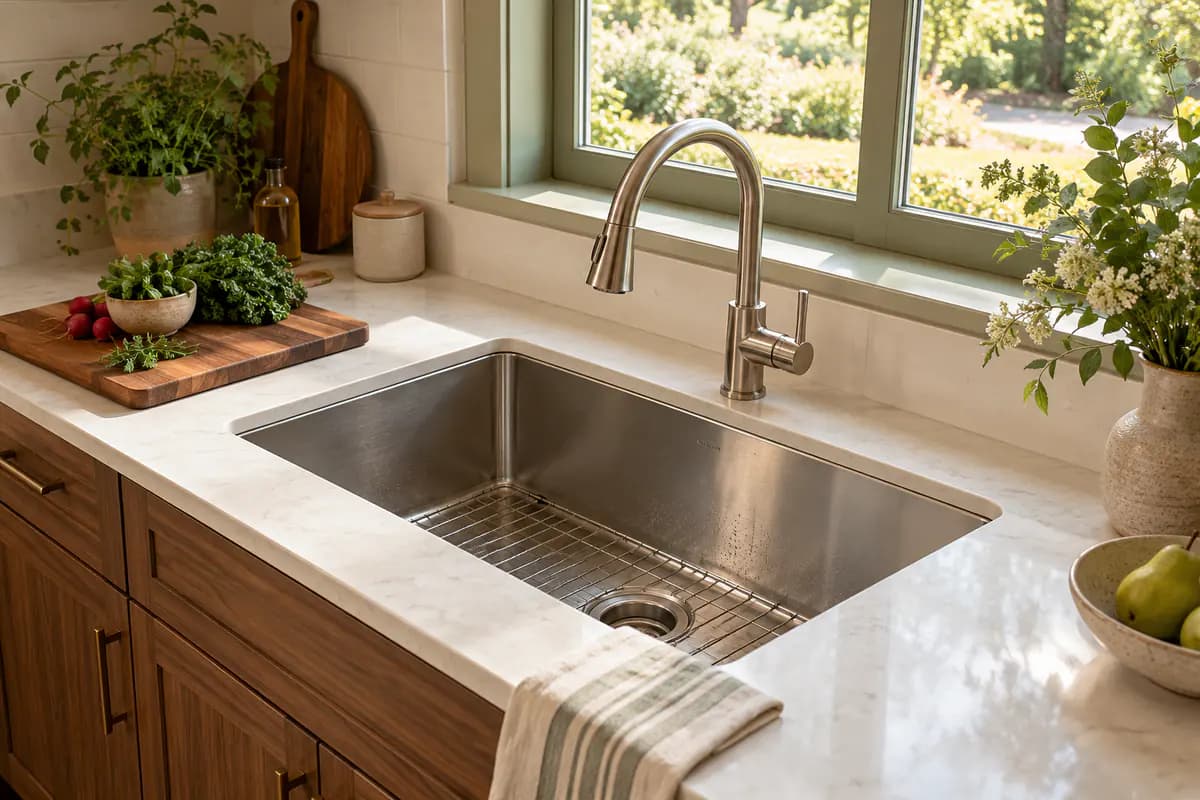
Verify included accessories, drain opening, overflow or disposal compatibility, finish care, and warranty. A photograph does not show a sink's sound treatment, exact gauge, or compatibility; use published specifications for the selected model and ask the maker when a detail is absent.
How can you plan the installation before ordering?
A sink change can require disconnecting water, modifying a counter opening, and reconnecting plumbing. Confirm who will perform the work, what preparation is needed, and whether the installation will affect the counter warranty. Use a qualified trade professional when the scope or local requirements call for it.
How can you measure the cabinet, opening, and counter as one system?
Record the sink cabinet's interior width, depth, and obstructions, then measure the counter opening and its distance from the front and back edges. Note the countertop material and thickness, cabinet rail, plumbing, disposal, and storage that may conflict below the bowl. Do not rely on the old sink's nominal size alone; measure the actual cutout and installation.
Use the manufacturer's template and technical drawing for the candidate sink. Compare minimum cabinet size, cutout, bowl depth, rim, and mounting requirements. If the counter is stone, laminate, or another specialty material, ask the fabricator whether a new cutout or mounting method is possible before ordering.
How can you choose a mounting style and bowl layout for the routine?
Compare drop-in, undermount, and other installation styles against the existing counter and the work required to change it. Confirm the exact model's clips, supports, sealants, and installation manual. A replacement sink may require counter modification or a different cabinet setup, so ask who is responsible for verifying those conditions.
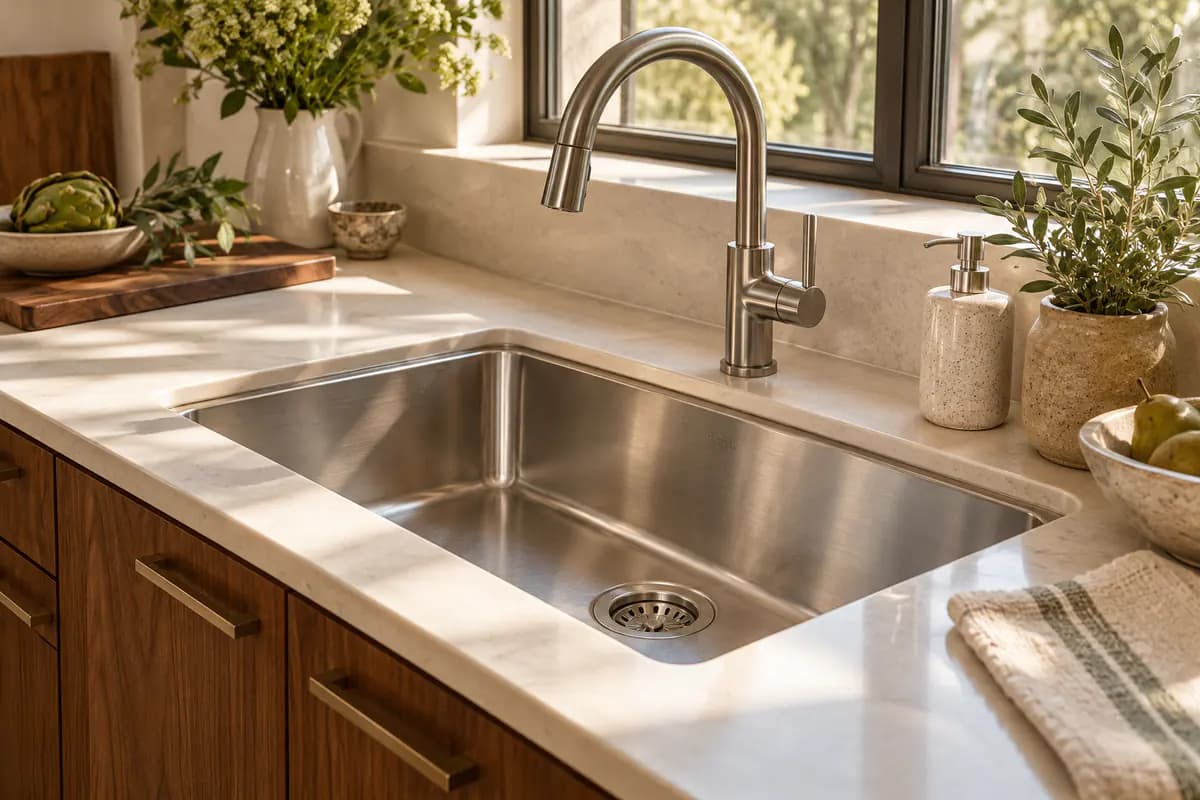
Think about how the household uses the bowls: washing large cookware, separating food preparation, or making room for a faucet and accessories. Measure the largest items and check the bowl's interior dimensions. A deeper or wider bowl can change under-counter clearance and daily posture; assess those trade-offs rather than assuming a larger sink is automatically more useful.
How can you check faucet, drain, and plumbing compatibility?
Verify the faucet mounting pattern and spout reach relative to the bowl. Check handle movement, backsplash clearance, sprayer hose path, and any soap dispenser or filter. Confirm drain placement and whether an existing disposal or strainer can be reused. Product families can contain models with different dimensions, so match the full model code.
Read the sink and faucet instructions alongside the plumbing details. If supply connections, venting, shutoffs, or drain alignment are uncertain, ask a licensed plumber to inspect the setup. Do not plan new plumbing based only on a retailer's compatibility note or a photograph of a similar kitchen.
How can you plan removal, installation, and post-install checks?
Ask who will disconnect the old sink, dispose of it, prepare the counter, install the new unit, and reconnect plumbing. Confirm the work sequence with the countertop fabricator and cabinet installer if more than one trade is involved. Review local permit requirements where applicable and keep the sink manual available on installation day.
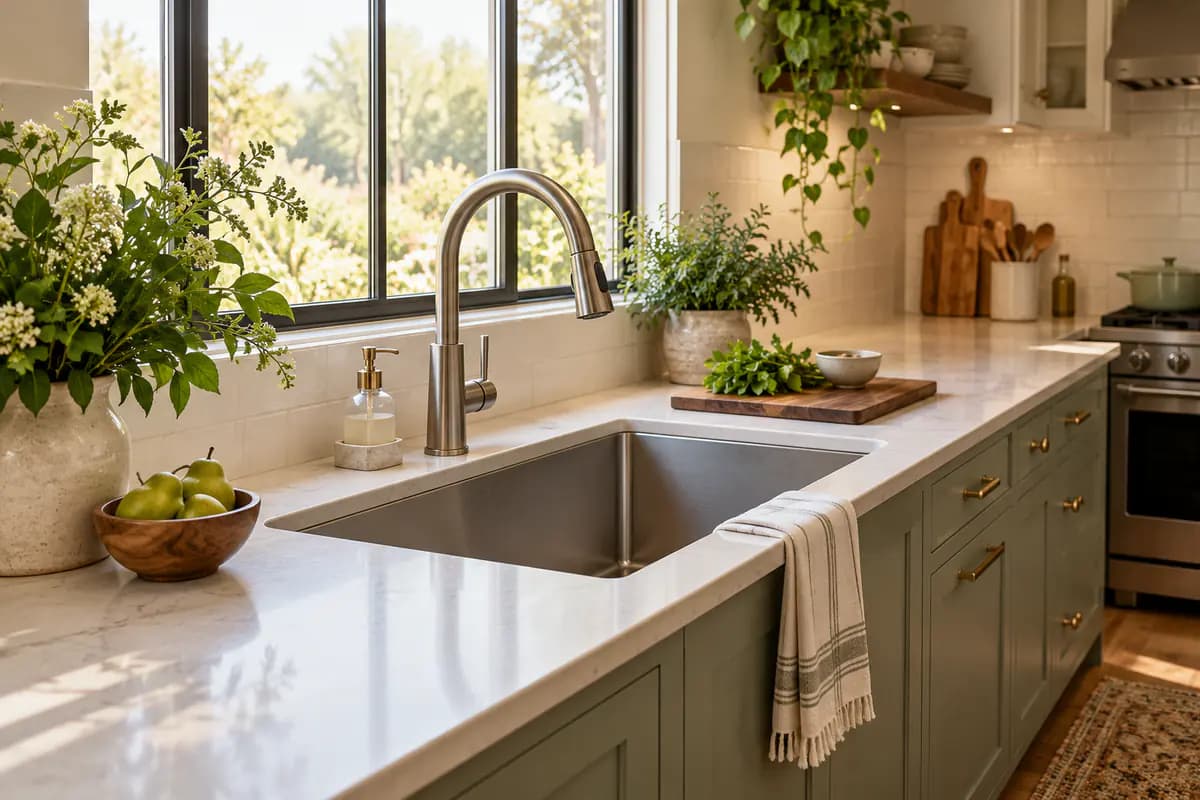
After the work, follow the plumber's instructions for sealant cure, cleaning, and leak checks. Keep model and warranty records. If a connection leaks, the sink shifts, or the counter shows damage, stop using the affected fixture and contact the installer. A sink buying guide can support a measured handoff but cannot certify an installation.
How can you build a written handoff for the countertop and plumbing teams?
Share the sink model, cutout template, cabinet measurements, faucet model, drain position, disposal information, and counter material with everyone involved before ordering. Ask who verifies the opening and what happens if the measured counter differs from the template. Coordinate delivery and installation so the sink is on site before a final cut is made.
Keep approvals and updated measurements together. If the fabricator or plumber identifies a conflict, pause the order and review alternatives. A written handoff can prevent the owner from assuming that the cabinet, faucet, sink, and countertop have been checked by the same person when different trades handle each part.
How can you preserve the sink documentation after the project?
After installation, keep the sink model, faucet pairing, countertop cutout, plumbing notes, manuals, and warranty together. Record the date and installer contact, along with any approved parts or sealants. This information can help resolve a future leak or replacement question without guessing which model was fitted. Follow the exact care instructions and contact the installer if the sink shifts or a connection shows a problem.
Conclusion
A replacement sink must match the cabinet, counter opening, plumbing, and intended bowl use. Record the existing cutout and mounting details, compare the exact model's dimensions and installation manual, and plan faucet reach and access below the counter. Ask a qualified installer about uncertain countertop changes or plumbing; a product listing cannot confirm compatibility by appearance alone.
Frequently Asked Questions
How do I measure for a replacement kitchen sink?
Record the cabinet's inside width and depth, the countertop thickness, the current cutout, and the sink's overall dimensions. Note the drain location, faucet holes, disposal or filtration connections, and clearance below the bowl. A sink's exterior size alone does not confirm that it fits a particular cabinet or plumbing layout.
Which kitchen sink installation type should I choose?
Top-mount, undermount, and other configurations have different edges, supports, and cutout requirements. Compare the installation method in the exact product documentation with the counter material and current opening. If you are replacing a sink without changing the counter, prioritize verified cutout compatibility over a style preference.
What should I plan before ordering a kitchen sink?
A sink change can require disconnecting water, modifying a counter opening, and reconnecting plumbing. Confirm who will perform the work, what preparation is needed, and whether the installation will affect the counter warranty. Use a qualified trade professional when the scope or local requirements call for it.
How do I check a sink's faucet and drain compatibility?
Think through the largest cookware you wash, food-preparation routines, drying space, and whether a divider would help or limit the basin. Compare usable bowl dimensions and depth, not just the overall sink width. Check faucet height and reach against the bowl and any window, shelf, or cabinet above it.
When should a plumber measure or install a sink?
A sink change can require disconnecting water, modifying a counter opening, and reconnecting plumbing. Confirm who will perform the work, what preparation is needed, and whether the installation will affect the counter warranty. Use a qualified trade professional when the scope or local requirements call for it.
Shopping Options To Explore
Use these listings and partner stores as places to continue your research, not as product ratings or test results. Listings, product details, availability, and offer terms can change; verify the exact item with the seller.
Some links may earn a commission. General Temu and Shein storefront destinations are not verified affiliate links and may not generate one. Read our affiliate disclosure.
Use the measurements and checks in this guide when comparing an exact item. Browse current partner offers and verify product details, eligibility, and terms with the seller.
Sources and further reading
We link primary or institutional references near factual claims and list the sources used for this guide below. Design suggestions are editorial guidance, not universal rules.
Living Statement may earn a commission from some partner links. Any paid relationship will be disclosed close to the relevant offer. How our affiliate links work.