

A bathroom faucet has to fit the sink and the installation already in the room. Before comparing finishes, identify the basin's mounting holes, faucet reach, supply connections, and available clearance. If water efficiency matters, compare a certified bathroom sink faucet label instead of relying on a marketing phrase alone.
Will the faucet fit the sink?
Check the sink or countertop from below and above. Note the number and spacing of mounting holes, whether the faucet mounts on the sink, countertop, or wall, and the thickness of the mounting surface. A single-hole faucet may not cover an existing widespread set of holes; a deck plate may cover some unused holes when the manufacturer says it is compatible.
Measure from the faucet's mounting point to the center of the drain and the basin edge. The spout should send water into the bowl rather than onto the back wall or too close to the rim. Check handle travel against a backsplash, mirror, and adjacent wall before ordering.
What do WaterSense labels tell you?
For private bathroom sink faucets, the U.S. EPA's WaterSense label applies to faucets and qualifying accessories that are independently certified to meet the program's efficiency and performance criteria. EPA says labeled bathroom faucets use no more than 1.5 gallons per minute at 60 psi; the program is specifically for private lavatory and bar-sink faucets, not every kitchen or public faucet type. Check the current EPA product listing and the exact product model before treating a claim as verified.
WaterSense is a useful comparison signal, not a substitute for fit. Confirm the faucet's flow, included aerator, cartridge and finish warranty, and the local plumbing requirements for your project.
Sources: U.S. EPA WaterSense: Bathroom faucets; U.S. EPA WaterSense label; U.S. EPA: High-Efficiency Lavatory Faucet Specification
How should you compare finishes and care?
Look at finish samples beside the sink, drain, shower trim, cabinet pulls, and lighting under the room's actual light. A finish name such as brushed brass or matte black is not enough to predict an exact match across manufacturers. Decide whether you want a coordinated suite or a deliberate mix, and compare care instructions for water spots, cleaners, and abrasion.
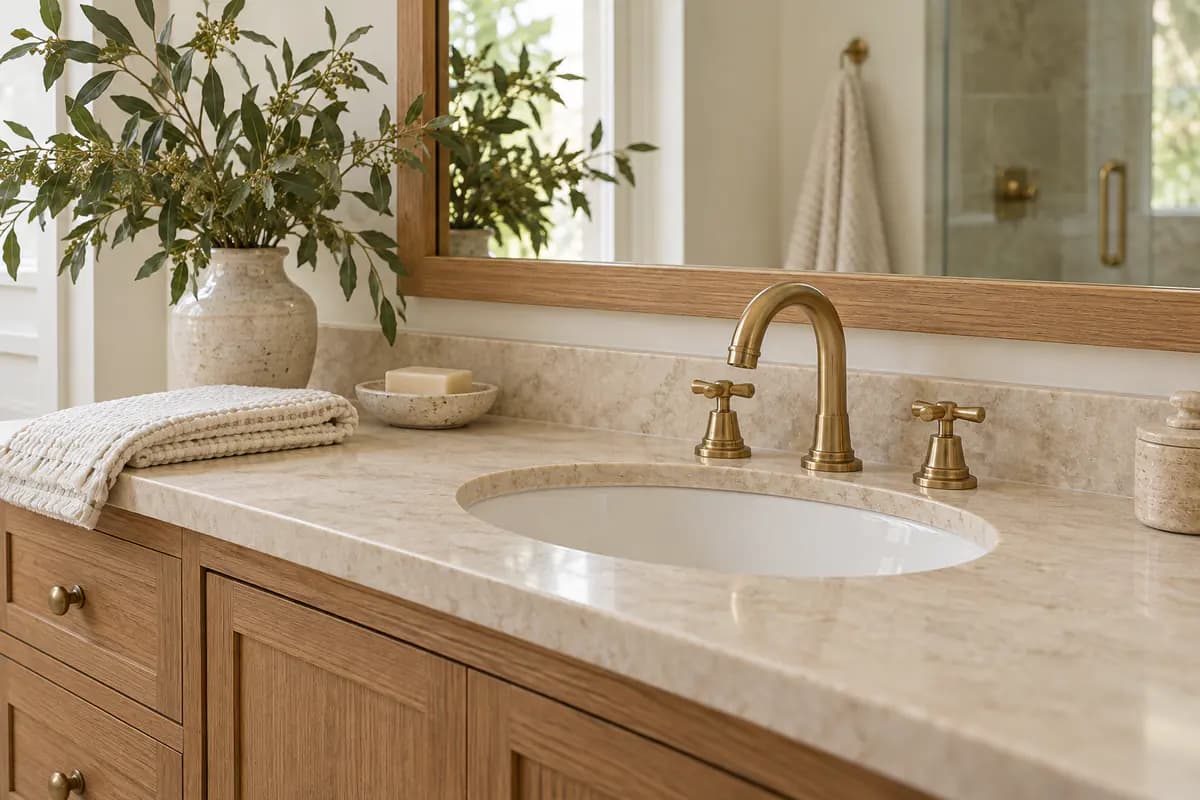
Read the manufacturer's installation and maintenance instructions before purchase. Some finishes call for mild soap and water and can be damaged by abrasive pads or harsh cleaners. Keep the documentation for warranty claims and confirm whether the finish is covered separately from the faucet body.
When should you ask a plumber?
Ask a licensed plumber when the shutoff valves are corroded, supply lines need replacement, the faucet is wall-mounted, the sink configuration is changing, or you are unsure about local code. A faucet swap can expose old connections or a damaged countertop; planning for that possibility is better than assuming every installation is a simple fixture change.
How can you make a measurement sheet for the existing sink?
Record the number and spacing of mounting openings, deck thickness, basin depth, and the distance from the mounting point to the drain. Measure the faucet's reach and height needs around the rim, backsplash, mirror, and any window. Check how the handle will move and whether it can be operated without striking a wall or other fixture.

Photograph the underside of the sink and note the supply connections and shutoff access. If the current setup includes a separate sprayer, soap dispenser, or pop-up drain, record those details too. Bring the sheet and model information to the retailer or plumber. An attractive product photo cannot confirm that the new faucet will align with the existing holes or supply layout.
How can you compare installation types and reach?
Compare the faucet's stated mounting pattern with the sink or counter. A single-hole model, a widespread set, and a faucet designed for a particular deck arrangement are not interchangeable simply because they have a similar finish. Confirm which components are included and whether the selected model requires a deck plate or other specific parts.
Check spout reach against the basin so water lands where it can be used comfortably without excessive splash, and review the handle's clearance through its full movement. Use the manufacturer's dimensional drawing rather than a cropped listing image. If the sink, counter, or supply configuration is unusual, ask a plumber to review the measurements before you order.
How can you read labels and care details in their proper scope?
If water efficiency matters, check whether the exact model carries a recognized label and confirm what that label measures. A product-family name or seller badge is not enough to establish certification. Compare the published flow information and the label's coverage with your local rules and needs; do not infer performance from the faucet's appearance or from a different model in the range.
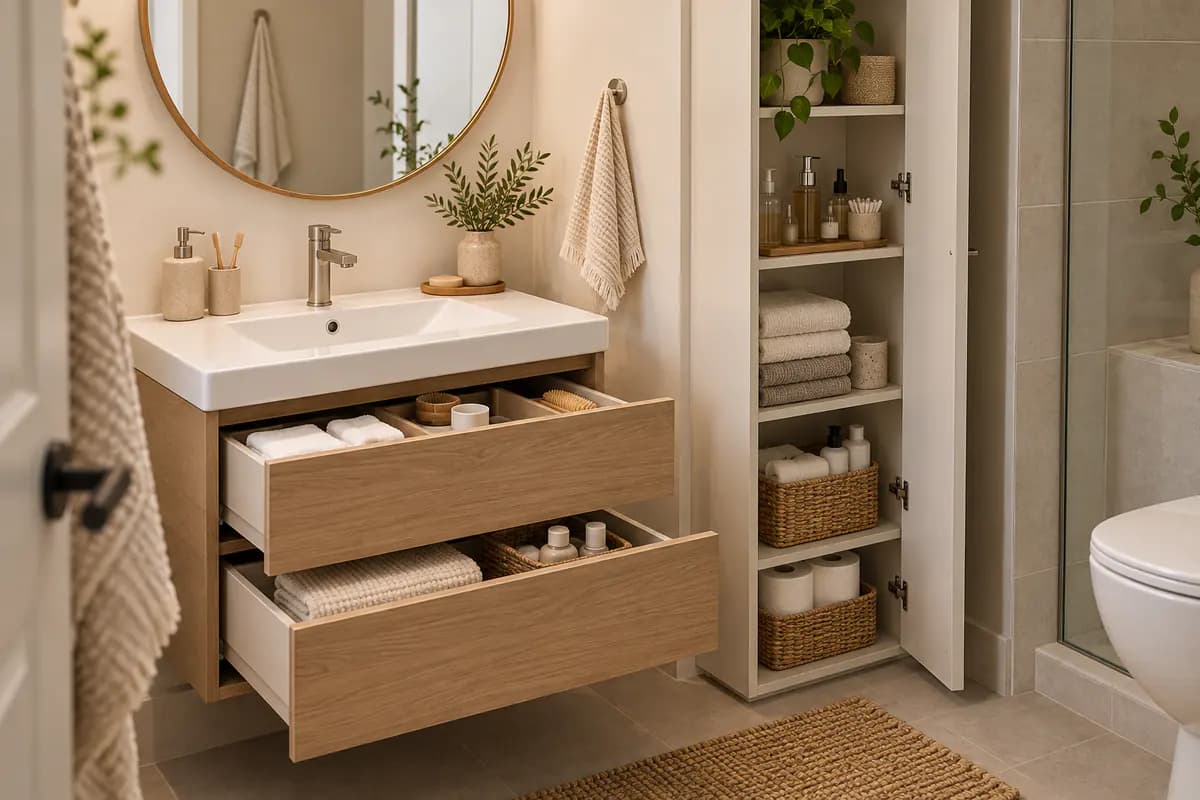
For finishes, review the maker's approved cleaning methods and restrictions. Some surfaces may require particular cleaners or a soft cloth, but instructions vary by product. Ask how replacement parts and warranty service work for the exact model. Save the technical sheet and care guide so future cleaning does not depend on generic advice from another faucet brand.
How can you plan a smooth handoff to the installer?
Before purchase, ask who will disconnect and remove the old faucet, whether the existing shutoffs and supply lines are suitable, and whether the basin or counter needs modification. Confirm access below the sink and any required tools or parts. If a shutoff valve is corroded, inaccessible, or uncertain, have a qualified plumber evaluate it instead of planning the replacement as a simple fixture swap.
After installation, compare the completed fixture with the model instructions and check for leaks or movement according to the plumber's handoff. Keep the model number, warranty, and service information. A good fit includes access for later repair as well as a finished appearance. Do not tighten, alter, or repair water connections beyond your competence or contrary to the manufacturer's directions.
How can you keep a model-by-model comparison record?
Create one line for each faucet model and record its mounting pattern, reach, height, handle clearance, supply connection, included drain parts, water label, care guidance, and warranty. Mark each fact as confirmed, unclear, or not applicable. This prevents two similar-looking models from being treated as identical when their dimensions or included components differ.
Before purchase, compare the record with the sink measurements and ask the maker or plumber to resolve any missing fit detail. Save the technical sheet and full model number. If installation reveals an unexpected connection or countertop issue, stop and ask the qualified installer rather than modifying the fixture or supply line beyond the approved instructions.
Conclusion
A faucet is a fit only when its mounting, reach, handle clearance, supply connections, and sink configuration match the actual basin. Compare the complete model documentation and any applicable water-efficiency label, then ask a plumber about uncertain plumbing or installation conditions. Finish and style matter after compatibility and maintenance needs are clear.
Frequently Asked Questions
How do I know if a bathroom faucet fits my sink?
Check the sink or countertop from below and above. Note the number and spacing of mounting holes, whether the faucet mounts on the sink, countertop, or wall, and the thickness of the mounting surface. A single-hole faucet may not cover an existing widespread set of holes; a deck plate may cover some unused holes when the manufacturer says it…
What does a WaterSense label tell me?
For private bathroom sink faucets, the U. S. EPA's WaterSense label applies to faucets and qualifying accessories that are independently certified to meet the program's efficiency and performance criteria. EPA says labeled bathroom faucets use no more than 1. 5 gallons per minute at 60 psi; the program is specifically for private lavatory and bar-sink faucets, not every kitchen…
When should I ask a plumber to install a faucet?
Ask a licensed plumber when the shutoff valves are corroded, supply lines need replacement, the faucet is wall-mounted, the sink configuration is changing, or you are unsure about local code. A faucet swap can expose old connections or a damaged countertop; planning for that possibility is better than assuming every installation is a simple fixture change.
How do faucet finishes differ in care?
Look at finish samples beside the sink, drain, shower trim, cabinet pulls, and lighting under the room's actual light. A finish name such as brushed brass or matte black is not enough to predict an exact match across manufacturers. Decide whether you want a coordinated suite or a deliberate mix, and compare care instructions for water spots, cleaners, and abrasion.
What if my sink has an unusual mounting pattern?
Check the sink or countertop from below and above. Note the number and spacing of mounting holes, whether the faucet mounts on the sink, countertop, or wall, and the thickness of the mounting surface. A single-hole faucet may not cover an existing widespread set of holes; a deck plate may cover some unused holes when the manufacturer says it…
Shopping Options To Explore
Use these listings and partner stores as places to continue your research, not as product ratings or test results. Listings, product details, availability, and offer terms can change; verify the exact item with the seller.
Some links may earn a commission. General Temu and Shein storefront destinations are not verified affiliate links and may not generate one. Read our affiliate disclosure.
Use the measurements and checks in this guide when comparing an exact item. Browse current partner offers and verify product details, eligibility, and terms with the seller.
Sources and further reading
We link primary or institutional references near factual claims and list the sources used for this guide below. Design suggestions are editorial guidance, not universal rules.
Living Statement may earn a commission from some partner links. Any paid relationship will be disclosed close to the relevant offer. How our affiliate links work.