

Some coatings are made for particular tile surfaces and locations, but “tile paint” is not one universal product category. Start with the exact substrate, how much heat or moisture it sees, and the maker's technical sheet. Painting changes the finish; it does not repair loose tile, failed grout, or a moisture problem behind the wall.
When might painting tile be a reasonable refresh?
Consider a coating only when the tile is firmly attached, the surrounding assembly is in sound condition, and the maker names that tile and location as an approved use. A backsplash away from direct heat may have different demands from a shower wall, a sink surround, or a floor. If tile is loose or cracked, grout is failing, or moisture damage is suspected, first identify and fix the underlying issue with a qualified tile or building professional.
A painted finish also changes the surface and grout visually rather than changing the tile layout. Decide whether the result you want is a color refresh or a different material, edge, pattern, or surface. If the existing tile is damaged or the coating instructions do not cover the exact use, compare repair or replacement options instead.
How do you match the coating to the location?
Read the product label and current technical data sheet for the exact tile material, indoor/outdoor use, wall or floor use, moisture exposure, temperature range, and any exclusions. Do not assume a tub-and-tile product can be used on a floor or that a floor system is suitable for a shower. For example, Rust-Oleum's US Tub & Tile Refinishing Kit directions specify walls and tubs, direct floor users to a separate floor coating, and list limits for extreme heat, constant high humidity, and continuous immersion. Those limits describe that product, not every coating.
For a backsplash, check how near the painted section is to a cooktop or other heat source and whether the selected product allows that exposure. For a bathroom, distinguish splashes and ordinary humidity from a location that stays wet or has standing water. If the product documentation does not clearly cover the exposure, ask the manufacturer or a qualified installer before buying it.
Sources: Rust-Oleum: Tub & Tile Refinishing Kit product guidance; Rust-Oleum: Tub & Tile Refinishing Kit technical data sheet
What preparation and safety checks matter?
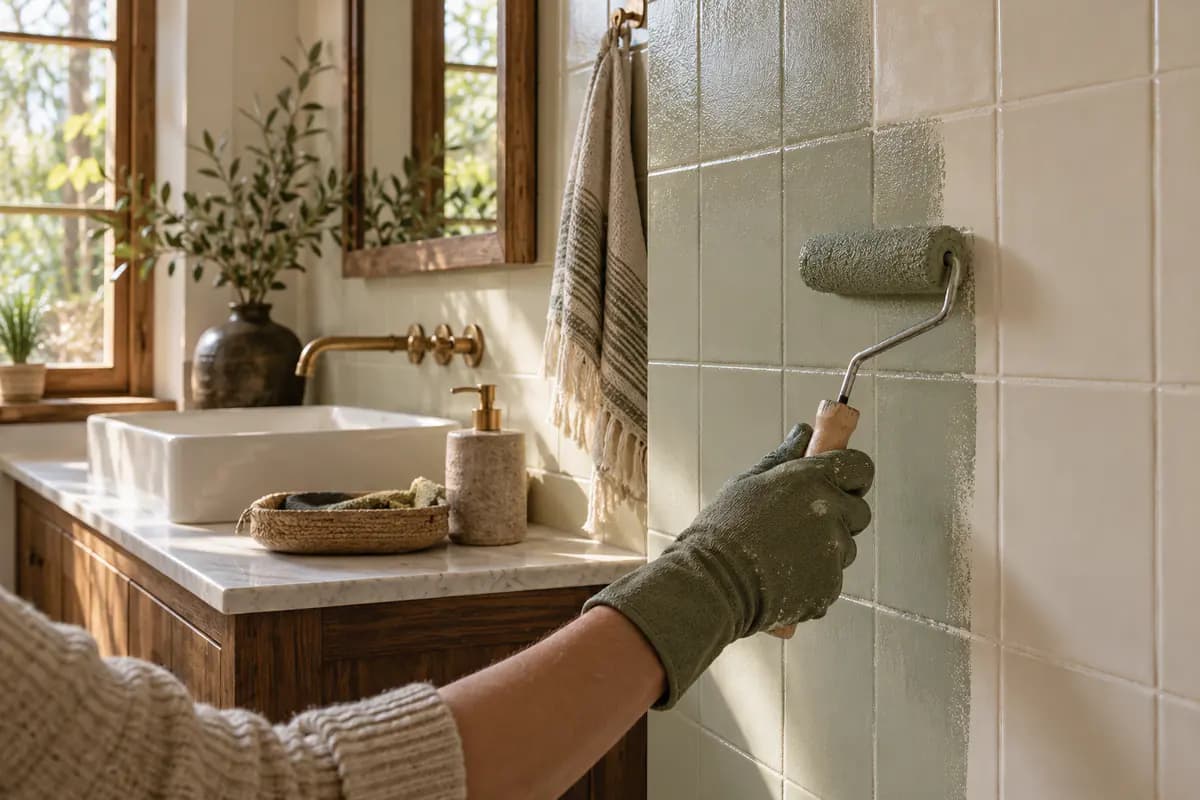
Preparation is product-specific and often takes more time than applying the coating. The named Rust-Oleum technical sheet, for example, calls for thorough cleaning, repairing chips and cracks, removing caulk, rinsing and drying, abrasion, and ventilation. Follow the exact product's sequence, tools, protective equipment, temperature and humidity limits, coat timing, and cure instructions; do not combine steps from different coating systems. The maker's label advises testing a small hidden area first; let that patch cure as directed and evaluate it before committing to the full surface.
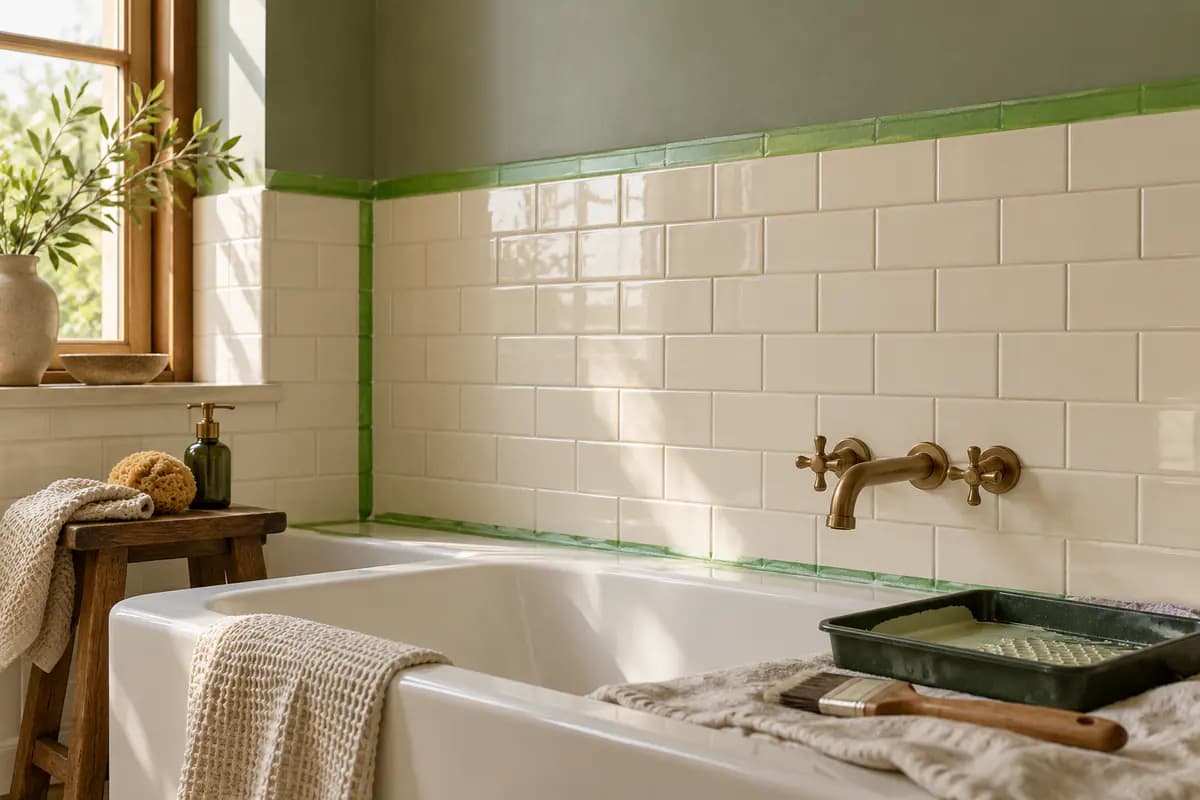
If preparation will sand or scrape painted trim, walls, or other painted components in a US home built before 1978, pause and review EPA lead-safe guidance before disturbing that paint; hire an appropriately certified contractor when the rule applies. EPA distinguishes ceramic-tile glaze from painted surfaces under its Renovation, Repair and Painting Rule, but that does not remove the need to control dust from adjacent paint or follow the coating label. These EPA resources are US-specific; check local rules and lead-safe guidance in other countries before disturbing older painted finishes. Ventilate as the label directs and keep people who may be sensitive to paint vapors away from the work area.
Sources: Rust-Oleum: Tub & Tile Refinishing Kit technical data sheet; Rust-Oleum: Tub & Tile Refinishing Kit product label; U.S. EPA: Renovation, Repair and Painting Program for Consumers; U.S. EPA: RRP questions about tile glaze and painted surfaces; U.S. EPA: Indoor environmental concerns during remodeling
How long before the painted surface can be used?
Use the coating maker's cure time, not a generic “dry to touch” estimate. Drying and curing are different stages, and water, cleaning, or regular use before the stated cure period can affect the finish. The Rust-Oleum US product page says to wait three days before exposing its kit to water; another product or market may specify a different interval.
Before starting, plan for the room to be out of service for the full preparation, application, ventilation, and cure period. Check the product's current label for when to remove masking, reinstall hardware, clean the surface, and return it to use.
Sources: Rust-Oleum: Tub & Tile Refinishing Kit product guidance
When should you choose a different approach?
Skip a coating when the exact product excludes the surface or location, when the tile or substrate needs repair, or when the prep and curing window will not work for the household. A professional can assess loose tile, failed grout, recurring dampness, or damaged backing and help compare localized repair with replacement. Painting over a symptom does not address a leak or unstable surface.
If you rent, get the required written permission before changing a fixed tile finish. For a project involving damaged waterproofing, persistent moisture, significant tile failure, or uncertain materials, ask a qualified professional to inspect the assembly before work begins. This guide is a planning aid, not an installation specification.
How can you decide whether the surface and room are suitable?
Identify the tile surface, its current coating, condition, and location before considering paint. A dry decorative wall and a frequently wet shower or a hot cooking surface present different conditions. Look for loose tile, cracks, failed grout, recurring moisture, or movement. Coating a problem surface does not repair the underlying assembly and may hide an issue that needs professional attention.
Compare the intended use with the exact coating's technical sheet and label. Confirm that the maker permits the tile type and location, and review heat, water, abrasion, and cleaning limits. If the documentation does not address the actual room, ask the manufacturer. Do not treat online before-and-after photographs as proof that a coating will hold in your conditions.
How can you plan preparation and ventilation from the product label?
Preparation can determine whether the coating is compatible with the surface. Follow the named product's cleaning, repair, caulk-removal, abrasion, rinsing, drying, and primer directions in sequence. Do not combine steps taken from different brands or skip a step because a demonstration video appears to omit it. Check whether the maker requires a test patch and what conditions apply to it.
Read the protective equipment, ventilation, temperature, humidity, and cleanup instructions before opening the container. Keep people and pets away as the label directs. If preparation would disturb older painted surfaces, assess applicable lead-safe requirements and avoid creating dust until you understand the local rules. Use a qualified contractor when the project or safety controls exceed your experience.
How can you make a realistic timeline for application and cure?
Separate the time needed to prepare the surface from the time needed to apply coats and wait between them. The exact product label controls the interval, temperature range, and point at which the surface can be exposed to water, heat, or cleaning. A coating that feels dry to the touch may not yet be ready for normal use; follow the stated cure schedule.
Plan around household access, ventilation, and the need to keep the room unused. Record the application date, batch, and conditions so the timeline can be checked later. Do not speed drying with an unapproved heater or add extra coats outside the maker's method. If the directions conflict with the room's schedule, postpone the work or choose another finish system.
How can you compare painting with replacement or another finish?
Estimate the full project, including surface repair, preparation supplies, coating, protection, and the possibility of future touch-up. Compare that effort with replacing the tile or using another finish that is explicitly rated for the location. Consider whether the existing tile is stable, whether the underlying substrate needs attention, and how a failed coating could be removed.
If the goal is a short-term visual change, ask the maker how the coating can be maintained and what conditions void its warranty. If durability or water exposure is central, seek qualified installation advice before choosing. A tile-paint guide is not an endorsement of a specific product, nor a promise that painted tile will perform like new tile.
Conclusion
Painting tile may be an option only when the selected coating explicitly suits the location and the surface can be prepared exactly as its label requires. Check heat, moisture, ventilation, preparation, protective equipment, and cure time before starting. If the coating instructions do not cover the use or the surface is damaged, choose a different approach or ask a qualified professional.
Frequently Asked Questions
Can you paint tile in a bathroom or kitchen?
Consider a coating only when the tile is firmly attached, the surrounding assembly is in sound condition, and the maker names that tile and location as an approved use. A backsplash away from direct heat may have different demands from a shower wall, a sink surround, or a floor.
How do I choose a coating for tile?
Read the product label and current technical data sheet for the exact tile material, indoor/outdoor use, wall or floor use, moisture exposure, temperature range, and any exclusions. Do not assume a tub-and-tile product can be used on a floor or that a floor system is suitable for a shower.
How long should painted tile cure before use?
Use the coating maker's cure time, not a generic “dry to touch” estimate. Drying and curing are different stages, and water, cleaning, or regular use before the stated cure period can affect the finish. The Rust-Oleum US product page says to wait three days before exposing its kit to water; another product or market may specify a different interval.
How can I check a coating's suitability for heat and moisture?
Read the product label and current technical data sheet for the exact tile material, indoor/outdoor use, wall or floor use, moisture exposure, temperature range, and any exclusions. Do not assume a tub-and-tile product can be used on a floor or that a floor system is suitable for a shower.
When should I avoid painting tile?
Skip a coating when the exact product excludes the surface or location, when the tile or substrate needs repair, or when the prep and curing window will not work for the household. A professional can assess loose tile, failed grout, recurring dampness, or damaged backing and help compare localized repair with replacement.
Shopping Options To Explore
Use these listings and partner stores as places to continue your research, not as product ratings or test results. Listings, product details, availability, and offer terms can change; verify the exact item with the seller.
Some links may earn a commission. General Temu and Shein storefront destinations are not verified affiliate links and may not generate one. Read our affiliate disclosure.
Use the measurements and checks in this guide when comparing an exact item. Browse current partner offers and verify product details, eligibility, and terms with the seller.
Sources and further reading
We link primary or institutional references near factual claims and list the sources used for this guide below. Design suggestions are editorial guidance, not universal rules.
- Rust-Oleum: Tub & Tile Refinishing Kit product guidance
- Rust-Oleum: Tub & Tile Refinishing Kit technical data sheet
- Rust-Oleum: Tub & Tile Refinishing Kit product label
- U.S. EPA: Renovation, Repair and Painting Program for Consumers
- U.S. EPA: RRP questions about tile glaze and painted surfaces
- U.S. EPA: Indoor environmental concerns during remodeling
Living Statement may earn a commission from some partner links. Any paid relationship will be disclosed close to the relevant offer. How our affiliate links work.