
A backsplash material affects more than the look of the wall: the surface, grout, edges, and installation system all influence routine care. Start with the way the cooking and sink areas are used, then compare samples and the exact manufacturer's care and installation documents. Material names alone do not guarantee that a particular tile is suitable for every wall or cleaning product.
What should you compare between tile materials?
Ceramic, porcelain, glass, and natural stone are common wall and backsplash options, but products within each category differ in finish, thickness, format, shade variation, and approved uses. Compare the technical sheet and installation guide for the exact tile instead of treating a broad material label as a complete specification.
Daltile's wall-tile guide describes several materials and their product-specific characteristics. Because it is a tile supplier's guide, use it to generate questions for a selected product and confirm the details with that maker or installer rather than assuming one brand's description applies to every tile in the category.

Sources: Daltile: Selecting the Perfect Wall Tile; Daltile: Expert Guide to Choosing the Right Tile
How do cleaning and maintenance affect the choice?
Ask what cleaners the surface allows, whether the tile or grout requires sealing, and how the maker recommends handling grease, food splashes, and water. Natural stone may call for a different care routine from a manufactured tile; glass, metal, decorative coatings, and textured surfaces can also have their own restrictions. Verify care guidance for both the tile and the grout or setting system. As one manufacturer's guidance, LATICRETE distinguishes unsanded grout for some soft or glazed tile at joints up to 1/8 inch from sanded grout for other tile or wider joints; confirm the selected product datasheet and installation conditions rather than treating this as a universal specification.
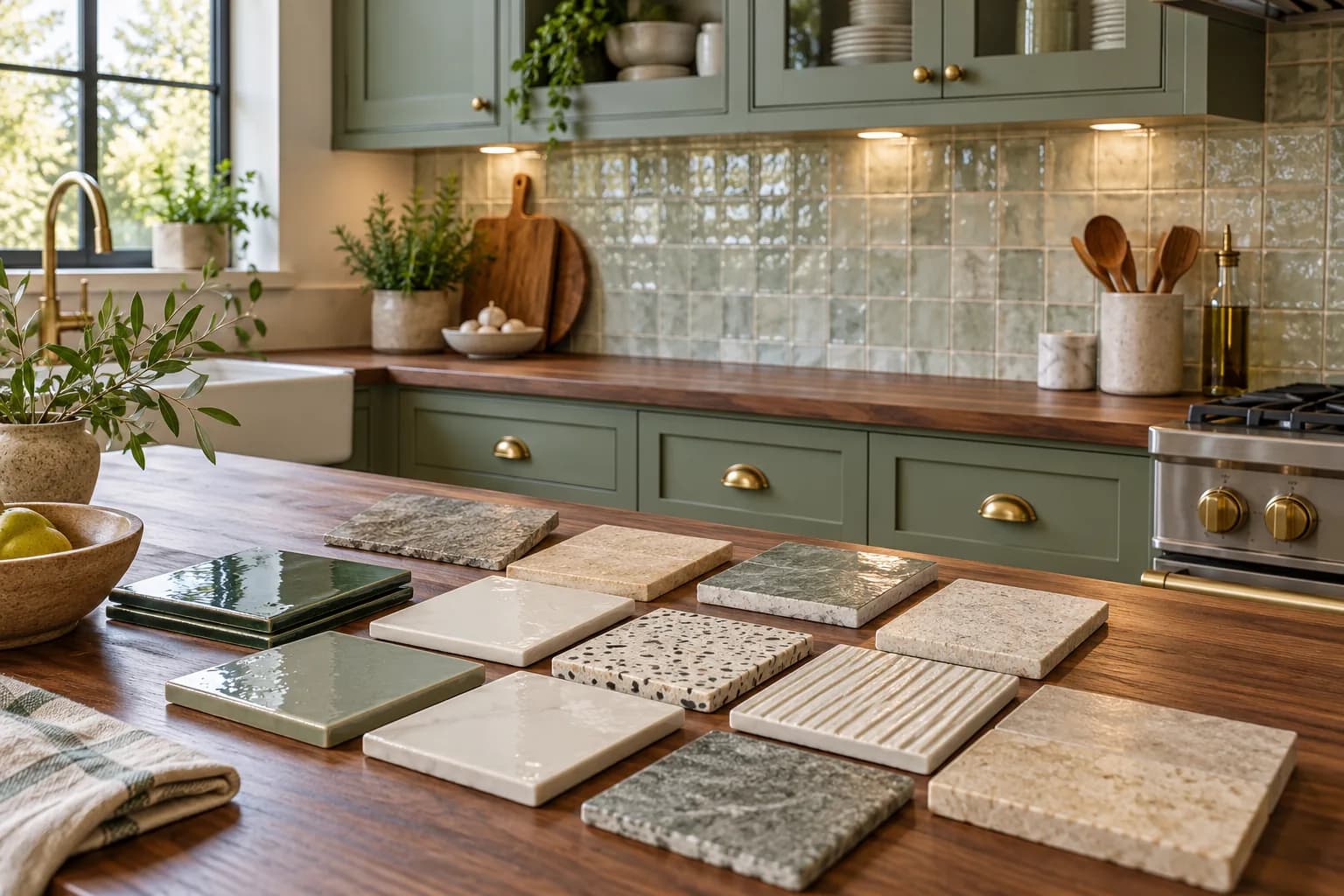
Bring home a sample if available and view it beside the countertop, cabinet finish, hardware, and lighting. A glossy or textured finish can look different under under-cabinet lights than it does in a showroom. Also check how the shade and surface variation are described, because a small sample may not show the full range in the production run.
Sources: Daltile: Glass and Metal Tile Care & Maintenance; LATICRETE: Cement Grouts FAQ
What should you check about installation?
Confirm that the exact tile is intended for the wall location and that its weight, size, edge, and substrate are compatible with the proposed installation system. Large-format tile, glass mosaics, natural stone, outlets, inside corners, and transitions can require specific tools, setting materials, layout choices, or installer experience. Do not copy an installation detail from a different tile or substrate.
Ask the installer to review the product documentation, substrate condition, grout joints, edge trim, outlet cuts, and the transition to the countertop before ordering. For a backsplash that may encounter heat, moisture, or unusual loads, confirm the applicable product and local requirements with a qualified installer.
How can you compare the finished look before committing?
Lay several sample pieces beside the countertop and cabinet door, then view them at different times of day and with the task lighting on. Test a small paper mock-up of the intended pattern and grout color; the same tile can read differently in a grid, running bond, or mosaic layout. Count the visible seams, edges, and cuts near outlets as part of the design rather than treating them as installation leftovers.
Use the backsplash measuring guide to record the wall area, then have the tile supplier or installer confirm the exact quantity and layout for the product you choose. The estimator gives wall area only; it does not determine a tile order, waste allowance, or installation design.
How can you compare the complete surface, not only the material name?
Build a shortlist that includes the tile material, finish, size, thickness, edge treatment, and stated wall use. Ceramic, porcelain, glass, metal, and natural stone each include products with different characteristics. A broad material label does not reveal the exact surface, variation, care, or installation requirements of a specific model.
Read the product data sheet and installation guide for each candidate. Check whether the manufacturer lists limitations for heat, moisture, cleaning chemicals, or the intended location. If a listing uses terms such as stain-resistant or easy-care, ask what the statement applies to and whether it is supported by a specific product document.
How can you test samples beside the counter and under the room lights?
Place samples beside the actual countertop, cabinet finish, grout candidates, and hardware. View them in daylight and under the lighting that will normally be used at night. Compare color variation, reflectivity, texture, and how the edge looks at a corner. A small chip may not represent the full production range, so ask how much variation the maker expects.
Photograph the sample in place, but judge it in person as well. Camera exposure and screen settings can alter appearance. If you are deciding between a glossy and matte finish, consider cleaning and reflected light alongside style. Keep the product name and shade with the sample so the chosen finish can be matched when ordering.
How can you coordinate tile with grout, trim, and the installation assembly?
Ask how the tile format, substrate, grout joint, edge treatment, and setting material work together. These choices affect the finished look and the installation method. Follow the selected tile and system manufacturers' instructions; a grout recommendation from one brand may not apply to every tile, joint width, or surface.
Review corners, outlets, cabinet ends, and the transition to adjacent wall finishes with the installer. Confirm who is responsible for measuring and what happens if the actual wall differs from the sketch. In a kitchen, coordinate the tile with countertop and cabinet installation sequence so a planned edge does not end at an unanticipated seam or gap.
How can you compare maintenance and replacement over time?
Ask what routine cleaning the maker permits and whether sealing or a particular grout-care product is specified. Note restrictions for acids, abrasives, oils, or common household cleaners. Verify guidance for both the tile and grout rather than assuming one product's care directions cover the entire surface.
Record the exact model, shade, size, batch, and supplier in case a repair or additional tile is needed. Confirm return rules for unopened boxes and whether the supplier can hold a matching batch. A material can look right at checkout yet become difficult to maintain if its care routine or replacement availability does not suit the household.
How can you compare samples in a repeatable way?
Place each sample beside the actual countertop, cabinet door, and hardware rather than judging it alone. View it in morning and evening light and switch on the task lighting you expect to use. Keep notes on the product name, finish, size, grout suggestion, and cleaning directions with each sample so a visual favorite can be matched to its technical details. If two materials look similar from a distance, compare their surface texture and care instructions at close range before deciding which one fits the cooking and cleaning routine.
Conclusion
Choose backsplash tile by balancing the room's use, care routine, appearance, and installation requirements. Compare technical sheets for the exact material and finish, view a sample beside the countertop and lighting, and confirm grout and setting-system compatibility. A broad material category cannot establish cleaning performance or suitability for a particular wall.
Frequently Asked Questions
How do backsplash tile materials differ?
Ceramic, porcelain, glass, and natural stone are common wall and backsplash options, but products within each category differ in finish, thickness, format, shade variation, and approved uses. Compare the technical sheet and installation guide for the exact tile instead of treating a broad material label as a complete specification.
How does tile maintenance affect the choice?
Ask what cleaners the surface allows, whether the tile or grout requires sealing, and how the maker recommends handling grease, food splashes, and water. Natural stone may call for a different care routine from a manufactured tile; glass, metal, decorative coatings, and textured surfaces can also have their own restrictions.
What should I check before tile installation?
Confirm that the exact tile is intended for the wall location and that its weight, size, edge, and substrate are compatible with the proposed installation system. Large-format tile, glass mosaics, natural stone, outlets, inside corners, and transitions can require specific tools, setting materials, layout choices, or installer experience.
How can I compare tile samples in my kitchen?
Lay several sample pieces beside the countertop and cabinet door, then view them at different times of day and with the task lighting on. Test a small paper mock-up of the intended pattern and grout color; the same tile can read differently in a grid, running bond, or mosaic layout.
Do all backsplash tiles use the same grout?
Confirm that the exact tile is intended for the wall location and that its weight, size, edge, and substrate are compatible with the proposed installation system. Large-format tile, glass mosaics, natural stone, outlets, inside corners, and transitions can require specific tools, setting materials, layout choices, or installer experience.
Shopping Options To Explore
Use these listings and partner stores as places to continue your research, not as product ratings or test results. Listings, product details, availability, and offer terms can change; verify the exact item with the seller.
Some links may earn a commission. General Temu and Shein storefront destinations are not verified affiliate links and may not generate one. Read our affiliate disclosure.
Use the measurements and checks in this guide when comparing an exact item. Browse current partner offers and verify product details, eligibility, and terms with the seller.
Sources and further reading
We link primary or institutional references near factual claims and list the sources used for this guide below. Design suggestions are editorial guidance, not universal rules.
Living Statement may earn a commission from some partner links. Any paid relationship will be disclosed close to the relevant offer. How our affiliate links work.