

A small balcony garden works when the layout follows the conditions you have: the space you can use, the sun it receives, the wind it catches, and the rules that apply to the building. Begin with a tape measure and a few days of observation. Shopping comes after the plan, because a container that blocks a door, drain, or route can make even a pretty arrangement difficult to live with.
How can you measure the usable balcony first?
Clear the floor enough to measure its usable width and depth. Sketch the door swing, railing, drain, hose or watering access, and the route you need to keep open. Mark the places where people sit or pass. The clear floor area is a better planning boundary than the balcony's outside dimensions; furniture, building rules, and access needs can all reduce the area available for plants.
If you rent or live in a managed building, check the lease and building rules before adding a screen, drilling, hanging a basket, or placing anything over a railing. Ask about container placement and load limits when the rules are unclear. Illinois Extension notes that heavy planters on balconies or rooftops warrant checking weight limits with the building architect; a retailer's layout suggestions cannot establish what a particular structure can safely hold.
Sources: Illinois Extension: Container Size; Bunnings: Renter-Friendly Balcony Gardening Ideas
How can you map sun, shade, heat, and wind?
Observe the balcony at several times of day instead of guessing from its compass direction. Note where direct sun lands, how long it stays, and whether glass or masonry reflects extra heat. Also notice gusts, rain exposure, and how quickly existing pots dry. The same balcony can have a sunny edge and a shaded corner, so it may support more than one planting condition.
Use the plant label or a local extension guide to match plants to those conditions. If you are unsure, start with one small group suited to the brightest or shadiest area you have measured, then see how it responds before adding more. Illinois Extension recommends stable container shapes for exposed balconies and highlights that wind can tip top-heavy plants and pots.
Sources: Illinois Extension: Container Size; Illinois Extension: Choosing and Combining Plants
How can you give each container a clear job?
A useful first layout can be as simple as one seated spot, one plant group, and a clear route between the door and the railing. Place larger containers where they do not pinch the path; group smaller pots together where you can water them without reaching over furniture. If you use a vertical stand, trellis, or screen, consider its footprint and stability as well as the floor space it saves.
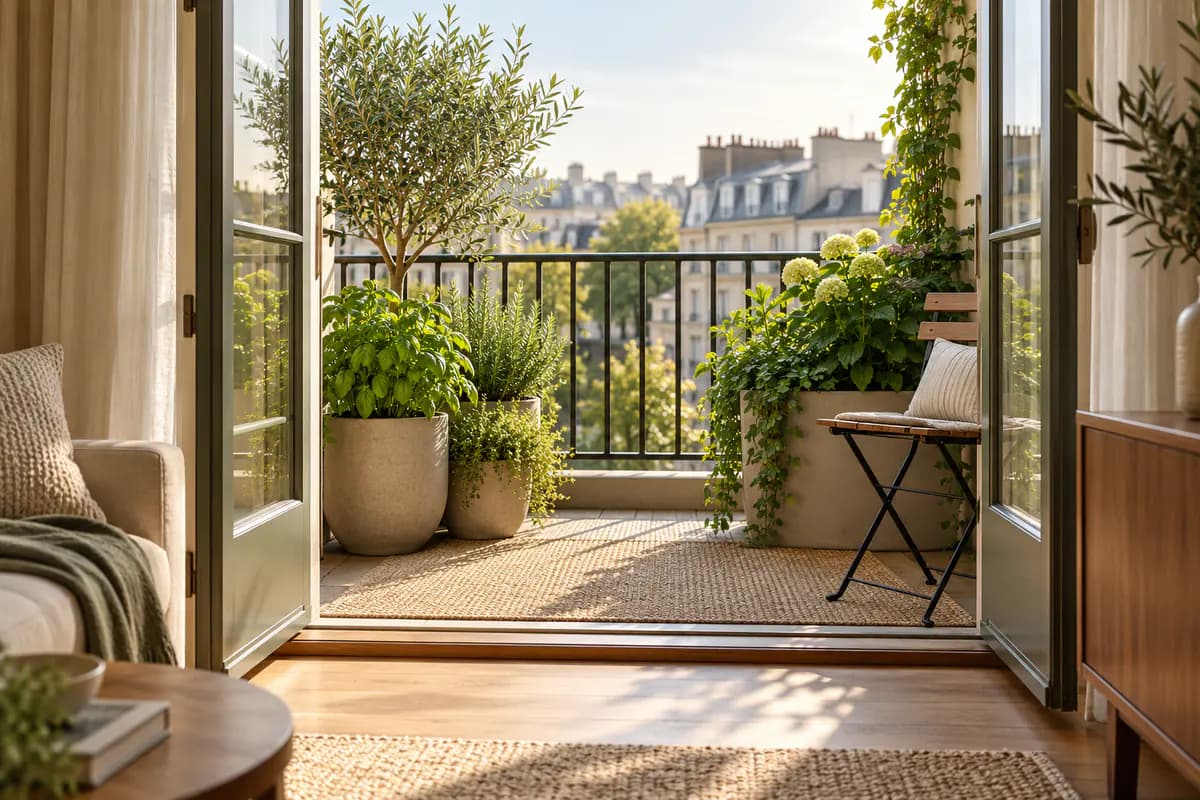
Choose only as many containers as you can water and maintain. Illinois Extension describes container combinations built from plants with compatible light and moisture needs, and suggests arranging plants before planting to check how a group looks. Try the arrangement with empty pots or paper outlines first; a sketch is easier to change than a full container of wet potting mix.
Sources: Illinois Extension: Choosing and Combining Plants; Illinois Extension: Container Garden Designs
How can you shop from the plan, not the photo?
Once you know the maximum footprint, plant height, drainage needs, and location, compare listings for their exact dimensions, materials, drainage openings, outdoor-use notes, assembly, and returns. Marketplace images are not measurements, and a decorative planter may need a separate nursery pot if it has no drain hole. Do not assume a rail box fits your railing or that a tall stand will remain steady in a gust.
Our Temu and Shein links are broad home-and-garden shopping options, not endorsements of a specific planter or a claim that a listing meets balcony requirements. Check the current code, destination market, item details, shipping, and seller terms at checkout. The safest shortlist is the one that fits the measured space and the building rules.
How can you measure the space and mark non-negotiable clear areas?
Draw the balcony floor and record its usable width and depth. Mark door swing, drains, outlets, hose access, stairs, emergency access, and the walking route. Include railings, columns, downpipes, and fixed seating. The usable gardening area is the portion that remains after these features and any building restrictions are respected.
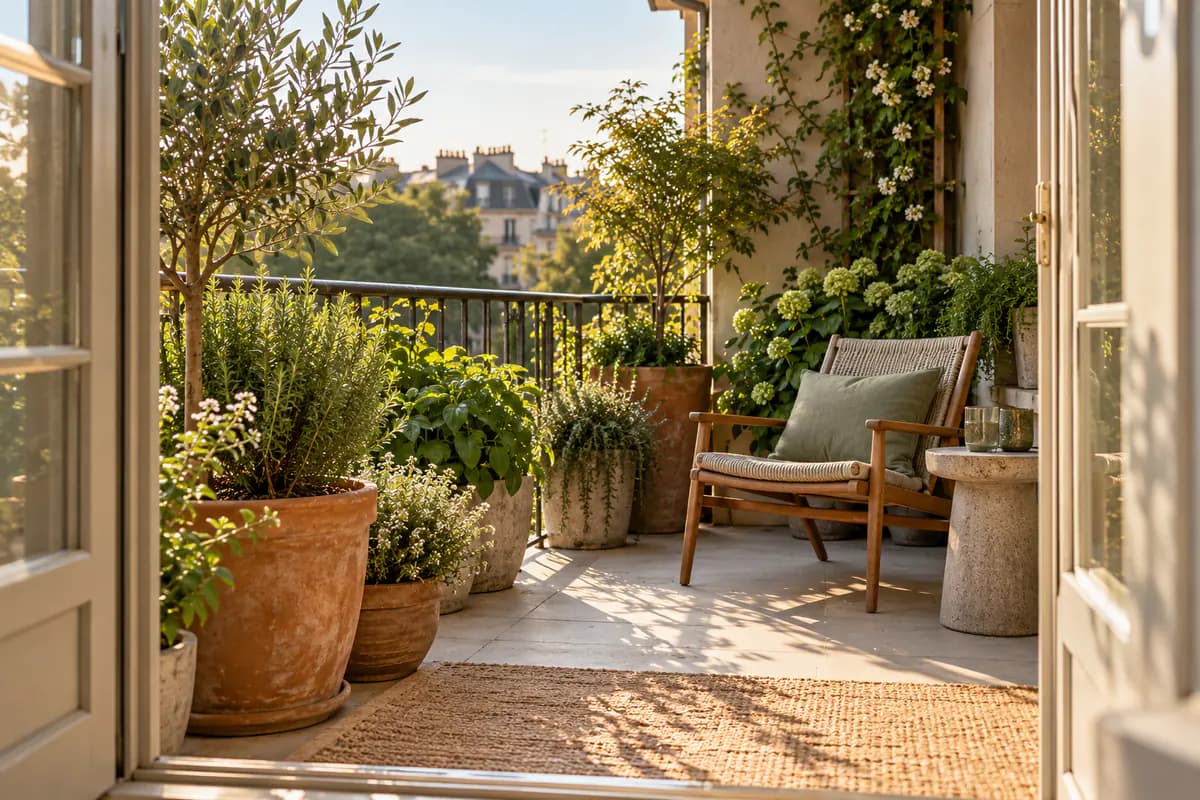
Check the lease and building rules before adding screens, shelves, railing planters, or anything that could fall outside the balcony. Ask the property manager about load limits or approved placement where the guidance is unclear. Do not infer structural capacity from the balcony's size or from how neighboring residents arrange their pots.
How can you observe microclimates before selecting plants?
Visit the balcony at several times over more than one day and record direct sun, shade, reflected heat, wind, and rain exposure. Note which corner dries quickly and whether nearby buildings change the light. A single compass direction or a midday observation may miss important differences across the floor.
Compare the record with plant labels and local extension recommendations. Start with a small selection that shares compatible light and watering needs, then observe how it responds before expanding. Keep the notes by container so seasonal changes can be separated from a plant that is simply in the wrong position.
How can you design zones for plants, watering, and everyday use?
Group containers by sunlight and care needs while keeping the door, drain, seating, and route clear. Place frequently watered plants where water can be handled without carrying a heavy pot through the home. Consider whether a tray or saucer is permitted and how runoff will be managed without affecting neighbors or building surfaces.
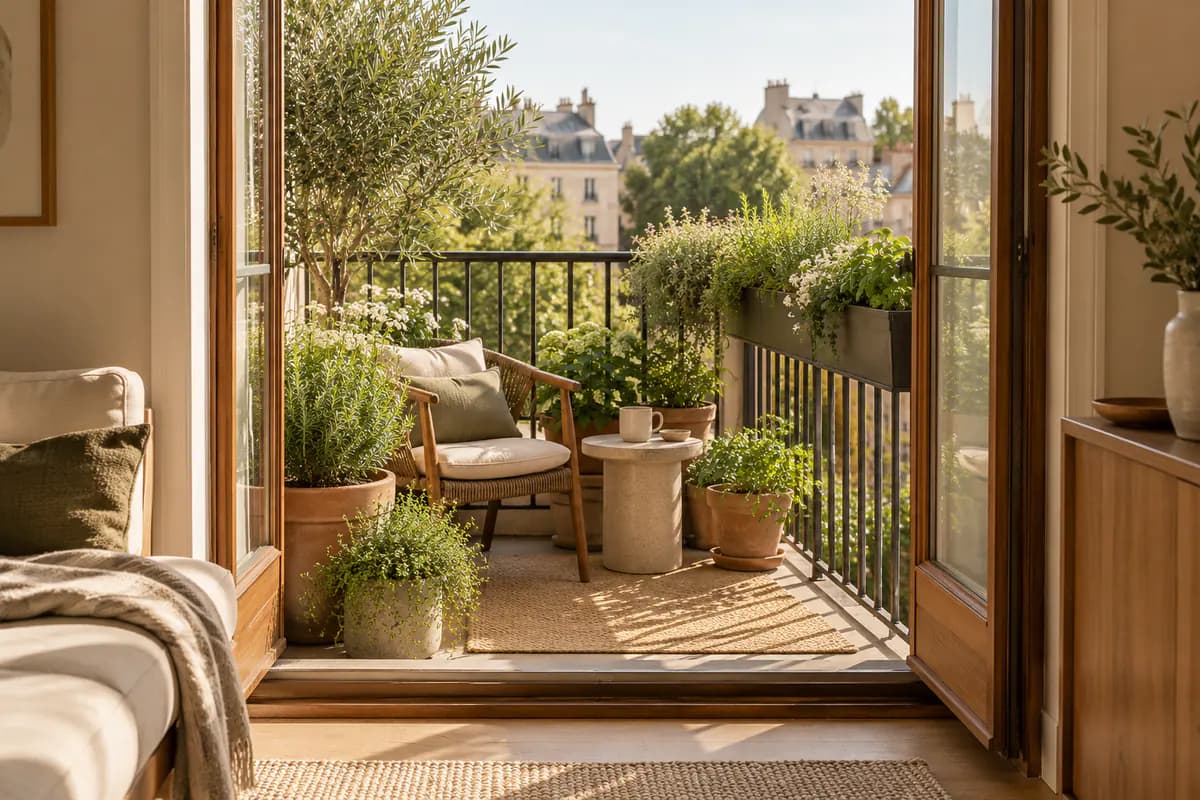
Use paper outlines or empty containers to test the footprint. Check how chairs move and whether plants will be bumped when someone opens the door. A vertical shelf can save floor space but may increase tipping or wind concerns; verify the exact product's outdoor rating, attachment method, and stability before use.
How can you build in stages and keep a seasonal record?
Begin with a manageable group of containers rather than filling every available surface. Record the plant variety, container dimensions, position, light observations, and watering response. This makes it easier to learn which locations work before adding cost or weight. If a plant struggles, compare its label and conditions before changing several variables at once.
Recheck the balcony when weather changes and as plants mature. Keep heavy pots and structures within approved locations, clear drains and exits, and inspect attachments according to the maker's guidance. Local growing advice should inform pruning, winter care, and species selection. A layout image can inspire a plan but cannot account for your building, climate, or load capacity.
Conclusion
A workable balcony garden begins with the space you can safely and lawfully use. Measure the floor and clear routes, observe sun and wind at different times, then choose a small group of containers that fits the plants and watering routine. Confirm building rules and load limits before placing heavy or attached items; a layout image cannot certify a balcony's capacity.
Frequently Asked Questions
How do I plan a small balcony garden layout?
Clear the floor enough to measure its usable width and depth. Sketch the door swing, railing, drain, hose or watering access, and the route you need to keep open. Mark the places where people sit or pass. The clear floor area is a better planning boundary than the balcony's outside dimensions; furniture, building rules, and access needs can all…
How can I map sunlight and wind on a balcony?
Observe the balcony at several times of day instead of guessing from its compass direction. Note where direct sun lands, how long it stays, and whether glass or masonry reflects extra heat. Also notice gusts, rain exposure, and how quickly existing pots dry.
What should I check before buying balcony planters?
Once you know the maximum footprint, plant height, drainage needs, and location, compare listings for their exact dimensions, materials, drainage openings, outdoor-use notes, assembly, and returns. Marketplace images are not measurements, and a decorative planter may need a separate nursery pot if it has no drain hole.
How do I keep a balcony garden walkway clear?
Clear the floor enough to measure its usable width and depth. Sketch the door swing, railing, drain, hose or watering access, and the route you need to keep open. Mark the places where people sit or pass. The clear floor area is a better planning boundary than the balcony's outside dimensions; furniture, building rules, and access needs can all…
Do balcony planters need building approval?
Once you know the maximum footprint, plant height, drainage needs, and location, compare listings for their exact dimensions, materials, drainage openings, outdoor-use notes, assembly, and returns. Marketplace images are not measurements, and a decorative planter may need a separate nursery pot if it has no drain hole.
Shopping Options To Explore
Use these listings and partner stores as places to continue your research, not as product ratings or test results. Listings, product details, availability, and offer terms can change; verify the exact item with the seller.
Some links may earn a commission. General Temu and Shein storefront destinations are not verified affiliate links and may not generate one. Read our affiliate disclosure.
Temu
Use the measured floor and shelf dimensions to compare small-space planters or plant stands. Verify drainage, material, outdoor suitability, assembly, and stability on the exact listing.
Publisher-supplied broad offer code; check its current availability and terms for your account and region
Partner codeALV837762
General store destination; tracking is not verified, and the code is not a product-specific offer.
Confirm current prices, eligibility, shipping, and return terms with the seller.
Shein
Browse broad home-and-garden listings only after measuring. The supplied Shein code is a general partner offer; it does not promise a garden-specific discount or confirm any listing's dimensions or safety.
Publisher-supplied broad offer code; check its current availability and terms for your account and region
Partner codeDPL3S52
General store destination; tracking is not verified, and the code is not a product-specific offer.
Confirm current prices, eligibility, shipping, and return terms with the seller.
Sources and further reading
We link primary or institutional references near factual claims and list the sources used for this guide below. Design suggestions are editorial guidance, not universal rules.
Living Statement may earn a commission from some partner links. Any paid relationship will be disclosed close to the relevant offer. How our affiliate links work.