
A balcony privacy screen can be a row of containers, a climbing plant on an approved freestanding support, or a simple change to the seating angle. The right choice depends on which sightline you want to soften and what the building allows. Start with a specific view to address; a dense screen can also take space, shade other plants, and catch wind.
How can you identify the sightline and keep the route clear?
Stand where you sit and mark the view you want to soften. Sketch the balcony, door swing, drain, railing, and walking route; then mark the height and width of the proposed screen on paper or with empty containers. Narrow containers or a vertical arrangement may use less floor area, but they still need to stay stable and leave access clear.
Before fastening anything to a wall, railing, ceiling, or floor, check your lease and building rules. Some balconies have restrictions on attachments and on objects placed above or outside the rail. Use freestanding or approved systems only when their maker's instructions and building rules allow it; do not assume that an online product image demonstrates a permitted or safe installation.
Sources: Washington State University Extension: Gardening While Renting; Bunnings: Renter-Friendly Balcony Gardening Ideas
How can you match the screen to light and mature plant size?
Record the sun and shade along the proposed planting area, then choose a plant that suits those measured conditions and your local growing season. Use plant labels or local extension guidance for mature height, width, water, and support needs. A young nursery plant may look small at purchase and later occupy much more of the opening or floor space.
Washington State University Extension's renting guidance describes vertical growing and narrow containers as useful options for balconies, and gives peas and beans as examples of climbing crops that can create a screen. These are examples, not universal recommendations: check the variety, local climate, available light, and support method before selecting a plant.
Sources: Washington State University Extension: Gardening While Renting; Illinois Extension: Choosing and Combining Plants
How can you account for wind, drainage, and weight?
A taller planting or panel can be more exposed to gusts, while a large wet container can be difficult to move. Illinois Extension advises using stable container shapes on exposed balconies and consulting the building architect about weight limits for heavy pots. Do not use a general online load figure to approve a particular balcony. Ask the property manager or a qualified structural professional when limits or placement are unclear.
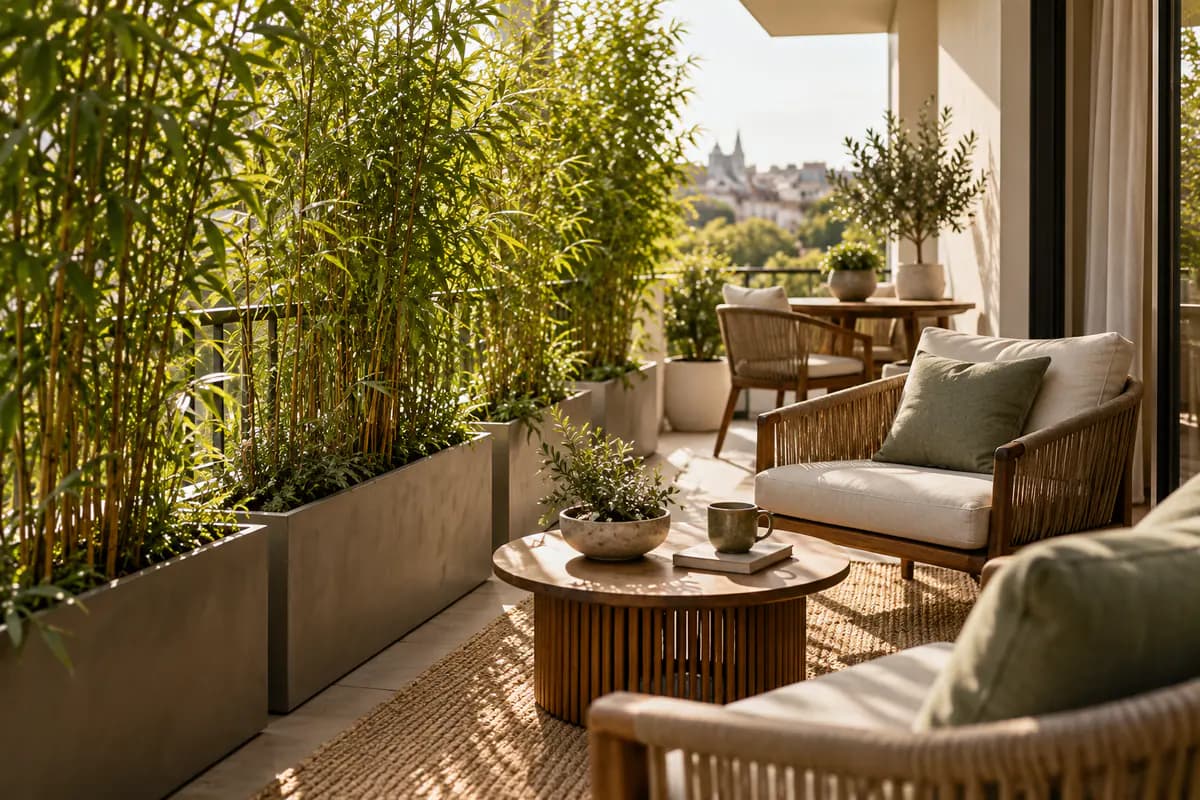
Keep water from pooling on the surface or dripping onto neighbors, and follow the container maker's drainage directions. A screen that feels stable in calm weather can behave differently in strong wind, so do not attach mesh or a trellis to the railing unless the building and product instructions explicitly allow that setup.
Sources: Illinois Extension: Container Size; Bunnings: Renter-Friendly Balcony Gardening Ideas
How can you choose the lightest effective intervention?
Try the smallest change that addresses the view: move the seating, group a few appropriately sized pots, or use a plant with a form suited to the space. A partial screen can preserve daylight and airflow while making one seating area feel more private. Let plants fill in gradually instead of buying a full barrier before you know how they grow on your balcony.
If you compare planters or outdoor accessories through Temu or Shein, check the exact dimensions, materials, stability instructions, return terms, and current regional offer details. The partner cards use broad store links and coupon information; they do not certify an item as wind-safe, railing-compatible, or suitable for your building.
How can you define the sightline and privacy goal precisely?
Identify where the view comes from and which part of the balcony needs screening. Mark the seating position, neighboring windows, door, and the area you want to soften. A partial screen may address the relevant sightline with less height and weight than a continuous wall of foliage.
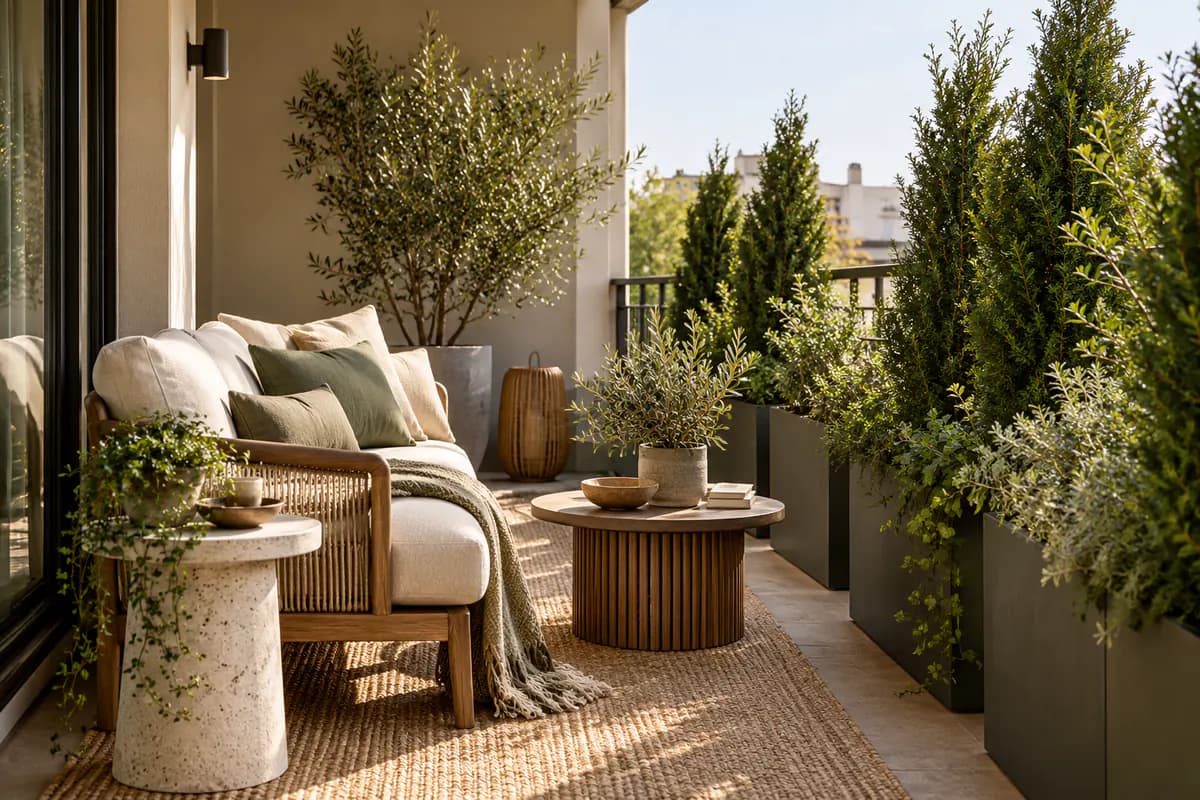
Decide whether you need privacy while seated, standing, or both, and observe the view at different times. Check building rules before adding a structure or changing the exterior appearance. A plant screen cannot guarantee privacy from every angle, and a staged image may omit the neighboring views that matter in your building.
How can you compare mature plant size with light and available room?
Read plant labels for mature height, width, light, water, and maintenance needs. Compare those dimensions with the balcony and consider the space left for growth rather than selecting by the current nursery size. Match plants to observed sun, shade, reflected heat, and wind, and use local guidance for species suitability.
Plan how the leaves and containers will be reached for watering and pruning. Keep the doorway, drain, and normal route clear as the plants mature. If the location is exposed, consider how a taller plant may respond to gusts and whether the pot remains stable. Do not assume a plant will stay at the height shown in a listing.
How can you consider freestanding, movable, and lower-profile alternatives?
A row of freestanding pots, a narrow planter, or a movable screen can offer different levels of privacy and flexibility. Compare the exact product dimensions, empty and filled weight, stability, outdoor rating, and instructions. A tall structure may act like a sail in wind or occupy more floor than expected, so get guidance specific to the balcony.
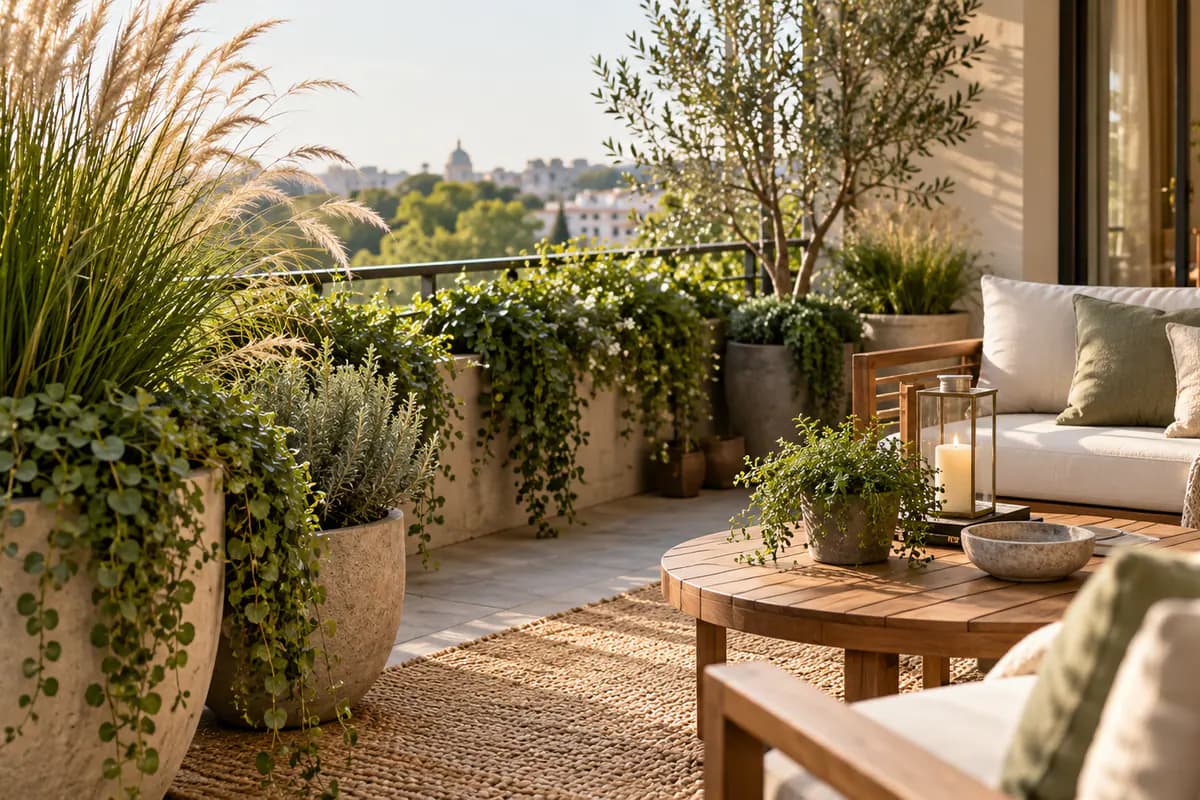
Before attaching any trellis, screen, or planter to a railing or wall, confirm that the building permits that method and that the product instructions cover the exact profile and surface. If attachment is not allowed, keep the arrangement freestanding and low enough to remain stable, subject to the property's requirements.
How can you review wind, drainage, and neighbor impact?
Check where watering runoff travels and whether pots could drip onto another balcony or common area. Use trays only as the plant and building conditions allow, and prevent standing water where local guidance advises. Keep drains, exits, and fire access unobstructed. The arrangement should not create a falling-object risk or require someone to lean over the railing to maintain it.
Ask the building manager about load limits and approved placement when documentation is not clear. Confirm the screen will not block required ventilation or maintenance access. If privacy remains limited, consider a lighter intervention such as changing the seating angle or adding an indoor window treatment instead of increasing the balcony structure without approval.
How can you review the screen after it has settled in?
After placing a screen, review the balcony from the same viewpoints you used when measuring the sightline. Check that it softens the intended view without blocking the door, drain, ventilation, or a neighbor's access. Recheck stability after watering and as plants add foliage or supports change. If the arrangement catches wind, leans, or narrows the walking route, reduce its height or move it to an approved position. A flexible set of pots can be rearranged as plants grow, which is often easier to manage than committing to a fixed barrier before you understand the exposure.
Conclusion
Use the least intrusive screen that addresses the specific sightline while preserving light, airflow, access, and the balcony route. Compare mature plant size and container stability with local wind and watering conditions, and confirm building rules before attaching or placing anything near a railing. A photograph cannot show how a screen will perform in your building.
Frequently Asked Questions
How can plants add privacy to a balcony?
Stand where you sit and mark the view you want to soften. Sketch the balcony, door swing, drain, railing, and walking route; then mark the height and width of the proposed screen on paper or with empty containers. Narrow containers or a vertical arrangement may use less floor area, but they still need to stay stable and leave access clear.
How do I choose a plant screen for balcony light?
Record the sun and shade along the proposed planting area, then choose a plant that suits those measured conditions and your local growing season. Use plant labels or local extension guidance for mature height, width, water, and support needs. A young nursery plant may look small at purchase and later occupy much more of the opening or floor space.
What balcony rules and safety details should I check?
A taller planting or panel can be more exposed to gusts, while a large wet container can be difficult to move. Illinois Extension advises using stable container shapes on exposed balconies and consulting the building architect about weight limits for heavy pots.
Can balcony plants be attached to a railing?
A taller planting or panel can be more exposed to gusts, while a large wet container can be difficult to move. Illinois Extension advises using stable container shapes on exposed balconies and consulting the building architect about weight limits for heavy pots.
What is a lower-impact alternative to a tall screen?
Try the smallest change that addresses the view: move the seating, group a few appropriately sized pots, or use a plant with a form suited to the space. A partial screen can preserve daylight and airflow while making one seating area feel more private.
Shopping Options To Explore
Use these listings and partner stores as places to continue your research, not as product ratings or test results. Listings, product details, availability, and offer terms can change; verify the exact item with the seller.
Some links may earn a commission. General Temu and Shein storefront destinations are not verified affiliate links and may not generate one. Read our affiliate disclosure.
Temu
Browse broad home-and-garden listings for freestanding planters or privacy accessories only after checking building rules, dimensions, materials, and stability instructions.
Publisher-supplied broad offer code; check its current availability and terms for your account and region
Partner codeALV837762
General store destination; tracking is not verified, and the code is not a product-specific offer.
Confirm current prices, eligibility, shipping, and return terms with the seller.
Shein
The partner offer is broad. Verify that a selected item is intended for outdoor use and check its dimensions and mounting details; the supplied code is not a product-specific safety or discount claim.
Publisher-supplied broad offer code; check its current availability and terms for your account and region
Partner codeDPL3S52
General store destination; tracking is not verified, and the code is not a product-specific offer.
Confirm current prices, eligibility, shipping, and return terms with the seller.
Sources and further reading
We link primary or institutional references near factual claims and list the sources used for this guide below. Design suggestions are editorial guidance, not universal rules.
Living Statement may earn a commission from some partner links. Any paid relationship will be disclosed close to the relevant offer. How our affiliate links work.