
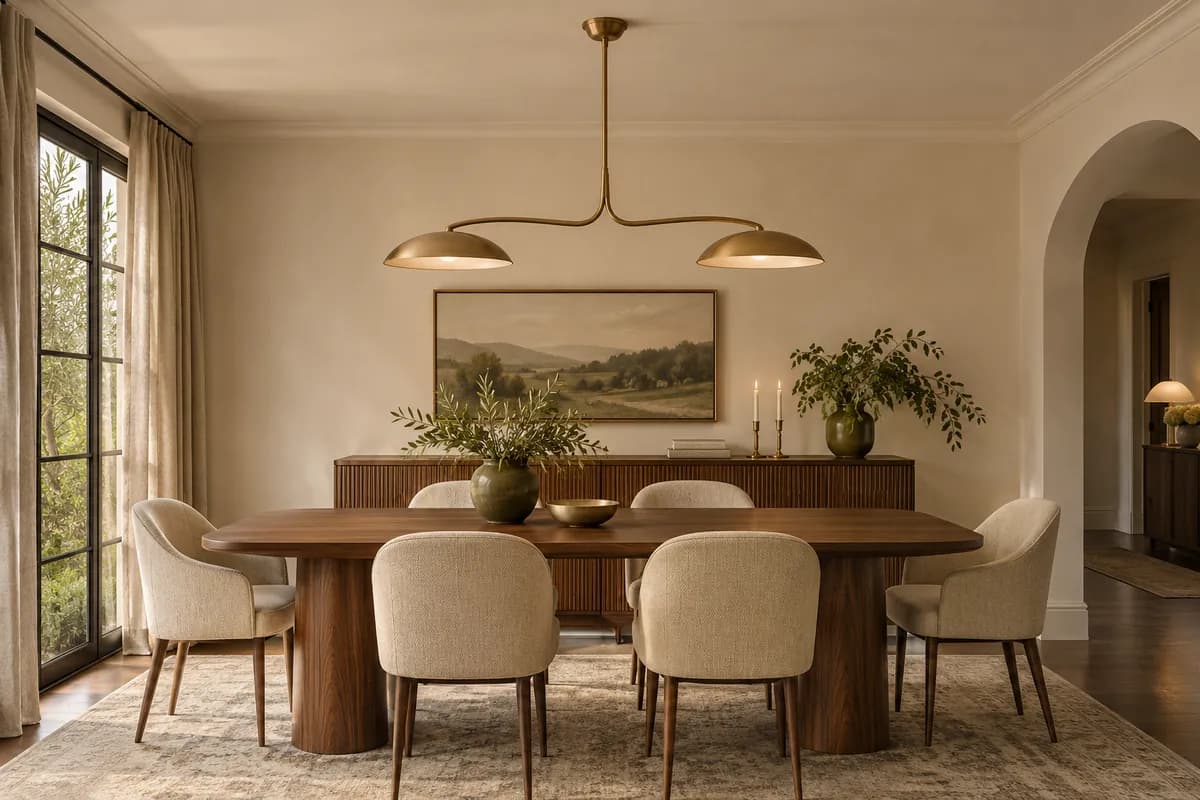
A chandelier over a dining table has to relate to the table footprint, ceiling, sightlines, and the room’s other light. Start with measurements and a paper mock-up, then verify the exact fixture’s weight, mounting, dimming, bulb, and electrical requirements. A familiar sizing formula can help compare options, but it cannot replace the product manual or an installer’s assessment.
Measure the table and room before browsing
Record the table’s length and width, including extensions if they are used regularly. Measure the ceiling height and note the distance to nearby walls, cabinets, beams, and doors. Mark the table’s usual position and whether people walk around it while others are seated; these details help determine the fixture’s footprint and visual presence.
For a long table, compare a linear fixture with a round chandelier or a pair of smaller pendants. The light should relate to the whole table rather than only one end. Lamps Plus suggests considering a larger chandelier or two fixtures for a particularly long dining table, but the right layout depends on the product, room, and electrical locations.
Sources: Lamps Plus: Chandeliers Buying Guide
Compare fixture width with the table
Make a paper circle or rectangle at the fixture’s listed outside dimensions and suspend or tape it at the planned location. Look from the doorway and from each seat. The fixture should feel connected to the table without extending so far that it competes with nearby furniture or risks being bumped as people move around.
Some retailers publish width-to-table rules as convenient starting points, but decorative shapes, shade direction, and ceiling height change the visual result. Use the actual fixture’s dimensions and compare a few options at scale. If the table has an extension leaf, check that the light still appears centered and balanced when the table is in both configurations.
Set the hanging height for use and sightlines
Mock up the proposed bottom height above the table and sit in every usual seat. Check that the fixture does not interrupt conversation or block a view across the table. Consider the tallest people who use the room, the shade or diffuser depth, and whether the table is used for activities that need a clear working surface.

Online guidance often gives a starting clearance above a dining surface, but that measurement is not a universal installation code or comfort guarantee. A low ceiling, high-back chairs, tall centerpiece, or open-plan sightline may call for a different decision. Confirm the final height with the fixture instructions and the qualified installer responsible for mounting it. Check the arrangement with the dining table cleared and with the centerpiece or serving pieces normally used; a tall vase can change the comfortable line of sight even when the fixture itself is positioned well.
Check ceiling support and electrical location
A decorative canopy does not prove the ceiling box or structure can support a particular fixture. Verify the chandelier’s weight, mounting bracket, ceiling type, and installation instructions. If the fixture is heavier than the existing fitting, or if the support is uncertain, stop and have the ceiling and mounting method assessed by a qualified professional.
The location of the existing electrical outlet may not match the visual center of a table that has moved. Do not run an improvised cord across a ceiling or relocate wiring yourself. Electrical work, circuit capacity, dimmers, and local code questions belong with a qualified electrician; a room plan or sizing article cannot certify an installation.
Choose light output and controls for dining
Think about how the dining area is used: meals, reading, homework, entertaining, or a mix. Compare the fixture’s light distribution, number and type of bulbs, maximum wattage, lumen output, and color appearance. A decorative shade may direct light upward, downward, or outward, so look at the manufacturer’s drawings and use a compatible dimmer only when both the fixture and bulbs support it.

A single chandelier may not provide all the ambient light a room needs. Existing lamps or ceiling lights can provide other layers, and dimming can help the room transition between tasks. Use the layered-lighting guide for the full room plan and keep this chandelier choice focused on table scale, location, and the product’s documented performance. When comparing bulbs, check socket type, maximum wattage, dimming compatibility, and whether the fixture lists a preferred lamp shape. Integrated LEDs may have different replacement and servicing options than fixtures with replaceable bulbs, so read those details before selecting a model.
Consider glare, shade, and material
Check the view of the bulb or LED source while seated and standing. Clear glass and exposed lamps can create sparkle but may also be bright in a direct sightline; shades, diffusers, and indirect surfaces change how the light feels. Compare the actual sample or returnable product in the room when possible instead of judging finish and glare from a small online image.
Look at how the fixture relates to table finish, chairs, hardware, and nearby wall colors. Brass, painted metal, glass, wood, and fabric have different care needs. Confirm cleaning methods and replacement parts in the manual, especially for integrated LED fixtures whose light source may not be replaceable like a standard bulb.
Test more than one table arrangement
If you move the table for gatherings, mark both positions and check how the fixture reads from each one. A centered installation may favor the everyday layout and appear offset when the table is extended; a long fixture may span both positions more comfortably. Think through the room’s actual use before choosing a permanent electrical location.

Use a floor plan with table, chair, and walkway measurements, then add a scaled fixture outline. Keep circulation clear when chairs are pulled out. If the layout depends on a new ceiling junction or structural support, have the plan reviewed before purchasing. A stylistic mock-up reveals proportions, not wiring routes or structural capacity.
Verify the exact fixture before ordering
Read the model-specific dimensions, weight, mounting method, location rating, bulb limits, dimmer compatibility, cleaning directions, warranty, and installation manual. Confirm that the selected finish and size are the ones in the cart. Product variations can share a listing while requiring different bulbs or support conditions.
Ask the seller or manufacturer about missing specifications, then share the chosen model with the electrician or installer before work is scheduled. If a partner offer appears, verify its current regional eligibility and restrictions separately. General store links are browsing destinations and do not constitute a fixture recommendation or confirm that a product meets your room’s requirements.
Conclusion
Size a dining chandelier by comparing its actual dimensions with the table, ceiling, sightlines, and room use. Test a scaled outline from seated and standing views, then confirm the fixture’s weight, support, bulbs, controls, and electrical needs with its manual and a qualified installer. A formula cannot certify a safe installation.
Frequently Asked Questions
How do I choose a chandelier width for a dining table?
Make a paper circle or rectangle at the fixture’s listed outside dimensions and suspend or tape it at the planned location. Look from the doorway and from each seat. The fixture should feel connected to the table without extending so far that it competes with nearby furniture or risks being bumped as people move around.
How high should a chandelier hang over a table?
Mock up the proposed bottom height above the table and sit in every usual seat. Check that the fixture does not interrupt conversation or block a view across the table. Consider the tallest people who use the room, the shade or diffuser depth, and whether the table is used for activities that need a clear working surface.
Can I install a heavy chandelier on an existing ceiling box?
A decorative canopy does not prove the ceiling box or structure can support a particular fixture. Verify the chandelier’s weight, mounting bracket, ceiling type, and installation instructions. If the fixture is heavier than the existing fitting, or if the support is uncertain, stop and have the ceiling and mounting method assessed by a qualified professional.
What should I measure before choosing a dining chandelier?
Record the table’s length and width, including extensions if they are used regularly. Measure the ceiling height and note the distance to nearby walls, cabinets, beams, and doors. Mark the table’s usual position and whether people walk around it while others are seated; these details help determine the fixture’s footprint and visual presence.
Can a chandelier sizing formula confirm safe installation?
Read the model-specific dimensions, weight, mounting method, location rating, bulb limits, dimmer compatibility, cleaning directions, warranty, and installation manual. Confirm that the selected finish and size are the ones in the cart. Product variations can share a listing while requiring different bulbs or support conditions.
Sources and further reading
We link primary or institutional references near factual claims and list the sources used for this guide below. Design suggestions are editorial guidance, not universal rules.
Living Statement may earn a commission from some partner links. Any paid relationship will be disclosed close to the relevant offer. How our affiliate links work.