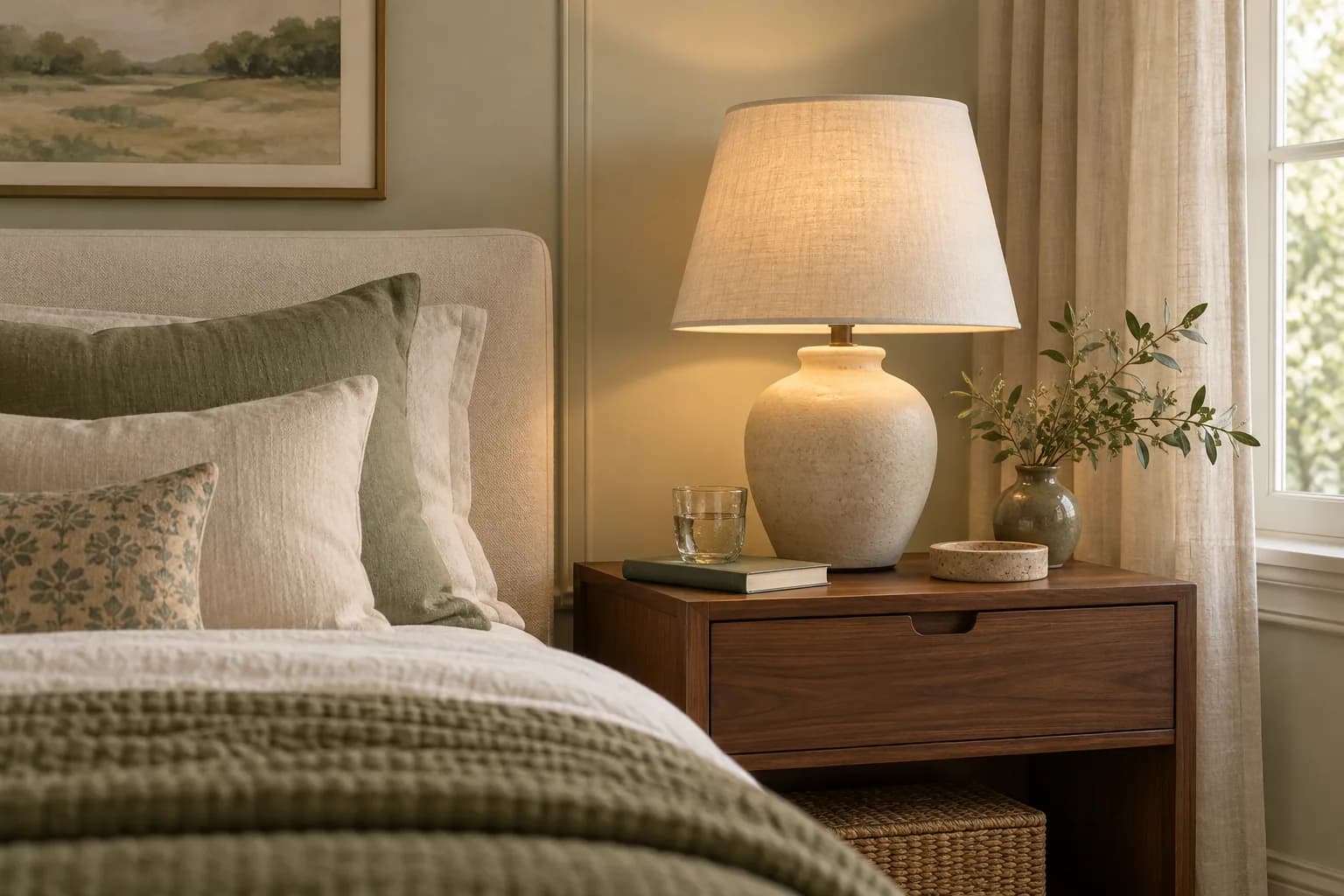
A table lamp should fit the surface, provide useful light for its job, and feel comfortable from the seat or bed where it will be used. Common proportion rules can help you compare silhouettes, but they are design heuristics rather than safety or lighting standards. Start with the table and task, then verify the lamp's dimensions and electrical limits.
How can you measure the table and the space around it?
Record the table's width, depth, and height, plus the usable surface after accounting for books, a phone, a glass, or other daily items. Note the lamp's base footprint and full height, including the shade. Check whether the lamp will crowd the surface, overlap a drawer or headboard, or sit where it can be knocked during ordinary use.
Measure the space above the table to shelves, artwork, a mirror, or a headboard. Tape a rough lamp-and-shade silhouette on cardboard or use a temporary object with a similar footprint to compare scale from the room entrance and the seat where the lamp will be used. This is a visual planning exercise, not a prescribed ratio.
How can you choose the shade for the intended light?
Consider whether the lamp is for reading, ambient glow, or a small accent. Shade material, shape, opacity, and opening affect where light goes and how bright the lamp feels. Sit or lie in the normal position and check for direct glare from the bulb, a blocked view, or a bright patch that does not reach the task.
For reading or detailed work, compare the lamp with the room's other light sources rather than expecting one decorative lamp to illuminate an entire room. The IES explains that recommended illuminance depends on the visual task and its context; a room photograph or shade-size rule cannot tell you the light level at the page.
Sources: Illuminating Engineering Society: Illuminance Selector FAQs
How can you check the bulb and fixture limits?
Read the fixture label or instructions for bulb base, maximum wattage, compatible bulb type, and any required shade or clearance. Do not exceed the stated rating just because an LED bulb uses less electricity; check the product's actual rating and any enclosed-fixture limitation. Stop using a lamp with a damaged cord, loose socket, unusual heat, buzzing, or discoloration and have it checked or replaced.

The U.S. Consumer Product Safety Commission's home-safety checklist calls for bulbs of the appropriate type and wattage for the fixture. Use the exact lamp maker's directions, and consult a qualified electrician for damaged wiring or uncertain electrical installation.
Sources: U.S. Consumer Product Safety Commission: Safety for Older Consumers home checklist
How can you compare options before buying?
Make a short checklist: shade width and height, total lamp height, base footprint, switch location, cord route, bulb type, maximum rating, cleaning instructions, and return terms. Compare the measurements with the table and your seated viewpoint, not just with an isolated product photograph.
When proportions look close, use a paper shade outline or a removable tabletop marker to compare two candidate sizes. Keep enough clear surface for the table's everyday purpose, route the cord away from walkways, and position the lamp where it is stable and easy to switch off.
How can you measure the lamp zone, not just the table?
Record the table's width, depth, height, and the free space left after books, a phone, glassware, or other objects are placed. Note the height of the seat and the position of the user's eyes when reading or conversing. This gives you a practical envelope for the lamp rather than comparing its dimensions with the table in isolation.
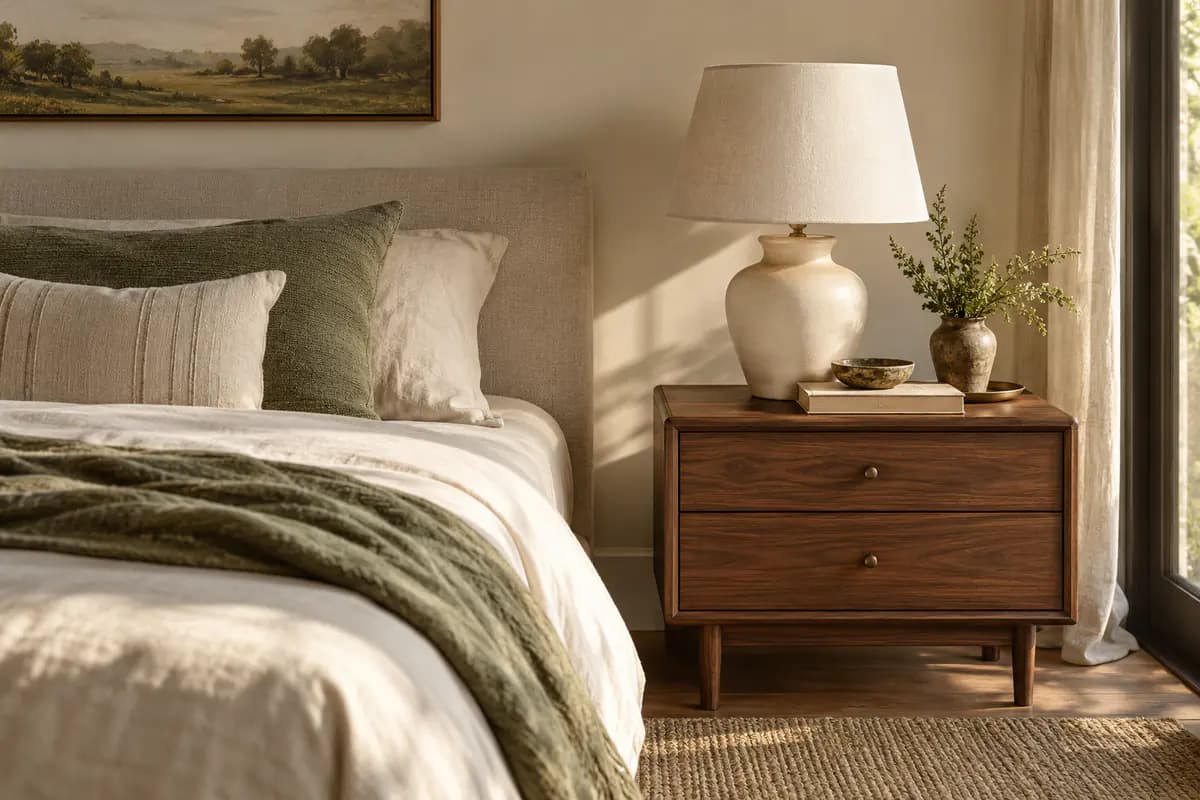
Use a paper circle or box to represent the lamp base and shade, then check it from the usual seat. Confirm that the base does not crowd the table edge and that a person can reach the switch without moving the lamp. If the table is narrow or shared, consider whether a wall-mounted or floor light is a better fit for the task.
How can you compare shade shape and light direction?
A shade changes where light travels and how much of the bulb is visible. Compare its top and bottom openings, material, color, and position with the intended task. A shade that directs light down may work differently from one that allows more light through its sides. Check whether the bulb is hidden from the seated line of sight and whether reflections appear on a nearby screen.
Do not rely on a universal ratio between lamp height and table size. Room scale, ceiling height, nearby furniture, and the task all affect the result. Place a candidate lamp or a full-size mock-up in the room and observe it at night. If light output matters for detailed work, use task-specific guidance rather than inferring performance from a shade photograph.
How can you verify the bulb, base, and electrical information?
Read the lamp label and manual for the permitted bulb base, maximum rating, recommended source, and any dimming or LED limitations. Check that a replacement bulb physically fits beneath the shade and does not touch fabric or other parts. Do not exceed the maker's stated limits even if a brighter bulb appears to be a simple solution.

For touch controls, smart bulbs, or integrated LED lamps, confirm the control method and service information before buying. Ask the seller what happens if a component fails and whether parts are replaceable. Keep the model number and manual so replacements can be checked. Consult an electrician for damaged cords, uncertain wiring, or any electrical modification.
How can you evaluate the lamp in the room before deciding?
If possible, test the lamp in the intended location during the time it will be used. Sit in the usual position and check direct glare, reflected light, switch access, and the amount of space left on the table. Turn on nearby ceiling or wall lights too; a lamp that seems comfortable alone may feel different as part of the room's complete lighting.
Before purchase, confirm the product's dimensions, shade material, care method, return window, and packaging requirements. Use a stable surface and keep the cord away from walkways and heat. If the lamp does not work for the task, reconsider the position or type instead of selecting a stronger bulb that the fixture does not permit.
How can you test the lamp in the real room before committing?
Use a cardboard footprint and a paper shade outline to reserve the lamp's proposed space on the table. Sit in the usual seat and check the view over the shade, the reach to nearby objects, and whether the base crowds a book, glass, or device. If you can borrow or see the exact lamp in person, switch it on with the room's other lights and observe it from the task position. Then confirm the final dimensions, bulb type, and fixture limits on the model documentation instead of relying on the scale shown in a staged photograph.
Conclusion
Choose a table lamp by relating its footprint and shade to the table, nearby objects, seated view, and lighting task. Then verify the fixture's bulb and electrical limits from its label or manual. A proportion that looks balanced in a photograph may crowd the actual surface or cause glare, so use a paper template and test the lamp in place where possible.
Frequently Asked Questions
How do I choose a table lamp size?
Record the table's width, depth, and height, plus the usable surface after accounting for books, a phone, a glass, or other daily items. Note the lamp's base footprint and full height, including the shade. Check whether the lamp will crowd the surface, overlap a drawer or headboard, or sit where it can be knocked during ordinary use.
How does shade size affect a table lamp's light?
Consider whether the lamp is for reading, ambient glow, or a small accent. Shade material, shape, opacity, and opening affect where light goes and how bright the lamp feels. Sit or lie in the normal position and check for direct glare from the bulb, a blocked view, or a bright patch that does not reach the task.
What bulb and fixture limits should I check?
Read the fixture label or instructions for bulb base, maximum wattage, compatible bulb type, and any required shade or clearance. Do not exceed the stated rating just because an LED bulb uses less electricity; check the product's actual rating and any enclosed-fixture limitation.
How do I avoid glare from a table lamp?
Consider whether the lamp is for reading, ambient glow, or a small accent. Shade material, shape, opacity, and opening affect where light goes and how bright the lamp feels. Sit or lie in the normal position and check for direct glare from the bulb, a blocked view, or a bright patch that does not reach the task.
Can I use a higher-wattage bulb than recommended?
Read the fixture label or instructions for bulb base, maximum wattage, compatible bulb type, and any required shade or clearance. Do not exceed the stated rating just because an LED bulb uses less electricity; check the product's actual rating and any enclosed-fixture limitation.
Shopping Options To Explore
Use these listings and partner stores as places to continue your research, not as product ratings or test results. Listings, product details, availability, and offer terms can change; verify the exact item with the seller.
Some links may earn a commission. General Temu and Shein storefront destinations are not verified affiliate links and may not generate one. Read our affiliate disclosure.
Use the measurements and checks in this guide when comparing an exact item. Browse current partner offers and verify product details, eligibility, and terms with the seller.
Sources and further reading
We link primary or institutional references near factual claims and list the sources used for this guide below. Design suggestions are editorial guidance, not universal rules.
Living Statement may earn a commission from some partner links. Any paid relationship will be disclosed close to the relevant offer. How our affiliate links work.