
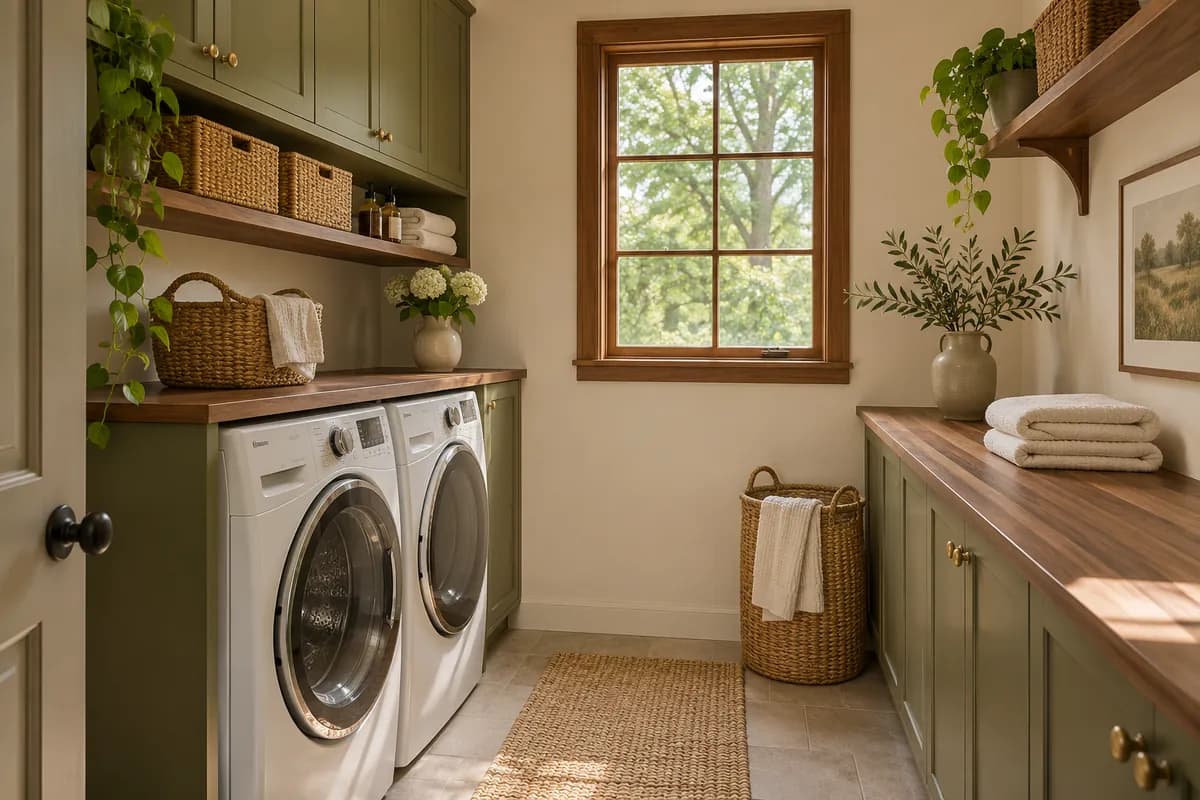
Laundry-room storage has to fit around machines, doors, hoses, ventilation, and the way people move through the room. Start with the appliance manuals and a measured floor plan before adding cabinets or shelves. The useful layout gives supplies a place while preserving service access, appliance clearances, and a workable route for carrying and folding laundry.
Record the room and appliance dimensions
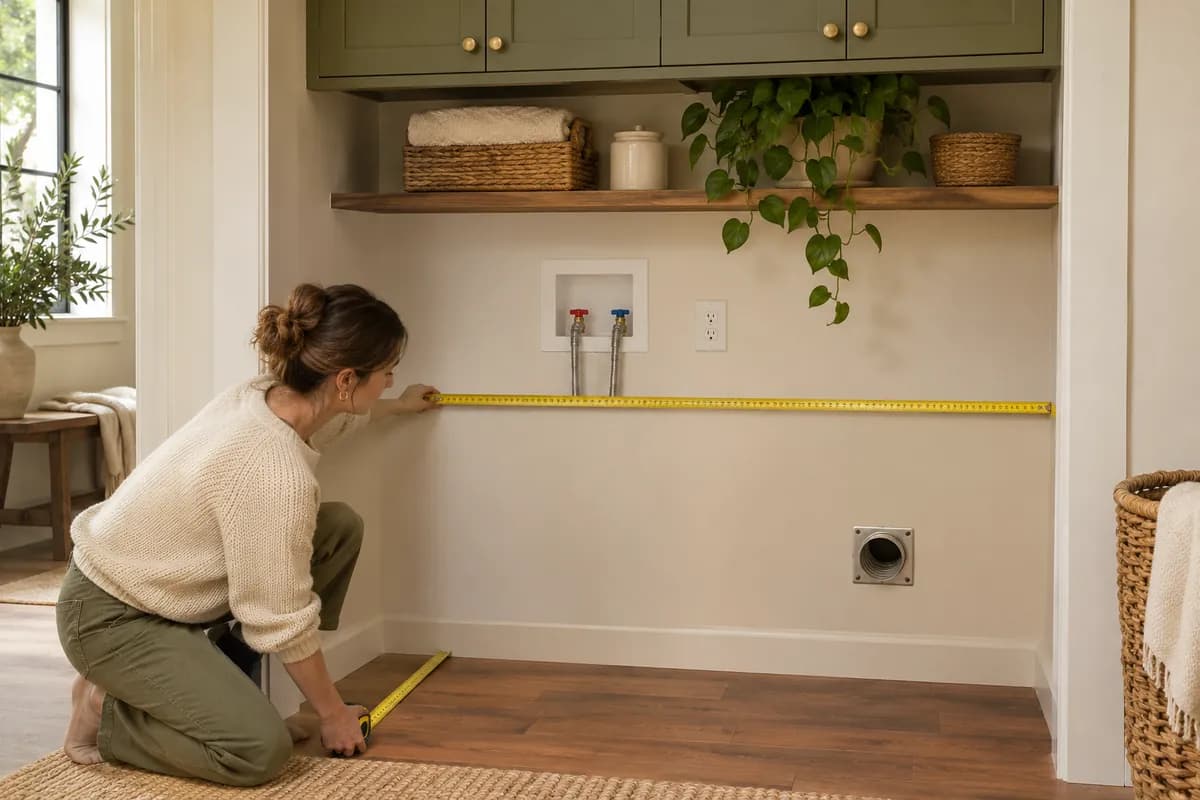
Measure wall-to-wall width and depth, ceiling height, doors, trim, windows, outlets, plumbing, drain, and ventilation. Measure each appliance’s full body and note hookups or rear clearance required by its manual. Include the floor drain, water shutoff, and access panels so storage does not cover something that may need inspection or maintenance.
Whirlpool’s laundry-room sizing guide calls out room width, depth, ceiling height, hookups, ventilation, and door swing as important to a working layout. The final dimensions depend on your washer, dryer, and installation instructions. Do not use a generic diagram to decide that an appliance will fit; compare the exact model specification and leave the required space.
Sources: Whirlpool: Laundry Room Sizes
Draw doors, lids, and service clearances
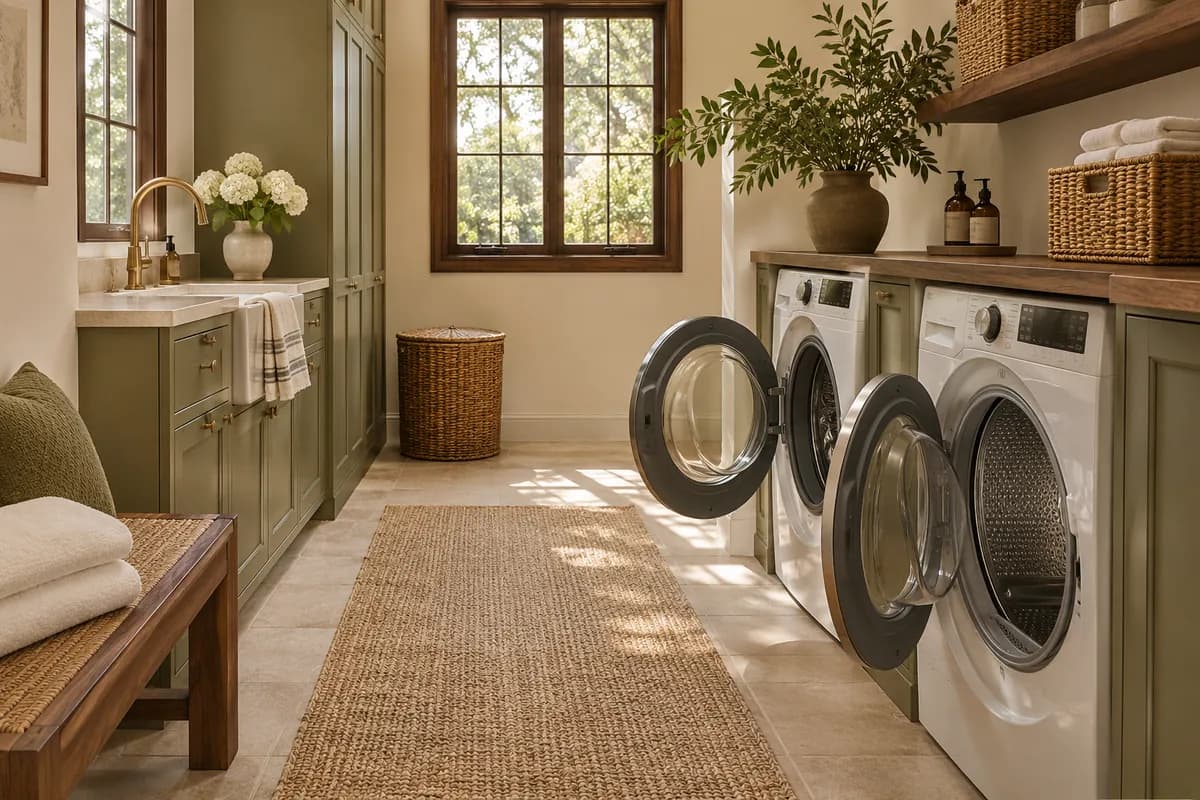
Mark the washer and dryer doors fully open on the plan, then show the room entrance and any cabinet or closet door. For a top-load washer, include lid clearance; for a front-load pair, include door swing and space to load a basket. Check that people can stand at the machines without blocking the route or striking an open door.
Leave the clearances the manufacturer specifies for ventilation, hoses, heat, and access. Storage should not crowd a dryer vent, cover shutoffs, or prevent the appliance from being pulled out for service. If the manual does not explain a condition in your room, contact the appliance maker or installer rather than assuming a shelf can sit above or beside the machine.
Map tasks before deciding where supplies go
List what happens in the room: sorting, spot treatment, loading, folding, hanging, ironing, and storing detergents or linens. Mark where each task occurs and place the most-used items within easy reach. A narrow counter can support folding, while a wall rail or hook may hold items to air-dry, provided it does not obstruct vents, doors, or access.
Think about who uses the room and whether supplies need to be kept secured. Keep detergents and cleaning products in their original containers and follow label directions for storage. If children or pets are present, choose a closed, appropriately secured cabinet and do not place chemical products where they can be reached or spilled.
Sources: U.S. Consumer Product Safety Commission: Childproofing Your Home
Choose storage that suits the available depth
Compare shallow wall cabinets, open shelves, rolling carts, hampers, and a counter by the room’s usable depth. Open shelves make labels and baskets visible, while closed doors can help contain clutter and reduce access. Measure the full cabinet body, door thickness, handle projection, and shelf depth; a product can fit on the wall and still interfere with machine doors.
Use the items you plan to store as a test. Measure detergent bottles, baskets, folded linens, and the tallest hanging items. Leave room for hands to lift a container safely, and avoid placing heavy objects high overhead. For a more general comparison of visible and concealed storage, the open-shelves guide covers access and upkeep trade-offs.
Plan folding and hanging without narrowing the route
A folding surface can sit above a front-load pair or on a nearby counter if the installation and appliance manuals allow it. Mark the surface edge, chair or basket position, and the route to the doorway. If the room is too narrow for a permanent counter, a folding wall shelf or movable surface may be easier to keep out of the way between loads.
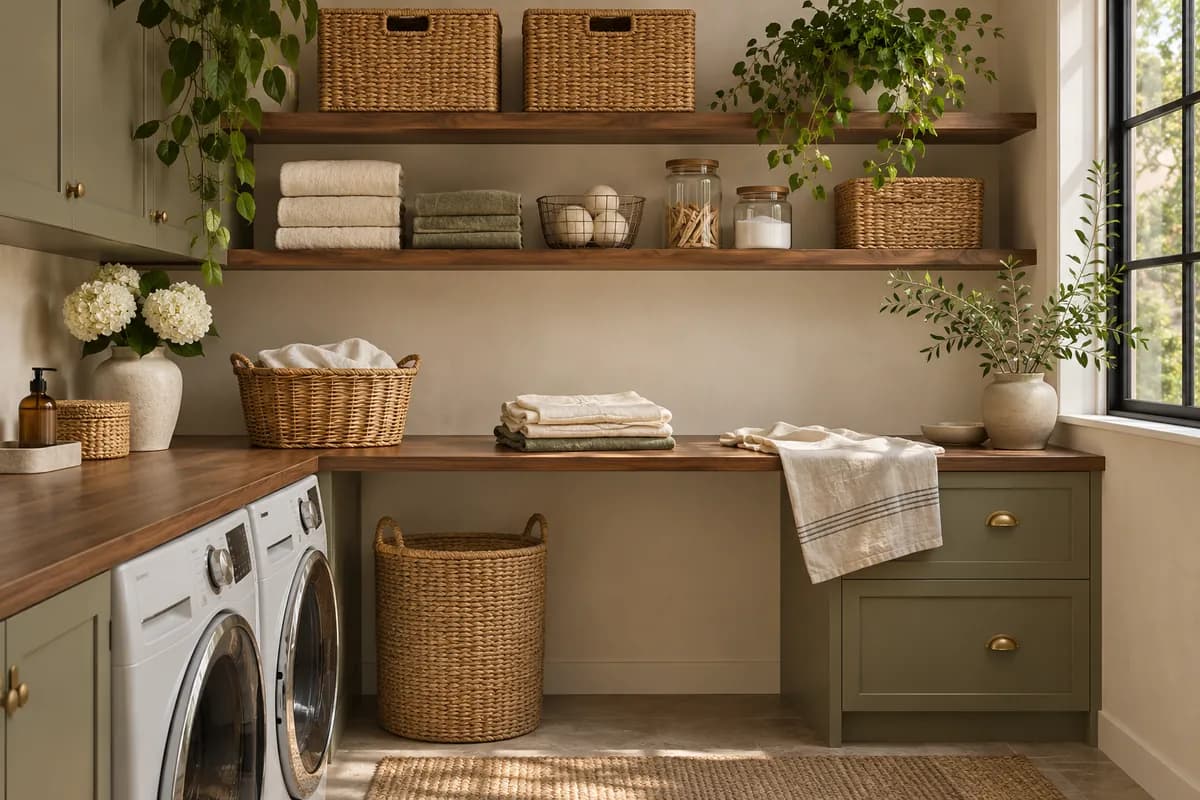
Measure the reach and working height for the people who will use the space. Test a basket where it will be carried and check that open cabinet doors do not occupy the only passage. A wall-mounted drying rail or retractable line needs a suitable fixing and permission if the home is rented; follow the system’s instructions and do not overload it. If laundry is carried between floors, include the basket’s temporary parking place and the person’s turning space at the doorway. Keep a small hamper or sorting station from becoming a permanent obstacle, and make sure a folding surface can be cleared quickly when someone needs to access a shutoff or service panel.
Keep moisture, heat, and ventilation in the plan
Laundry rooms may experience humidity, vibration, lint, and heat. Choose storage materials and finishes that suit the conditions, and preserve the appliance’s required airflow. Do not store fabric or paper against a dryer vent or block a grille because the shelf looks convenient in a staged image.
Follow the dryer manual for venting, cleaning, and clearance. Ask an installer about ventilation routes, condensate, or moisture concerns that are not covered by a simple storage plan. If supplies or linens are stored near plumbing, keep valves and connections visible and accessible so a leak can be noticed and addressed. A shelf or decorative panel should never be added in a way that conceals a service connection or changes the specified airflow path. If the room has persistent dampness, address the source and ventilation with a qualified professional before storing paper goods, linens, or laundry chemicals there.
Check anchoring and the exact unit’s load limits
Before mounting shelves or cabinets, identify the wall construction and read the furniture maker’s assembly and anchoring requirements. The correct restraint or fastener depends on the unit, stored weight, wall material, and fixing points. Do not assume that a screw supplied in a box is appropriate for every wall or that a product’s shelf rating covers a different installation.
Secure freestanding furniture according to its manual, especially when it is tall or heavily loaded. If you rent, ask before drilling and clarify repair expectations. For uncertain wall construction or a heavy cabinet, have a qualified installer choose the fixing method. The bookcase planning guide explains how stored contents, wall support, and the product restraint work together.
Sources: U.S. Consumer Product Safety Commission: Anchor It!
Mock up the plan before buying organizers
Use painter’s tape or cardboard to mark appliance doors, proposed cabinet fronts, counter depth, and hamper locations. Open every door in the plan and walk through with a full basket. Check whether the room remains usable when the washer is running, a dryer door is open, or someone needs to reach a shutoff.
Before ordering, verify the exact appliance model, storage dimensions, material, load limits, assembly method, delivery access, and return policy. Compare the listing with the measurements rather than relying on an illustration. If any cabinet requires moving electrical, plumbing, or venting, pause and obtain professional advice before changing the room.
Conclusion
Build the laundry layout around exact appliance manuals, open doors, hookups, ventilation, service access, and household tasks. Test storage and folding locations on a measured plan, secure furniture as instructed, and keep routes and controls clear. Have a qualified installer review changes to plumbing, wiring, venting, or uncertain wall support.
Frequently Asked Questions
What should I measure before planning laundry storage?
Measure wall-to-wall width and depth, ceiling height, doors, trim, windows, outlets, plumbing, drain, and ventilation. Measure each appliance’s full body and note hookups or rear clearance required by its manual. Include the floor drain, water shutoff, and access panels so storage does not cover something that may need inspection or maintenance.
How much clearance do washer and dryer doors need?
Mark the washer and dryer doors fully open on the plan, then show the room entrance and any cabinet or closet door. For a top-load washer, include lid clearance; for a front-load pair, include door swing and space to load a basket.
Can I install shelves above a dryer?
Laundry rooms may experience humidity, vibration, lint, and heat. Choose storage materials and finishes that suit the conditions, and preserve the appliance’s required airflow. Do not store fabric or paper against a dryer vent or block a grille because the shelf looks convenient in a staged image.
How do I plan shelves around washer and dryer clearances?
Mark the washer and dryer doors fully open on the plan, then show the room entrance and any cabinet or closet door. For a top-load washer, include lid clearance; for a front-load pair, include door swing and space to load a basket.
How should I secure laundry room cabinets?
Before mounting shelves or cabinets, identify the wall construction and read the furniture maker’s assembly and anchoring requirements. The correct restraint or fastener depends on the unit, stored weight, wall material, and fixing points. Do not assume that a screw supplied in a box is appropriate for every wall or that a product’s shelf rating covers a different installation.
Sources and further reading
We link primary or institutional references near factual claims and list the sources used for this guide below. Design suggestions are editorial guidance, not universal rules.
Living Statement may earn a commission from some partner links. Any paid relationship will be disclosed close to the relevant offer. How our affiliate links work.