

Small-bathroom storage works when the items used each day are easy to reach and doors, drawers, and walkways still function. Start by grouping the contents by routine, then measure usable storage and the clearances around it. Account for moisture and household safety before deciding what belongs in a cabinet, drawer, or open shelf.
How can you map the daily routine and storage footprint?
List what the household uses at the sink, in the shower, while getting ready, and for cleaning. Separate daily items from occasional supplies and duplicates. Measure the vanity interior, shelf openings, drawer depth, and the exact items or bins you want to store; a cabinet's outside width does not show its usable space.
Measure door and drawer swing, the route past the toilet and tub, towel access, and the area needed to stand at the sink. Test a proposed organizer with a paper outline or temporary box before adding a cabinet. Leave service access to plumbing and ventilation paths clear.
How can you keep materials and contents suited to the conditions?
Bathrooms vary in humidity and direct water exposure. Check the cabinet maker's material and care instructions and avoid storing items where splashes, persistent dampness, or poor ventilation could damage them. Do not assume a closed cabinet is waterproof or that an adhesive shelf will hold in a wet area.
Use the location and product instructions to decide whether a proposed shelf or organizer belongs beside a sink, in a shower, or in a dry area. If a fixture must be attached to tile or a wall, confirm the substrate and mounting method with the maker or a qualified installer.
How can you separate hazardous products and medicines?
The CPSC advises using safety latches or locks on cabinets and drawers to help prevent children from accessing medicines and household cleaners. Store hazardous products according to their labels and keep them secured from children and pets. Do not decant chemicals into unlabeled containers or place incompatible products together because a shelf happens to be convenient.
Choose storage that supports the household's actual access needs while following product labels and local guidance. A child-resistant latch is not a substitute for original packaging or safe handling instructions.
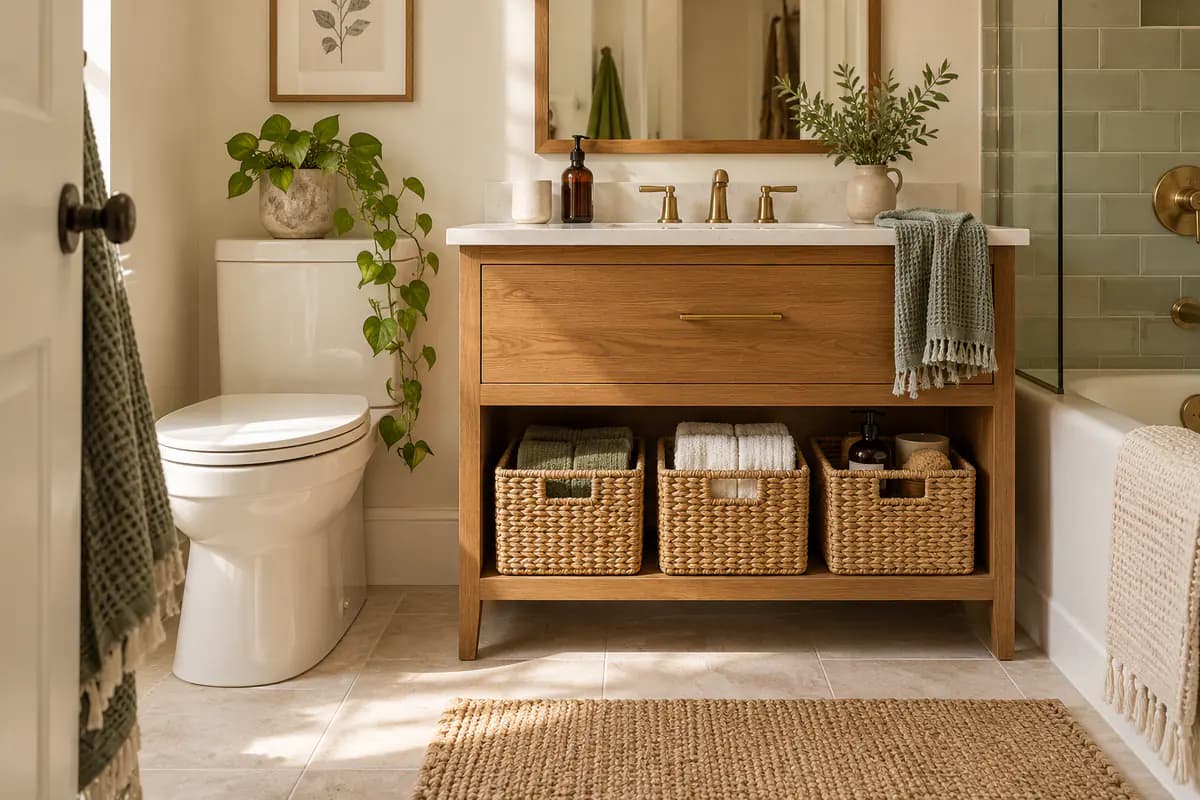
The CPSC advises keeping medicines and household cleaning supplies locked away and out of children's reach, and keeping chemicals in their original child-resistant containers. Choose bathroom storage and safety latches around the household's actual needs, while following each product label and cabinet maker's instructions.
Sources: U.S. Consumer Product Safety Commission: Childproofing Your Home; U.S. Consumer Product Safety Commission: Poison Prevention Information Center
How can you buy only after checking the exact unit?
Verify the exact dimensions, material, assembly, wall hardware, load limits, finish care, and return terms. For a bathroom organizer, check that its mounting and material are intended for the actual exposure. If the product page does not document a needed property, ask the seller before relying on it.
How can you map routines, clearances, and service access?
List the items used at the sink, in the shower, during grooming, and for cleaning. Separate daily supplies from occasional stock and measure the bins or bottles you intend to store. Then measure cabinet openings, drawer depth, shelf clearance, and the path needed to stand at the vanity or reach the tub.
Mark plumbing traps, shutoffs, vents, electrical points, and service panels on the sketch. Storage should not block maintenance access or airflow. Check doors and drawers against the toilet, tub, and entry. Use a paper outline or temporary box to test a proposed unit before buying it.
How can you choose materials and mounting for actual moisture conditions?
Check the room's ventilation, splash exposure, and how damp the intended storage area becomes after normal use. Read the product's care information and approved location for the exact material and finish. A general water-resistant claim does not establish suitability for a wet zone or a poorly ventilated room.
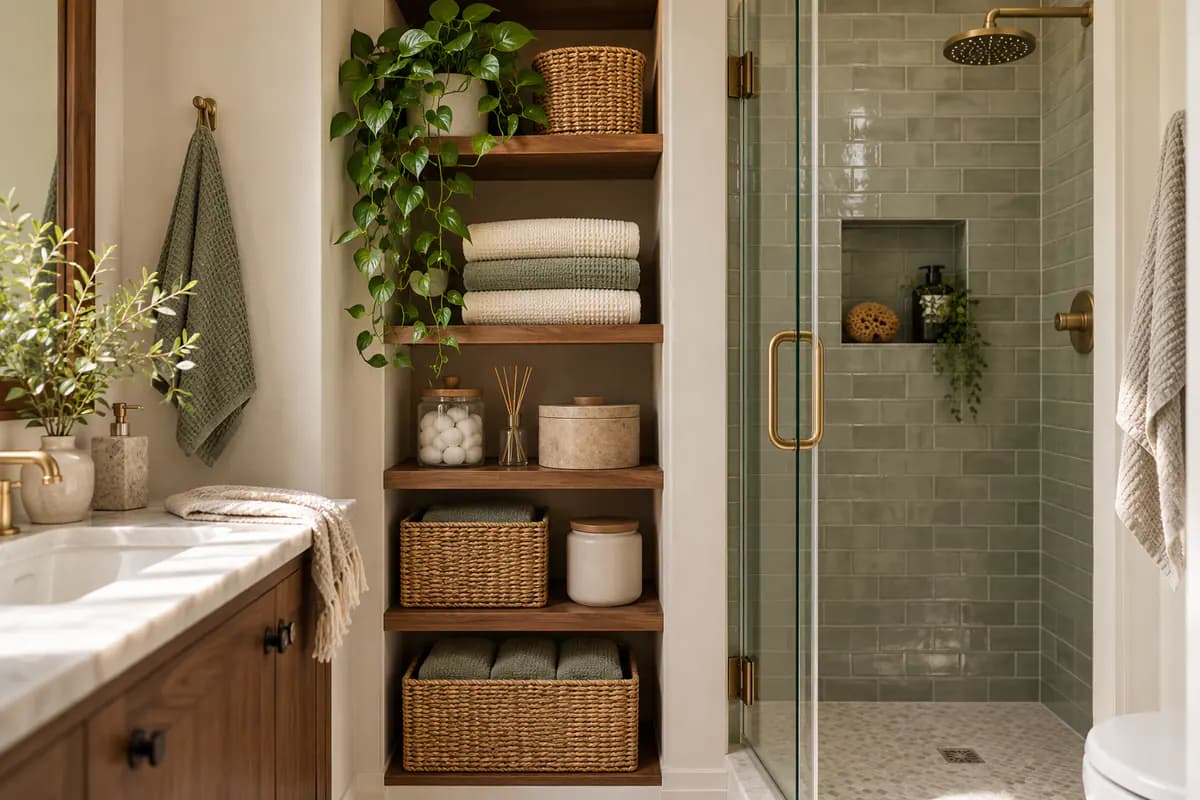
For a wall-mounted cabinet or shelf, identify wall construction and follow the maker's load and fixing instructions. Confirm what can be stored and how the unit should be maintained. Ask a qualified installer about uncertain wall, tile, or plumbing conditions instead of drilling based on a product photo.
How can you separate household products and medicines responsibly?
Keep cleaners, medicines, and other hazardous products in their original containers and follow their labels. Consider access by children and pets and use safety latches or locks where appropriate. The CPSC guidance cited in this article can help with childproofing questions, but storage should also follow product-specific instructions and local recommendations.
Do not decant products into unlabeled containers or place incompatible materials together because a shelf is convenient. Keep hazardous items separate from toiletries and food-related supplies, and avoid storing them where leaks can contact towels or other items. A storage layout is not a substitute for safe handling and disposal directions.
How can you trial the system and preserve a maintenance plan?
Before purchase, place temporary boxes in the proposed footprint and test daily access, door movement, and cleaning. Keep frequently used items reachable without stretching over a wet floor. If a shared bathroom serves several people, check whether the assigned shelves and drawers remain clear during peak routines.
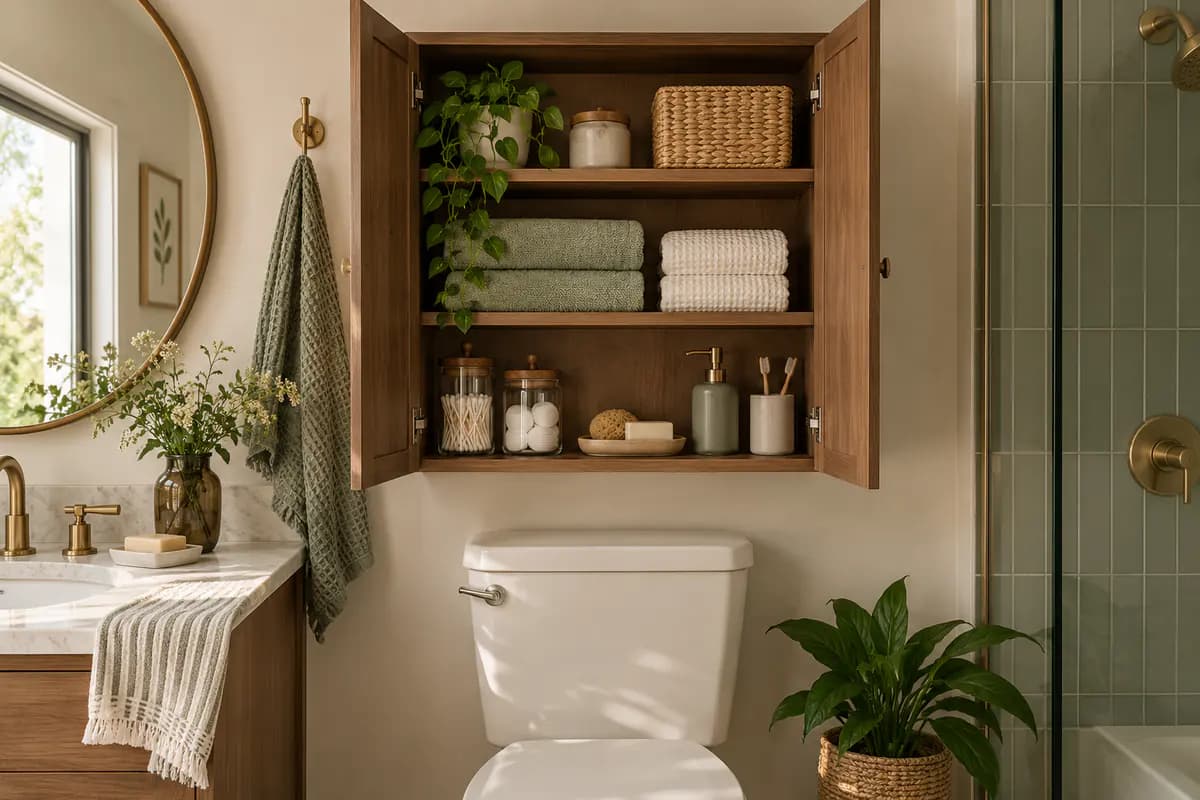
Once installed, keep model and mounting details for future repair. Recheck for loosened hardware, moisture damage, and blocked service access. Reassess the contents periodically so a unit does not become overloaded or conceal a leak. If the installation conflicts with plumbing access or ventilation, remove or reposition it with qualified guidance.
How can you review storage after the household settles into the routine?
After installation, use the bathroom normally for several days and check whether daily items are easy to reach, doors clear the route, and service points remain accessible. Note where products collect on the counter or floor; that may show that the zone or container size does not match the routine.
Adjust the contents and labels before adding another cabinet. Inspect for moisture or loosened hardware and follow the unit maker's care guidance. If a leak or ventilation issue appears behind storage, clear access and contact the relevant professional rather than sealing or covering the area with another organizer.
How can you keep cleaning products and labels easy to identify?
Organize household cleaners so their original labels remain visible and containers stay upright, closed, and stored as directed. Avoid mixing incompatible products or using a storage bin that hides a leak. Keep medicines and hazardous items secured from children and pets, and make sure everyone in the household knows where to find the product safety information in an emergency.
Conclusion
Plan bathroom storage around daily routines, available openings, moisture conditions, and safe access to household products. Keep cleaners and medicines secured as their labels and CPSC guidance require, preserve plumbing and ventilation access, and confirm mounting and load details for the chosen unit. If the room or product instructions leave a safety question open, seek specific professional advice.
Frequently Asked Questions
How do I plan storage in a small bathroom?
List what the household uses at the sink, in the shower, while getting ready, and for cleaning. Separate daily items from occasional supplies and duplicates. Measure the vanity interior, shelf openings, drawer depth, and the exact items or bins you want to store; a cabinet's outside width does not show its usable space.
Which bathroom storage materials suit damp conditions?
Bathrooms vary in humidity and direct water exposure. Check the cabinet maker's material and care instructions and avoid storing items where splashes, persistent dampness, or poor ventilation could damage them. Do not assume a closed cabinet is waterproof or that an adhesive shelf will hold in a wet area.
How should I store bathroom cleaners and medicines?
The CPSC advises using safety latches or locks on cabinets and drawers to help prevent children from accessing medicines and household cleaners. Store hazardous products according to their labels and keep them secured from children and pets. Do not decant chemicals into unlabeled containers or place incompatible products together because a shelf happens to be convenient.
How can I store cleaners safely in a bathroom?
The CPSC advises using safety latches or locks on cabinets and drawers to help prevent children from accessing medicines and household cleaners. Store hazardous products according to their labels and keep them secured from children and pets. Do not decant chemicals into unlabeled containers or place incompatible products together because a shelf happens to be convenient.
Should storage block plumbing or ventilation access?
List what the household uses at the sink, in the shower, while getting ready, and for cleaning. Separate daily items from occasional supplies and duplicates. Measure the vanity interior, shelf openings, drawer depth, and the exact items or bins you want to store; a cabinet's outside width does not show its usable space.
Shopping Options To Explore
Use these listings and partner stores as places to continue your research, not as product ratings or test results. Listings, product details, availability, and offer terms can change; verify the exact item with the seller.
Some links may earn a commission. General Temu and Shein storefront destinations are not verified affiliate links and may not generate one. Read our affiliate disclosure.
Temu
Browse broad storage listings only after measuring the exact opening. Confirm the selected item's dimensions, materials, mounting, load limits, moisture suitability, and current offer terms.
Publisher-supplied broad offer code; check its current availability and terms for your account and region
Partner codeALV837762
General store destination; tracking is not verified, and the code is not a product-specific offer.
Confirm current prices, eligibility, shipping, and return terms with the seller.
Sources and further reading
We link primary or institutional references near factual claims and list the sources used for this guide below. Design suggestions are editorial guidance, not universal rules.
Living Statement may earn a commission from some partner links. Any paid relationship will be disclosed close to the relevant offer. How our affiliate links work.