

Entryway storage succeeds when it catches the things that arrive with you without narrowing the route through the room. Measure the passage, door swing, and storage footprint first; then decide which daily items need a place, how quickly you need to reach them, and whether the furniture needs to be secured.
What should you measure before choosing an entryway unit?
Measure the narrowest part of the walkway, the door's full swing, nearby trim, and any radiator or switch that could conflict with a cabinet or bench. Record the available width, depth, and height, including the route used to bring the furniture into the home. For a bench, allow room for someone to sit and stand without blocking the door or hallway.
Compare the unit's outside dimensions with its inside storage. A cabinet's nominal width does not tell you the usable drawer opening, shelf depth, or boot height. Check the retailer's assembly dimensions and the manufacturer's instructions for clearances and floor protection.
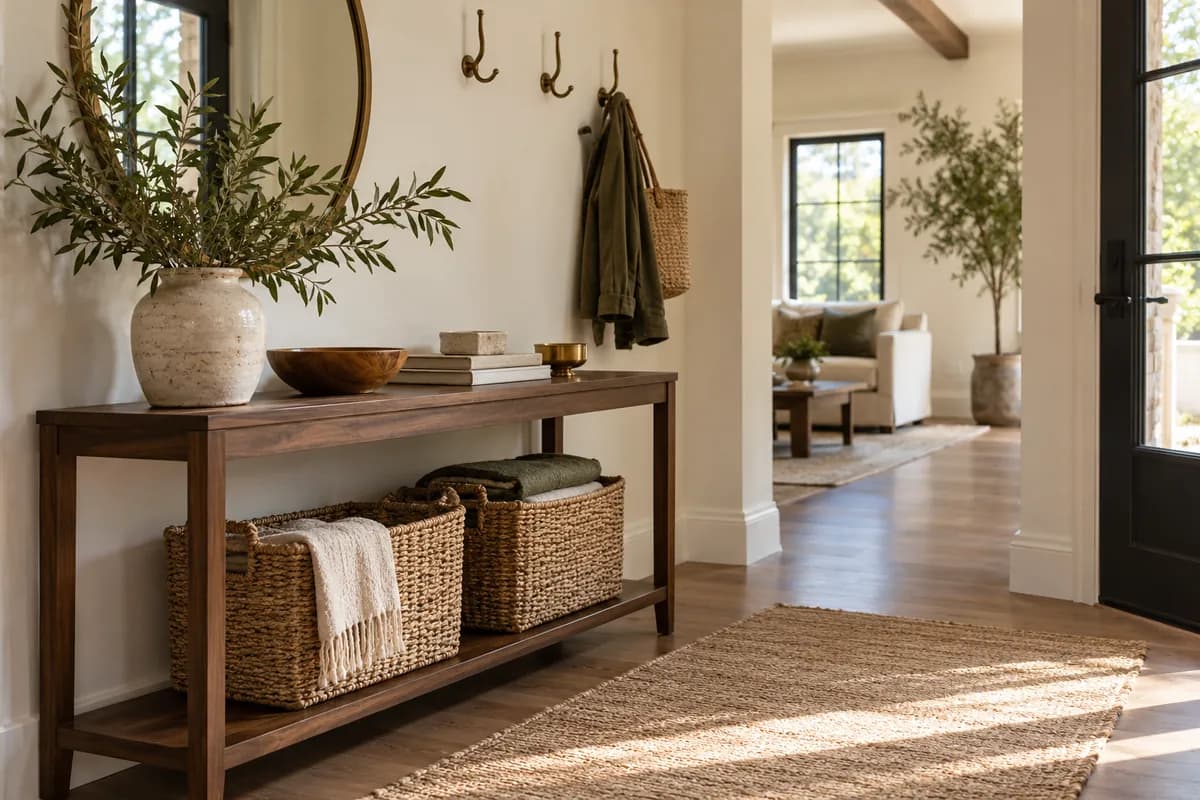
How do you decide what the storage should hold?
List the items that actually enter the home: shoes, bags, keys, umbrellas, outerwear, pet leads, or parcels. Choose a dedicated place for the two or three items you handle most often, then plan less-used storage above, below, or elsewhere. A small tray or open hook can make a frequently used item easier to put away than a closed drawer.
Measure bulky objects rather than estimating. Compare shoe length, basket dimensions, and the height of boots with the unit's interior measurements. If several people share the entry, consider separate baskets or hooks so everyday belongings do not collect in the walking path.
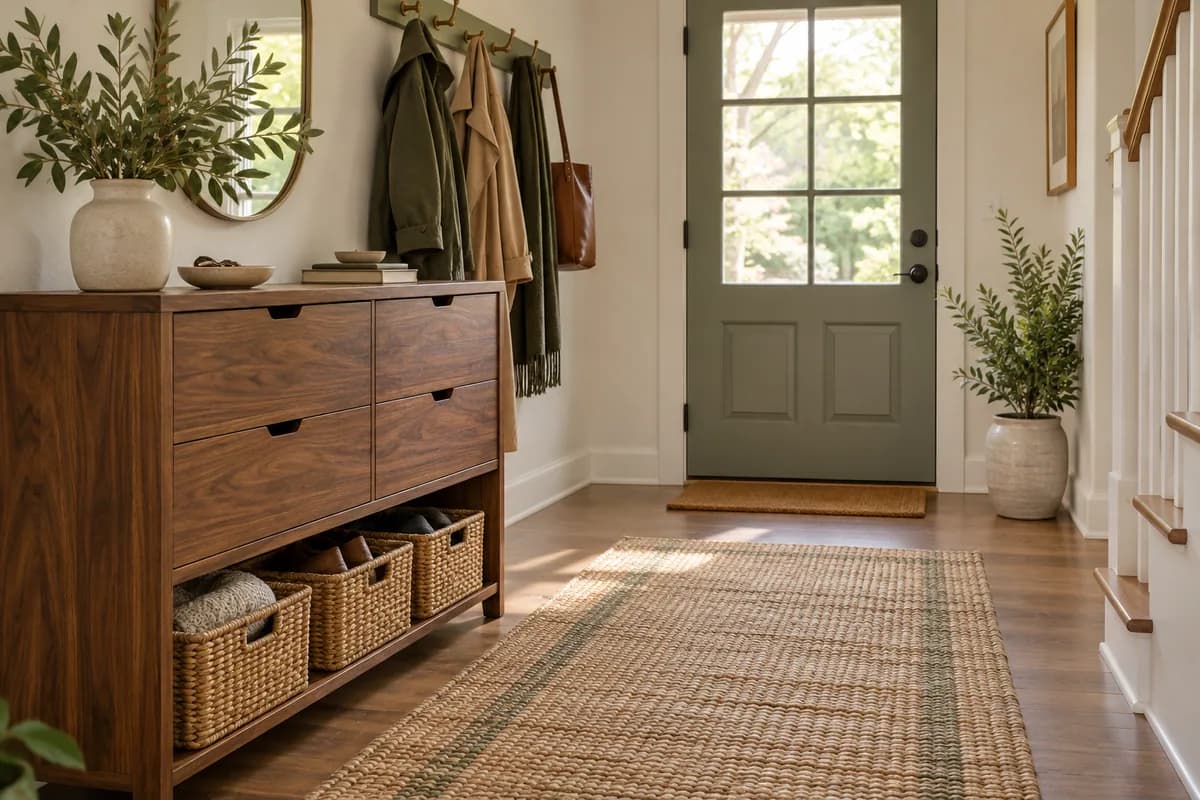
When should entryway furniture be anchored?
The U.S. Consumer Product Safety Commission's Anchor It! guidance warns that unsecured furniture can tip when children climb or pull on it. Follow the furniture maker's instructions and install the included anti-tip device where applicable. Select fasteners appropriate to the wall construction; if you are unsure about the wall or fixing, ask a qualified installer.
A heavier-looking cabinet is not automatically tip-resistant. Keep tempting objects off high surfaces in homes with young children, and do not use a shelf or drawer as a step. Check anchors periodically and after moving the unit.
Sources: U.S. Consumer Product Safety Commission: Anchor It!
How can the entryway stay usable?
Keep a clear path from the door into the next room. Put seasonal overflow in a closet or another location instead of adding more storage to a narrow hall. Use a washable or easy-clean mat that fits the entrance and does not curl or slide, and make sure baskets and open doors stay within the measured footprint.
Before buying, check the product's published weight limits, assembly requirements, wall-fixing instructions, return policy, and delivery dimensions. These vary by model, so use the exact listing and manual rather than a general category description.
How can you measure the arrival route as well as the furniture space?
Measure the entry wall, door swing, hallway width, and the route from the exterior door to the next room. Include trim, radiators, switches, vents, and any required clear space. A bench or cabinet must fit the path when doors are open and people are carrying bags, not only the empty floor plan.
Check the delivery route from the building entrance, including stairs, turns, elevators, and narrow doorways. Compare the assembled unit dimensions and packaging with those constraints. If the product requires assembly in place, identify whether the instructions call for a clear work area or wall attachment. These checks can rule out an unsuitable model before delivery.
How can you assign a home for everyday items?
List what arrives with the household: shoes, coats, keys, bags, umbrellas, mail, pet supplies, or sports equipment. Separate items that need quick access from those that can be stored elsewhere. Measure the largest shoes, bag, or basket you plan to use so shelves and cubbies are sized for actual belongings.
Consider the routine of each person and whether a shared unit will become crowded at peak times. Hooks may keep coats visible, while a closed cabinet conceals shoes; neither is automatically better. Decide how often you are willing to reset the space and select a format that supports that habit instead of relying on a staged image.
How can you check stability, materials, and cleaning access?
Review whether the unit is tall, narrow, heavy, or likely to be pulled by drawers and doors. Follow its manual for assembly and any anti-tip attachment. Identify the wall construction and use only the restraint and fasteners specified or approved for the furniture. If the installation needs drilling in a rental or shared space, get required permission first.
An entry receives outdoor dirt and moisture, so read care guidance for the exact material and finish. Check whether baskets can be removed and floors can be cleaned underneath. Consider how the surface responds to wet shoes or umbrellas without assuming a general water-resistant claim applies to the model. Keep manufacturer instructions for future cleaning and repair.
How can you run a one-week layout test before buying?
Mark the proposed furniture footprint with tape and place a temporary basket where shoes or bags would go. Use the route at different times and note whether the door, stairs, or hallway becomes difficult to navigate. If the plan only works when everyone leaves nothing by the door, it may not reflect the household's actual routine.
Adjust the list of items and storage capacity after the test. Confirm exact dimensions, load information, wall restraints, assembly needs, delivery fit, and return policy for the chosen unit. Preserve a clear route and access to exits. A simple trial is more useful than choosing a larger cabinet based on the hope that it will solve clutter without changing the routine.
How can you design for peak arrival times, not an empty hallway?
Test the entryway with the items people actually carry: coats, bags, shoes, parcels, and umbrellas. Consider the time when several people arrive together and whether the front door can open fully. A unit may fit on the floor plan yet narrow the route when drawers, baskets, or shoes are in use.
Mark a temporary footprint and observe the space over several ordinary days. Keep exits and access routes clear and account for any building-specific requirements. If the household's routine changes seasonally, leave a flexible place for bulkier coats or wet items rather than filling every shelf with permanent storage.
Conclusion
Entryway storage should hold the household's real daily items while preserving a clear route through the door. Measure the footprint, depth, access path, and door swings before comparing units, then follow the maker's anchoring instructions for furniture that requires restraint. Recheck the layout with bags, shoes, and coats in use rather than relying on an empty-room plan.
Frequently Asked Questions
What should I measure before choosing entryway storage?
Measure the narrowest part of the walkway, the door's full swing, nearby trim, and any radiator or switch that could conflict with a cabinet or bench. Record the available width, depth, and height, including the route used to bring the furniture into the home.
How do I decide what an entryway unit should hold?
List the items that actually enter the home: shoes, bags, keys, umbrellas, outerwear, pet leads, or parcels. Choose a dedicated place for the two or three items you handle most often, then plan less-used storage above, below, or elsewhere. A small tray or open hook can make a frequently used item easier to put away than a closed drawer.
How can I keep entryway storage from blocking the route?
Keep a clear path from the door into the next room. Put seasonal overflow in a closet or another location instead of adding more storage to a narrow hall. Use a washable or easy-clean mat that fits the entrance and does not curl or slide, and make sure baskets and open doors stay within the measured footprint.
What should I store near an entryway?
List the items that actually enter the home: shoes, bags, keys, umbrellas, outerwear, pet leads, or parcels. Choose a dedicated place for the two or three items you handle most often, then plan less-used storage above, below, or elsewhere. A small tray or open hook can make a frequently used item easier to put away than a closed drawer.
Does entryway furniture need an anti-tip restraint?
The U. S. Consumer Product Safety Commission's Anchor It! guidance warns that unsecured furniture can tip when children climb or pull on it. Follow the furniture maker's instructions and install the included anti-tip device where applicable. Select fasteners appropriate to the wall construction; if you are unsure about the wall or fixing, ask a qualified installer.
Shopping Options To Explore
Use these listings and partner stores as places to continue your research, not as product ratings or test results. Listings, product details, availability, and offer terms can change; verify the exact item with the seller.
Some links may earn a commission. General Temu and Shein storefront destinations are not verified affiliate links and may not generate one. Read our affiliate disclosure.
Shein
Compare small baskets and organizers with your entryway's measured shelf, bench, and walkway clearances.
Publisher-supplied broad offer code; check its current availability and terms for your account and region
Partner codeDPL3S52
General store destination; tracking is not verified, and the code is not a product-specific offer.
Confirm current prices, eligibility, shipping, and return terms with the seller.
Temu
Browse current entryway organizers after measuring the clear route, door swing, and available storage footprint.
Publisher-supplied broad offer code; check its current availability and terms for your account and region
Partner codeALV837762
General store destination; tracking is not verified, and the code is not a product-specific offer.
Confirm current prices, eligibility, shipping, and return terms with the seller.
Sources and further reading
We link primary or institutional references near factual claims and list the sources used for this guide below. Design suggestions are editorial guidance, not universal rules.
Living Statement may earn a commission from some partner links. Any paid relationship will be disclosed close to the relevant offer. How our affiliate links work.