

Wallpaper quantity depends on more than the wall's square footage. Roll width, usable length, pattern repeat, pattern match, openings, and trimming all affect how much usable material a project needs. This guide is a planning checklist, not a final takeoff: confirm the exact roll information with the seller or installer before ordering.
How can you measure each wall and record the openings?
Measure the width and height of every wall separately. Note windows, doors, alcoves, sloping ceilings, built-ins, outlets, and any surface that will not receive the wallcovering. Keep the original measurements beside any net-area calculation so an installer can review what was included or excluded.
Do not order from a room-perimeter shortcut alone. A room may have different wall heights, large openings, or a feature wall that changes the layout. The Wallcoverings Association's estimating guidance distinguishes total wall area from openings and explains that its sample yield calculation does not account for pattern-repeat waste.
How can you check the pattern repeat and match?
Find the pattern repeat and match type on the product information. A random match, straight match, or drop match changes how adjacent strips align and how much material may be left over. The Wallcoverings Association describes repeat as the vertical distance between identical points in the design and notes that repeat can range from very small to more than a roll's width.
Use the exact manufacturer's yield chart or ask the supplier to estimate the quantity using your measurements and the selected pattern. A generic percentage allowance cannot account for every repeat, wall height, or layout, so treat online calculators as a first check rather than a purchase quantity.
Sources: Wallcoverings Association: Understanding Wallcoverings
How can you keep roll numbers and installation instructions together?
Before opening rolls, compare the pattern number, colorway, and dye-lot or run number. The Association advises checking individual rolls for a consistent run and recording those identifiers in case additional material is needed. If multiple runs arrive, ask the retailer or installer how to handle them before cutting.
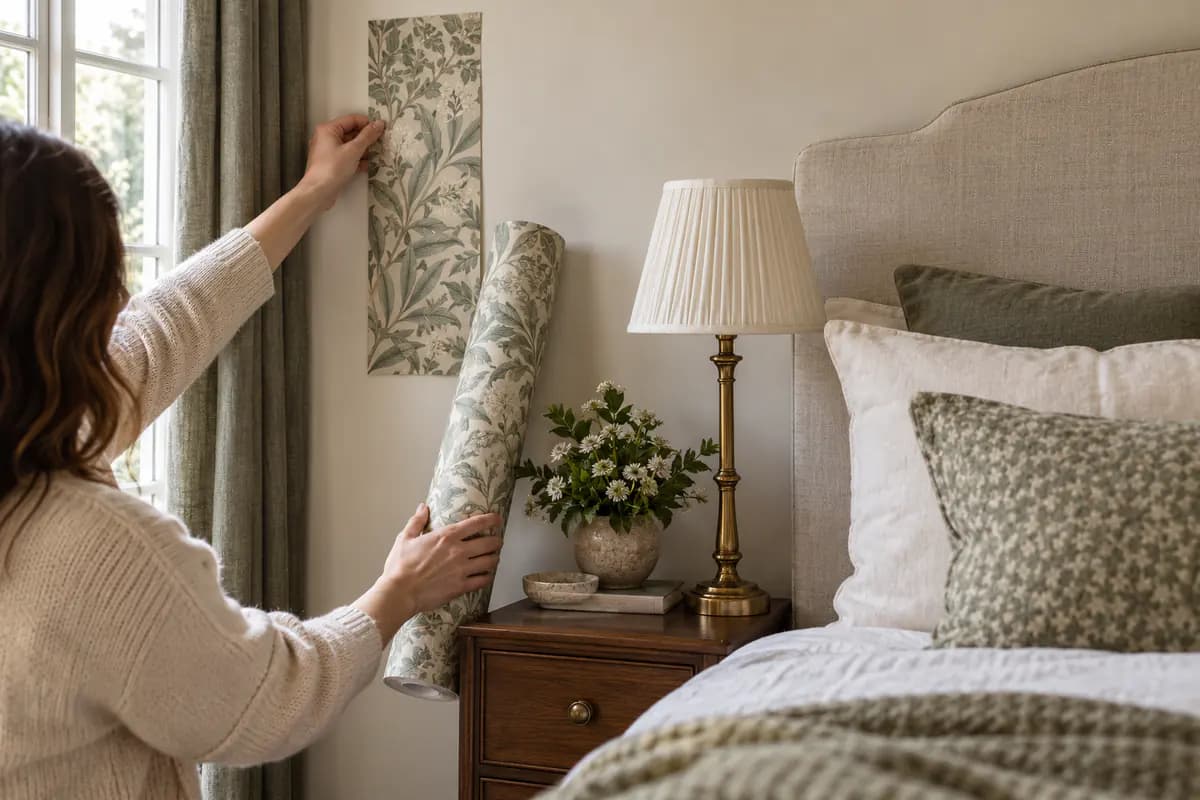
Follow the manufacturer's substrate, adhesive, preparation, and hanging instructions for the specific material. The Association's residential installation guide also says to inspect goods before cutting and to allow for the pattern match when cutting strips. If the wall is damaged, damp, textured, or recently painted, ask a qualified installer whether it is ready for the chosen wallcovering.
Sources: Wallcoverings Association: Standard Installation of Residential Wallpapers
How can you use shopping links as a starting point?
A broad marketplace link does not confirm that a wallpaper listing is appropriate for a particular wall, room, or surface. Compare the selected listing's dimensions, material, match information, adhesive requirements, care, seller, return terms, and current offer terms before ordering. If the page does not provide a needed specification, ask the seller or choose a listing with clearer documentation.
How can you separate wall measurements from the roll calculation?
Create a sketch and measure each wall's width and height individually. Mark doors, windows, alcoves, built-ins, sloped ceilings, and any surface that will not be covered. Preserve the gross dimensions alongside any net-area calculation so a supplier or installer can review what has been included or excluded.
Do not estimate from room perimeter alone. Different wall heights, openings, pattern direction, and a feature wall can change the layout. Photograph the wall and label the measurements, then compare them with the selected product's roll width and usable length. This creates a clear handoff before anyone turns the area into a purchase quantity.
How can you understand repeat, match, and usable yield?
Read the pattern repeat and match type on the exact roll or technical sheet. A straight or drop match affects how successive strips align and can change the usable yield. A design with a large repeat may create more offcut than one with a small repeat; the exact effect depends on wall height and the chosen layout.
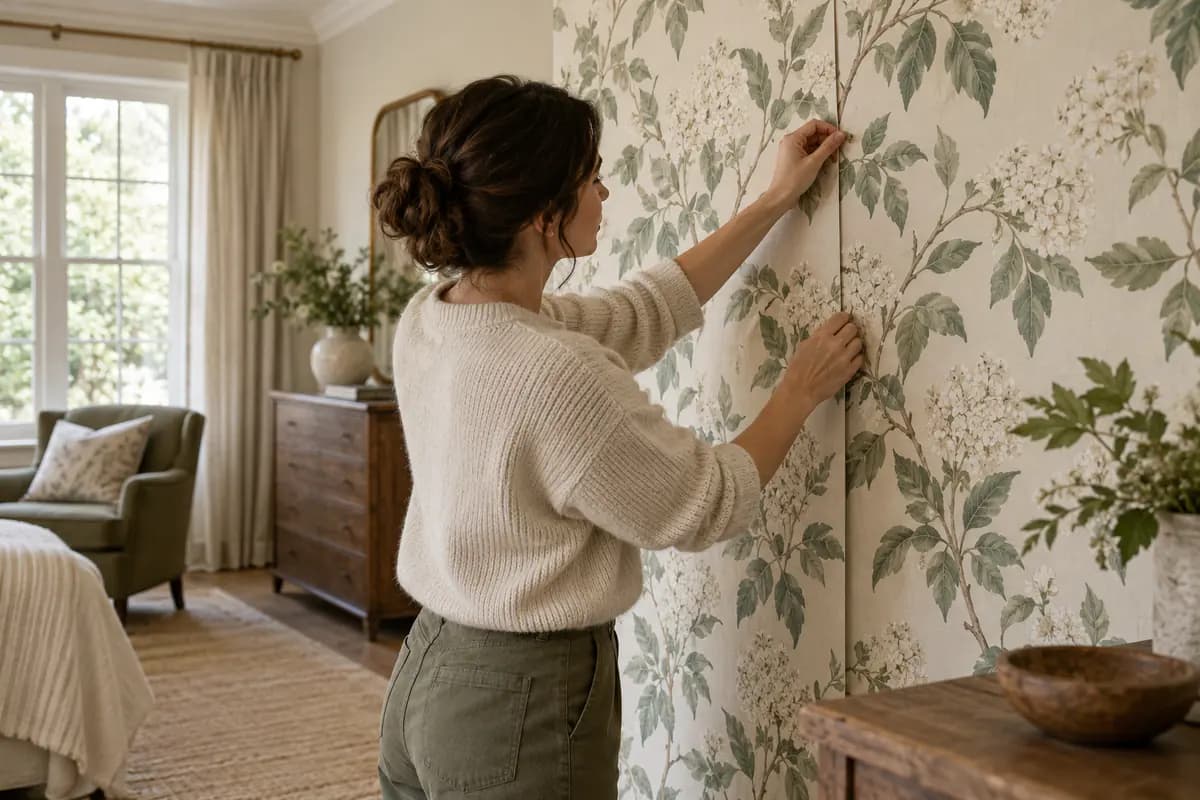
Use the manufacturer's yield information or ask the supplier or installer to estimate from your measurements and selected pattern. Generic online area calculators may not account for the design's repeat, windows, corners, or cutting sequence. Treat a quick estimate as a starting check, not as a final order quantity.
How can you coordinate walls, corners, openings, and pattern direction?
Discuss where the first strip begins and how the pattern will meet at internal and external corners, windows, doors, and a feature-wall edge. Record the intended pattern direction and whether a design has a visual top. The installer may need to balance the pattern at a focal point, which can affect where trimming occurs.
Inspect the wall condition and follow the chosen product's substrate and preparation instructions. A damaged, damp, textured, or recently painted surface may need more work before hanging. Ask a qualified installer whether the surface is ready instead of assuming wallpaper will cover the defect or follow a generic preparation rule.
How can you check roll identifiers and keep a spare plan?
Before cutting, compare the pattern number, colorway, and run or dye-lot identifiers on every roll. Keep the labels and receipts in case more material is needed. If rolls arrive with different identifiers or visible variation, stop and ask the supplier how to proceed before opening them.
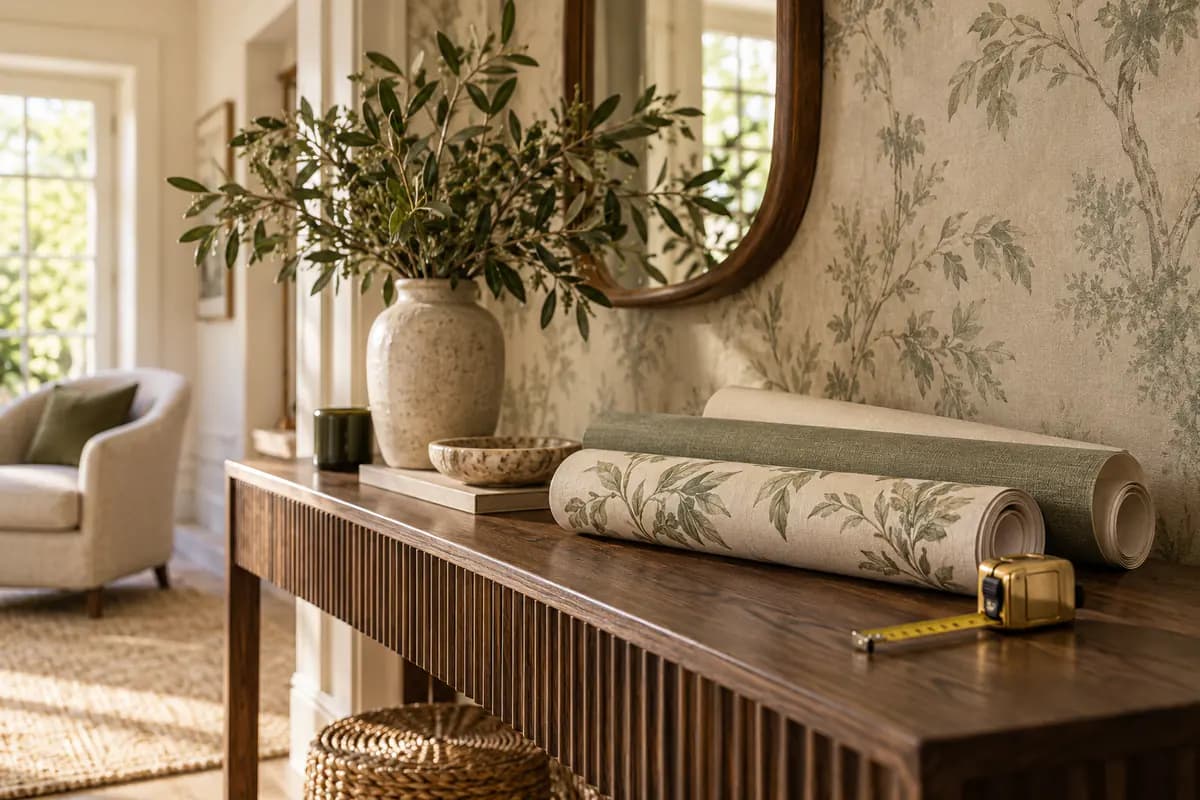
Confirm return terms for unopened rolls, extra-material guidance, and what happens if a batch becomes unavailable. Follow the product's inspection and installation directions. Store a small labeled remnant if the maker or installer recommends it for future repair, and record the wall where the roll was used.
How can you keep a supplier-ready wallpaper worksheet?
Prepare one page showing every wall width and height, openings, ceiling changes, pattern repeat, match type, roll information, and the intended starting wall. Note whether measurements are gross or net and identify anything the installer still needs to inspect. A labeled worksheet helps the supplier estimate the selected product without guessing which dimension belongs to which wall.
Ask the supplier to state the quantity, assumptions, and any extra material recommendation in writing. Confirm whether the estimate accounts for the chosen pattern and the actual layout. Keep roll labels and lot details after delivery. If the product or room changes, request a revised estimate instead of reusing the first calculation.
How can you review the finished estimate before placing the order?
Before approving the supplier's quantity, compare its assumptions with the measurement sketch and chosen roll label. Confirm the number of walls, openings, pattern repeat, match direction, and any feature-wall treatment included. Ask how the estimate changes if a wall is out of square or if the installer needs to center the pattern at a focal point. A written review helps catch a missed return or ceiling change before material is cut.
Conclusion
Wallpaper estimates should begin with each wall's measurements and the selected roll's usable dimensions, pattern repeat, and match. Keep the labels and dye-lot details together, then ask the supplier or installer to verify the quantity for the actual layout. A generic area calculation cannot account for every pattern, opening, or cutting plan.
Frequently Asked Questions
How do I measure a room for wallpaper?
Measure the width and height of every wall separately. Note windows, doors, alcoves, sloping ceilings, built-ins, outlets, and any surface that will not receive the wallcovering. Keep the original measurements beside any net-area calculation so an installer can review what was included or excluded.
How does wallpaper pattern repeat affect quantity?
Find the pattern repeat and match type on the product information. A random match, straight match, or drop match changes how adjacent strips align and how much material may be left over. The Wallcoverings Association describes repeat as the vertical distance between identical points in the design and notes that repeat can range from very small to more than…
What roll details should I check before ordering?
Before opening rolls, compare the pattern number, colorway, and dye-lot or run number. The Association advises checking individual rolls for a consistent run and recording those identifiers in case additional material is needed. If multiple runs arrive, ask the retailer or installer how to handle them before cutting.
Should wallpaper openings be subtracted from the estimate?
Measure the width and height of every wall separately. Note windows, doors, alcoves, sloping ceilings, built-ins, outlets, and any surface that will not receive the wallcovering. Keep the original measurements beside any net-area calculation so an installer can review what was included or excluded.
Why do wallpaper dye lots matter?
Before opening rolls, compare the pattern number, colorway, and dye-lot or run number. The Association advises checking individual rolls for a consistent run and recording those identifiers in case additional material is needed. If multiple runs arrive, ask the retailer or installer how to handle them before cutting.
Shopping Options To Explore
Use these listings and partner stores as places to continue your research, not as product ratings or test results. Listings, product details, availability, and offer terms can change; verify the exact item with the seller.
Some links may earn a commission. General Temu and Shein storefront destinations are not verified affiliate links and may not generate one. Read our affiliate disclosure.
Shein
This is a broad home-and-décor storefront, not a verified wallpaper recommendation. Confirm the exact material, roll dimensions, pattern repeat, wall compatibility, and current coupon eligibility before purchase.
Publisher-supplied broad offer code; check its current availability and terms for your account and region
Partner codeDPL3S52
General store destination; tracking is not verified, and the code is not a product-specific offer.
Confirm current prices, eligibility, shipping, and return terms with the seller.
Sources and further reading
We link primary or institutional references near factual claims and list the sources used for this guide below. Design suggestions are editorial guidance, not universal rules.
Living Statement may earn a commission from some partner links. Any paid relationship will be disclosed close to the relevant offer. How our affiliate links work.