
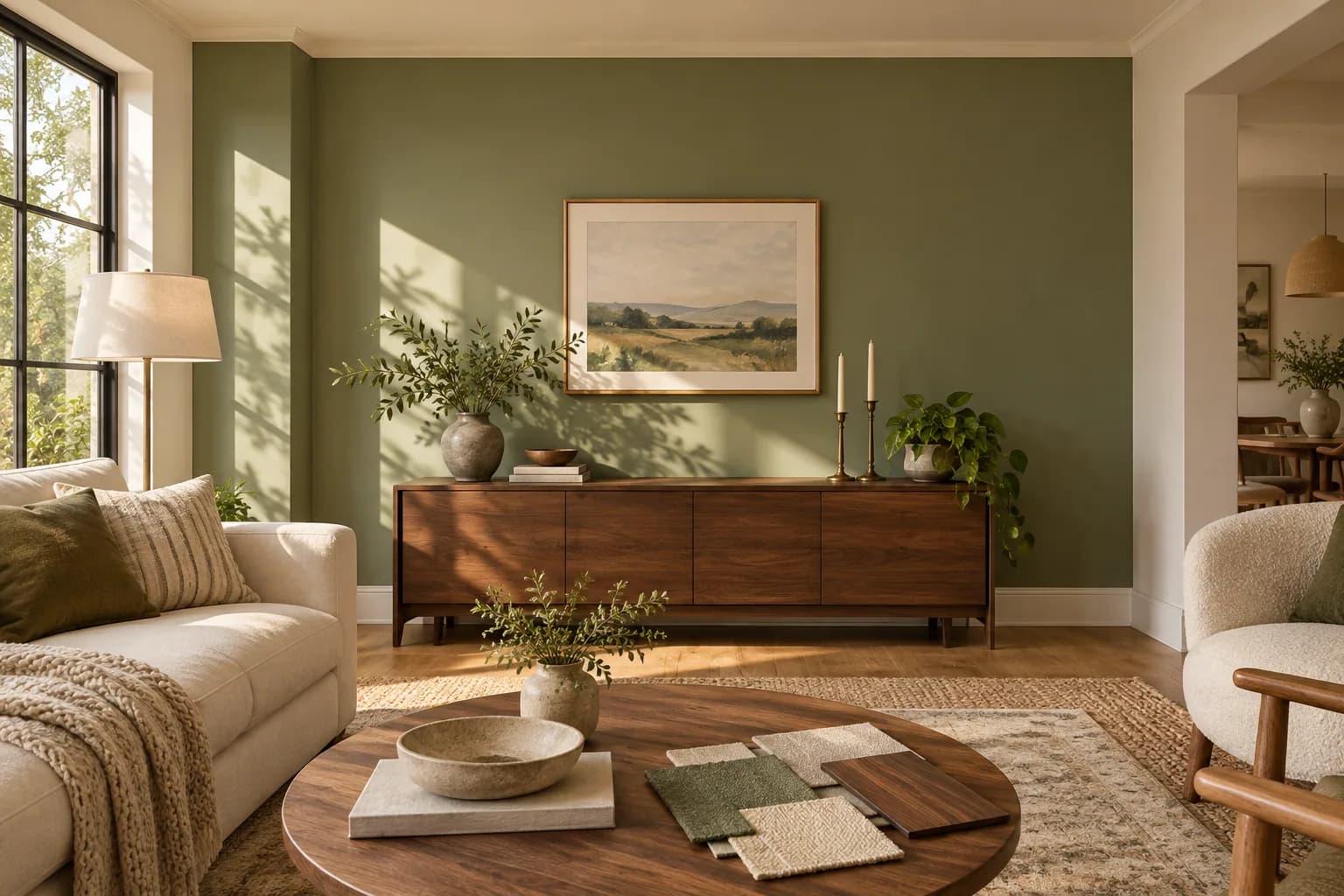
An accent wall is a choice about emphasis: it gives one surface a different color, finish, or pattern so the room has a place for the eye to rest. The wall opposite the doorway is one common option, not a rule. Start with the room's architecture, furniture, lighting, and the view from the places people actually enter and sit.
Planning a decorative decal as a wall treatment? The Wall Decal Size Fit Check compares its full dimensions with the clear wall area; check surface compatibility and application steps with the maker separately.
Which wall is worth emphasizing?
Look for a wall that already supports a clear focal point, such as a fireplace, bed, console, or an uninterrupted architectural surface. Stand at the doorway and main seating area; note what is visible, what is blocked by furniture, and whether a window, doorway, or large television would divide the treatment. Sherwin-Williams suggests the wall visible opposite the room entrance as one possible feature wall, but use that as a prompt to test the sightline rather than as a universal placement formula.
An accent treatment may not help if every wall already competes for attention or if the chosen wall is mostly hidden. Make a quick sketch of the room and mark doors, windows, built-ins, large furniture, and the main views before choosing a surface. If you are highlighting art or a distinctive feature, use the wall-art guide to plan its scale and position as a separate decision.
How should the treatment relate to the rest of the room?
List the finishes that are expensive or difficult to change: flooring, cabinetry, tile, large upholstery, and woodwork. Compare your proposed color or pattern with those fixed elements and with the colors already repeated in rugs, art, and textiles. Sherwin-Williams' color guidance recommends considering permanent finishes and reflecting on how light sources affect color appearance; these are useful checks, not a promise that one palette will suit every room.
Paint, wallpaper, and other wall finishes each bring different preparation, edge, and maintenance requirements. Choose the treatment only after checking the exact product's approved surface, application directions, cleaning method, and return or repair implications. For wallpaper, the Wallcoverings Association advises that the wall be clean, dry, and sound and that the product maker's instructions control the installation.
Sources: Sherwin-Williams: How to Choose Paint Colors; Wallcoverings Association: Surface Preparation
How can you test a color or pattern before committing?
Look at a real paint sample in the room instead of relying only on a phone or a printed color chip. Benjamin Moore recommends viewing samples in the space and watching how they look in different parts of the room and at different times of day. Place a sample near the intended wall and check it in daylight, evening light, and with the lamps you normally use; compare it with nearby trim, flooring, and furniture.
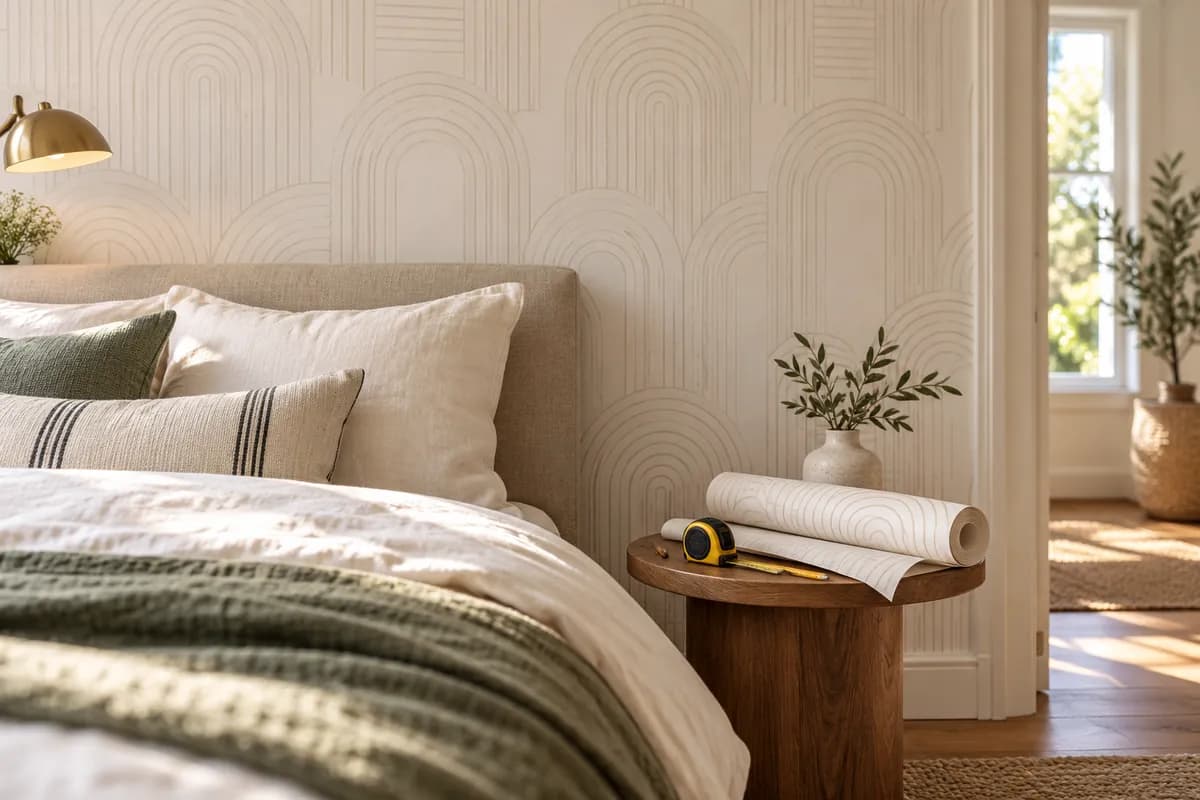
For wallpaper, request a sample with the actual pattern and scale if available. Hold or temporarily position it on the chosen surface, then view it from the doorway and seating area. Pattern repeat, seams, corners, outlets, and adjacent wall transitions can change how the finished field reads, so include those edges in the trial rather than judging a small swatch alone.
Sources: Benjamin Moore: Paint & Color Samples; Wallcoverings Association: Standard Residential Wallpaper Installation
What should you measure before buying materials?
Measure the full wall width and height, then record doors, windows, built-ins, trim, and any portion that will remain untreated. A measured sketch helps compare a color block, wallpaper panel, or full-wall treatment and gives the retailer the dimensions needed for a product-specific quantity estimate. Do not use one generic coverage or waste allowance for every paint, wallpaper width, or pattern repeat.
If you choose wallpaper, check the pattern repeat, roll width, dye lot, and how the manufacturer says to calculate the number of rolls. The Wallcoverings Association's residential installation guidance calls for examining the roll and matching the pattern before cutting; follow the chosen product's instructions and ask the seller or installer to verify the order quantity before purchase.
Sources: Wallcoverings Association: Standard Residential Wallpaper Installation
What changes for a rental or a shared home?
Before painting, applying wallpaper, or adding fixed panels in a rental, check the lease and get the required permission. A removable product is not automatically residue-free or suitable for every wall. Confirm the exact product's surface limits, removal method, and the owner's expectations before application.
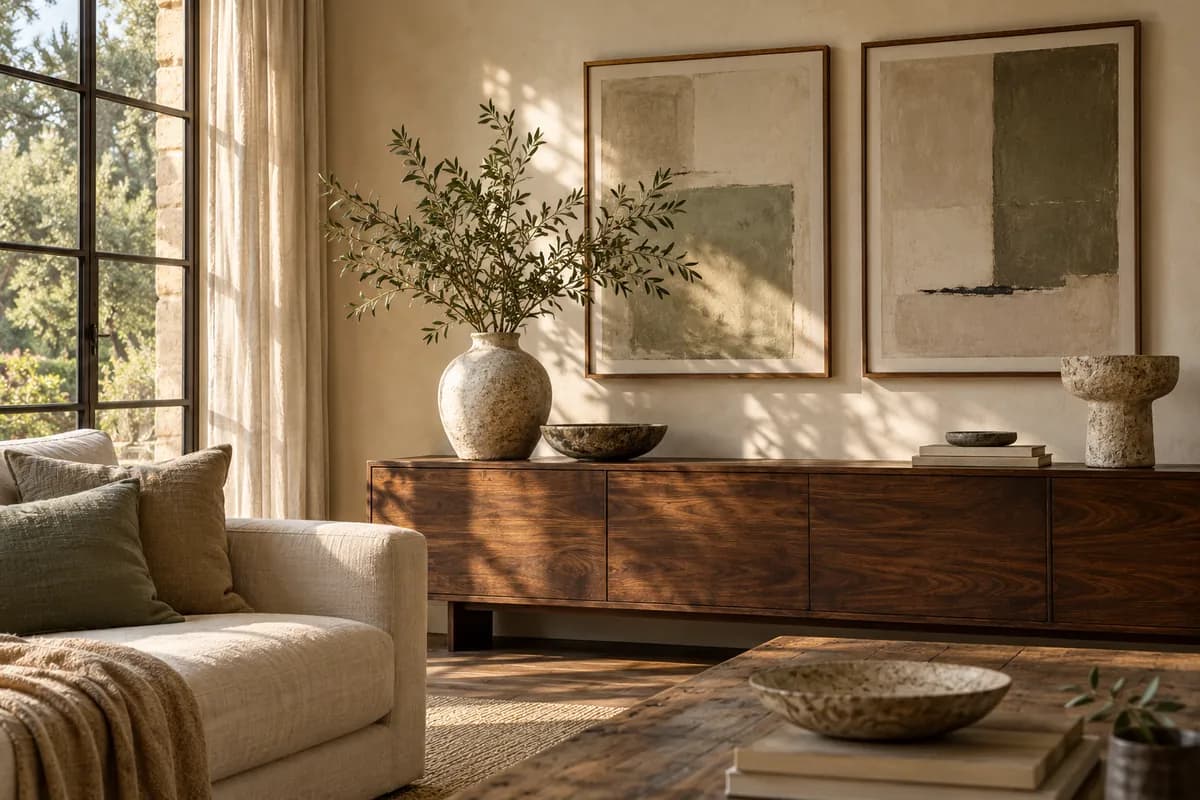
If several people share the room, test the proposed treatment at the times and from the places they use most. Keep switches, outlets, vents, doors, and access to built-ins unobstructed. If a wall has peeling paint, dampness, or damaged plaster or drywall, address the condition before applying a decorative finish.
How can you set a clear purpose before selecting a finish?
Describe what you want the wall to do in one sentence: draw attention to a fireplace, give a bed a quieter backdrop, define a dining area, or bring color to a room with few architectural features. This purpose helps narrow the wall and the treatment. If the wall has a window, television, artwork, or several doorways, include those elements in the plan rather than treating the surface as blank.
Look at the wall from the room's main entry and seating positions. A wall that feels prominent from one angle may disappear from the everyday view. Note existing finishes, furniture, floor color, and permanent materials. The point is not to match every item, but to understand which colors and patterns are already carrying visual weight before adding another strong surface.
How can you compare paint, wallpaper, and other treatments honestly?
Paint may offer a simple change of color, while wallpaper introduces pattern, texture, and product-specific preparation. A panel, textile, or other finish adds its own attachment and maintenance questions. Compare the complete system: surface preparation, primer or adhesive, edge details, cleaning, removal, and repair. A sample swatch does not show every finish condition, and a room photograph cannot establish how a product will perform on your wall.

Read the selected maker's documentation and note any limits for dampness, heat, surface type, or cleaning. If a finish requires a trained installer or a substrate repair, include that work in the decision. Where you are unsure whether the current wall is sound or compatible, ask the manufacturer or a qualified decorator before buying materials.
How can you use a repeatable sample-testing routine?
Collect a small number of candidate samples and place them beside the permanent materials that will remain: flooring, trim, cabinetry, upholstery, or tile. View the samples in morning, afternoon, and evening light, and turn on the lamps normally used in the room. Keep the samples at the intended wall rather than judging them from a desk or a phone image.
For paint, follow the brand's sample instructions and test a patch large enough to see from the room's main viewpoints. For patterned paper or a panel treatment, include the intended repeat and edge where possible. Record the product name and finish beside each sample. This simple comparison prevents memory from turning several close shades into one imagined color.
How can you coordinate the accent wall with the rest of the room?
Once a treatment is chosen, review the room as a whole. Decide whether the wall should be the main focal point or a supporting backdrop. If it is visually strong, consider simplifying nearby accessories; if it is subtle, other objects may continue to lead. Check how artwork, mirrors, shelves, and lighting will interact with the new surface before buying or moving them.
Make a small sequence plan: finish the wall, allow the product's specified drying or cure period, then place furniture and hang objects. Follow the finish maker's instructions rather than a generic timeline. If the project changes a shared or rented space, confirm permissions and restoration responsibilities first. Keep product labels and color references so later touch-ups use the intended material and finish.
Conclusion
Choose an accent treatment only after deciding what the wall should do in the room. Compare samples in the actual light, measure the full surface, and include preparation, finish, and return details in the plan. If you rent or share the home, confirm permission before making a change that may be difficult to reverse.
Frequently Asked Questions
Which wall should I choose for an accent wall?
Look for a wall that already supports a clear focal point, such as a fireplace, bed, console, or an uninterrupted architectural surface. Stand at the doorway and main seating area; note what is visible, what is blocked by furniture, and whether a window, doorway, or large television would divide the treatment.
How can I test an accent color or pattern first?
Look at a real paint sample in the room instead of relying only on a phone or a printed color chip. Benjamin Moore recommends viewing samples in the space and watching how they look in different parts of the room and at different times of day.
What should renters check before changing a wall?
Before painting, applying wallpaper, or adding fixed panels in a rental, check the lease and get the required permission. A removable product is not automatically residue-free or suitable for every wall. Confirm the exact product's surface limits, removal method, and the owner's expectations before application.
How do I estimate paint or wallpaper for an accent wall?
Measure the full wall width and height, then record doors, windows, built-ins, trim, and any portion that will remain untreated. A measured sketch helps compare a color block, wallpaper panel, or full-wall treatment and gives the retailer the dimensions needed for a product-specific quantity estimate.
How can the accent wall relate to nearby furnishings?
List the finishes that are expensive or difficult to change: flooring, cabinetry, tile, large upholstery, and woodwork. Compare your proposed color or pattern with those fixed elements and with the colors already repeated in rugs, art, and textiles. Sherwin-Williams' color guidance recommends considering permanent finishes and reflecting on how light sources affect color appearance; these are useful checks, not…
Shopping Options To Explore
Use these listings and partner stores as places to continue your research, not as product ratings or test results. Listings, product details, availability, and offer terms can change; verify the exact item with the seller.
Some links may earn a commission. General Temu and Shein storefront destinations are not verified affiliate links and may not generate one. Read our affiliate disclosure.
Use the measurements and checks in this guide when comparing an exact item. Browse current partner offers and verify product details, eligibility, and terms with the seller.
Sources and further reading
We link primary or institutional references near factual claims and list the sources used for this guide below. Design suggestions are editorial guidance, not universal rules.
Living Statement may earn a commission from some partner links. Any paid relationship will be disclosed close to the relevant offer. How our affiliate links work.