

Layering rugs can add texture or define a smaller zone, but the stack has to work underfoot as well as in a photograph. Start with the room’s usable floor, the furniture footprint, and the actual rug constructions. Then mock up the overlap and check whether edges remain flat, doors clear the combined height, and both rugs suit the floor beneath them.
Choose the job for each layer
Give the lower rug a clear role: create a quiet base, connect a seating group, or cover a broad floor area. The upper rug can introduce a smaller pattern, a different texture, or a focal point. If both layers compete in color and pattern, the result may feel busy; if both are nearly the same size, the edge relationship can look accidental. Treat these as design questions rather than fixed rules.
Sketch the room with furniture, walkways, and door swings before choosing the pair. Decide whether the top rug should center on the seating group, align with the sofa, or sit under a coffee table. A layered plan is different from placing two separate rugs side by side in an open layout; choose the arrangement that best explains how the room is used.
Measure the base rug and the visible border
Record the finished width and length of both rugs, then calculate how much of the lower rug will show on each side. The border need not be identical everywhere if the arrangement is intentionally offset, but check the complete outline against the sofa, chairs, and room edges. Use painter’s tape or paper to mark each footprint on the floor before moving heavy furniture.
A common design approach is to let the base rug extend beyond the top rug enough to read as a frame, but the amount depends on shape, pattern, furniture, and the space available. Do not treat a retailer’s suggested margin as a safety or sizing standard. For the room-specific footprints, compare the living-room or dining-room rug guide where relevant.
Compare texture, thickness, and edge construction
Look at the pile height, stiffness, backing, fringe, and edge finish of both rugs. A thick lower pile can allow an upper rug to shift or ripple; a loose weave or curled edge can catch a foot. Smooth rugs together on the floor and inspect the perimeter instead of relying only on the listed fiber names or a styled photograph.
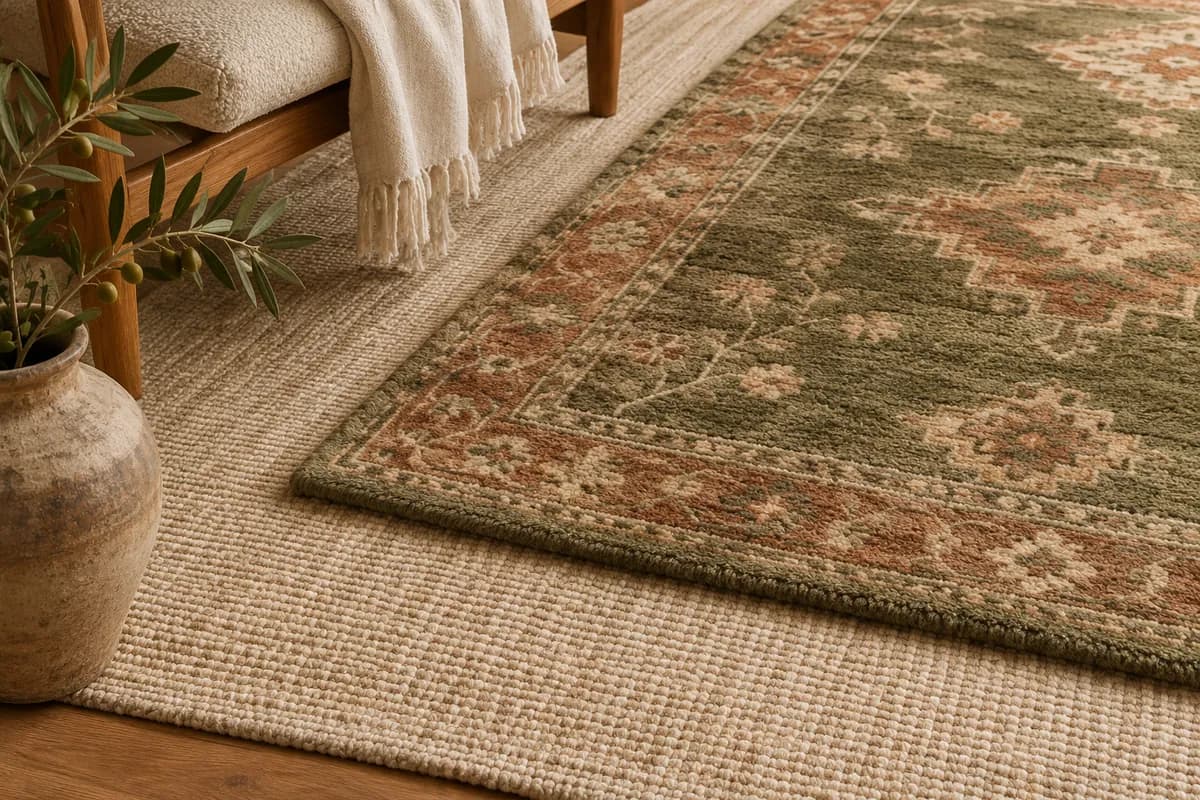
If one rug has fringe, a raised border, or an irregular shape, see how that edge lies beneath the second layer. Check the exact maker’s care label and construction details. A natural-fiber base and a soft wool accent can create an appealing contrast, but they may respond differently to moisture, vacuuming, and sunlight; see the jute-versus-sisal and rug-fiber guides for material-specific comparisons.
Check the pad and floor as a system
Read the instructions for both rugs, the pad, and the floor finish. Some rug backings or pad materials may not be recommended for particular flooring surfaces. A pad that grips one rug can still interact differently with a second layer, so confirm that the top rug is supported and that no pad edge projects where it can be seen or caught.
Do not assume tape, adhesive, or one universal pad is safe for every floor. The exact floor manufacturer’s warranty and rug maker’s guidance take precedence. If the instructions conflict or omit compatibility, ask the flooring or rug maker before layering. The rug-pad guide explains why the pad has to suit both the rug backing and the floor below it.
Protect doors and everyday paths
Open each door fully over the proposed stack and check thresholds, closet doors, and furniture movement. The combined layers raise the floor height, sometimes enough to drag under a door or create a noticeable lip. Walk the route from each entrance, move a chair, and test how the rug edges behave during ordinary use before returning the room to its usual arrangement.
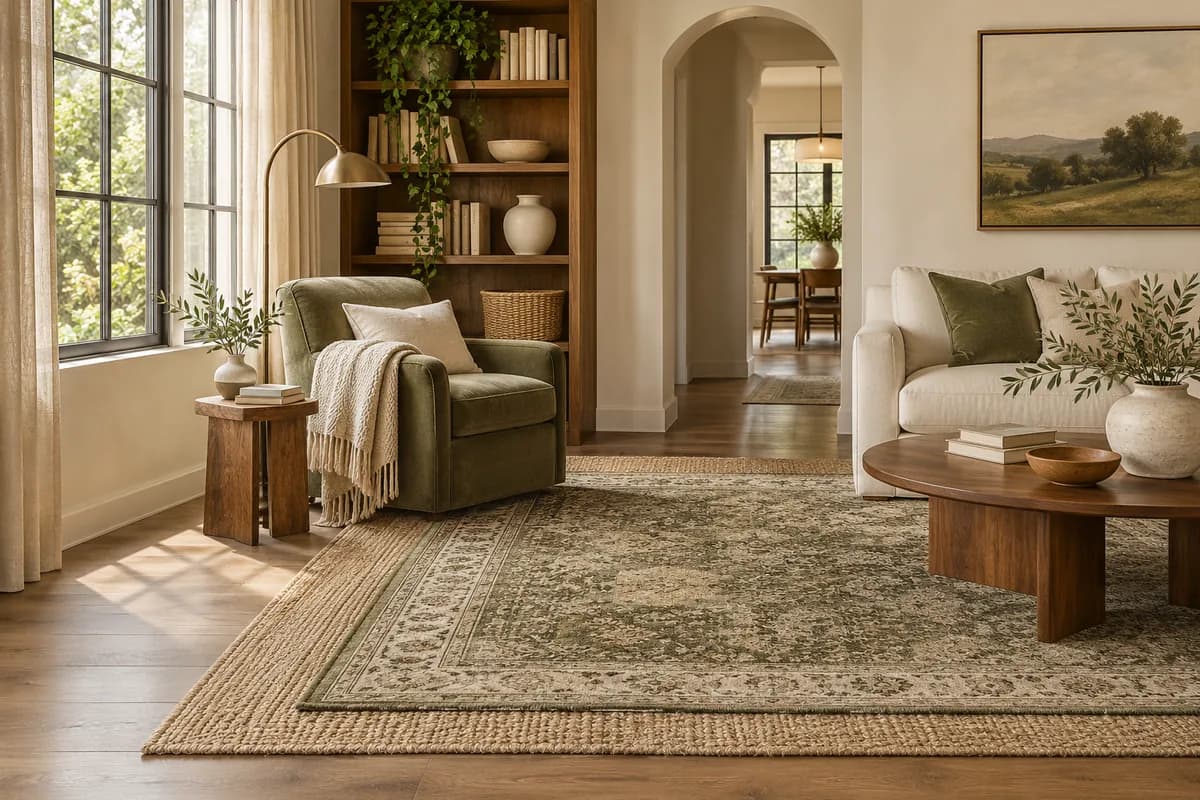
Keep overlapping edges away from a narrow, high-traffic route when possible. If a rug edge lifts, slides, or bunches, remove the stack and reconsider the product combination rather than accepting a trip point. Children, older adults, wheeled mobility devices, and pets may need a particularly clear, stable floor surface. A decorative result is not useful if it interferes with access.
Use pattern and color to create hierarchy
One practical composition is a quieter, larger base with a smaller rug that carries more pattern or color. The reverse can also work when a textured base is subtle and the upper piece is restrained. Compare the rugs with nearby upholstery, curtains, and art in the room’s actual light; colors on a screen may differ from the delivered textiles.
Mixing shapes can create movement, but the relationship should still feel intentional from the room entrance. Try a rectangular base with a round or hide-shaped accent only after marking the real dimensions. Keep the rest of the palette in view, and avoid making a styling formula stand in for personal preference or an exact measurement.
Clean and maintain each layer separately
Before purchase, confirm how each rug should be vacuumed, spot-cleaned, washed, and dried. Layered rugs can trap dust between surfaces, and a spill on the upper layer may reach the base rug or pad. Check whether a rug can be lifted without moving furniture and whether its construction is suitable for the cleaning routine you can maintain.
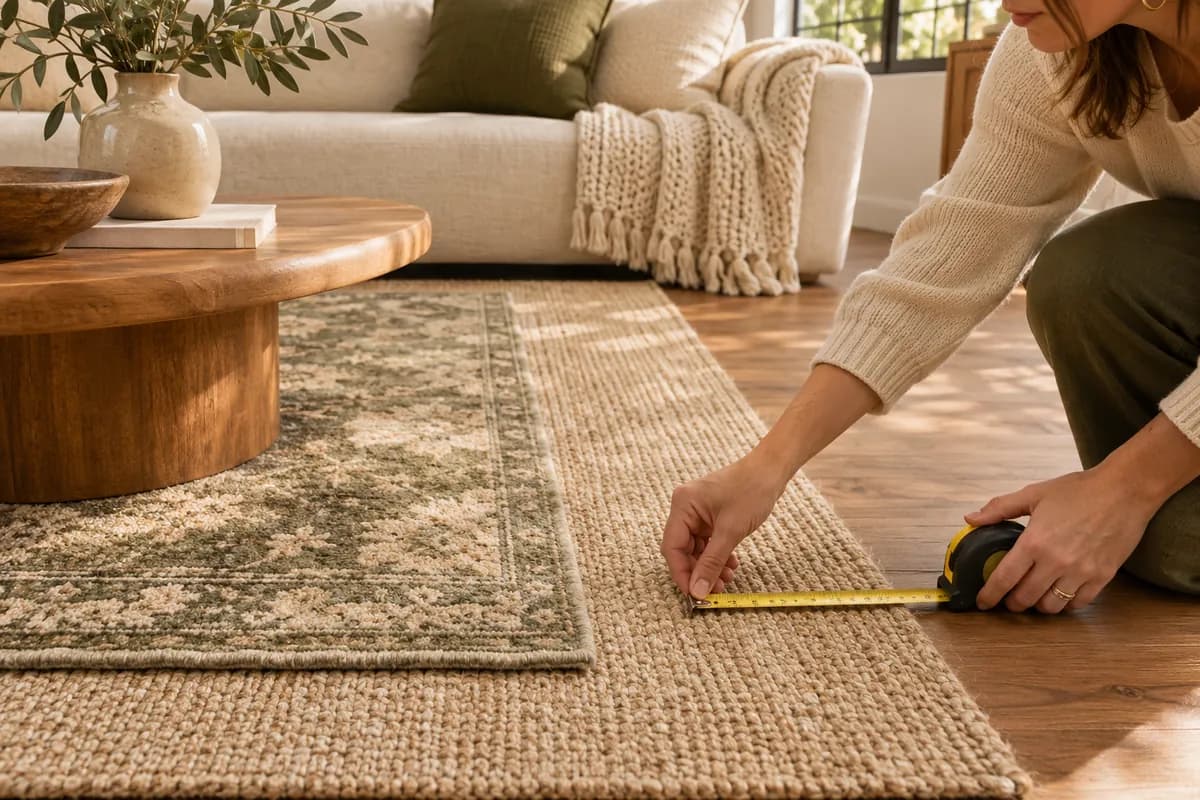
Follow the care label for each textile and do not assume that a washable top layer makes the full stack washable. Remove and clean one layer at a time, then allow it to dry as directed before putting it back. The area-rug care guide covers checking the fiber and maker’s directions before using water, cleaners, or a vacuum attachment.
Test the full arrangement before committing
Lay both rugs in their intended positions and leave the arrangement undisturbed long enough to see how the edges settle. Check the top rug after walking across it and after moving a chair or coffee table. Photograph the room from the doorway and the main seat; review the border, furniture alignment, and clear paths together rather than focusing on a single close-up.
If the rugs do not stay flat or the overlap narrows a route, choose one rug or a different pair. Verify the exact dimensions, fiber, construction, return window, and care details on the seller’s listing before ordering. Partner stores are broad browsing destinations, not product-specific endorsements; confirm variant, availability, shipping, and current offer terms with the seller.
Conclusion
Layer rugs only when the complete arrangement looks intentional and stays flat under everyday use. Measure both footprints, check the combined height at doors, confirm compatibility with the rug and floor makers, and test how edges behave when people walk or move furniture. If the layers shift or catch, choose a simpler layout.
Frequently Asked Questions
How much of the lower rug should show?
Record the finished width and length of both rugs, then calculate how much of the lower rug will show on each side. The border need not be identical everywhere if the arrangement is intentionally offset, but check the complete outline against the sofa, chairs, and room edges.
Can I layer rugs on any floor or carpet?
Read the instructions for both rugs, the pad, and the floor finish. Some rug backings or pad materials may not be recommended for particular flooring surfaces. A pad that grips one rug can still interact differently with a second layer, so confirm that the top rug is supported and that no pad edge projects where it can be seen…
How do I keep layered rugs from shifting?
Open each door fully over the proposed stack and check thresholds, closet doors, and furniture movement. The combined layers raise the floor height, sometimes enough to drag under a door or create a noticeable lip. Walk the route from each entrance, move a chair, and test how the rug edges behave during ordinary use before returning the room to…
Can the top rug have fringe or a thick pile?
Look at the pile height, stiffness, backing, fringe, and edge finish of both rugs. A thick lower pile can allow an upper rug to shift or ripple; a loose weave or curled edge can catch a foot. Smooth rugs together on the floor and inspect the perimeter instead of relying only on the listed fiber names or a styled photograph.
How should I clean layered rugs?
Before purchase, confirm how each rug should be vacuumed, spot-cleaned, washed, and dried. Layered rugs can trap dust between surfaces, and a spill on the upper layer may reach the base rug or pad. Check whether a rug can be lifted without moving furniture and whether its construction is suitable for the cleaning routine you can maintain.
Sources and further reading
We link primary or institutional references near factual claims and list the sources used for this guide below. Design suggestions are editorial guidance, not universal rules.
Living Statement may earn a commission from some partner links. Any paid relationship will be disclosed close to the relevant offer. How our affiliate links work.